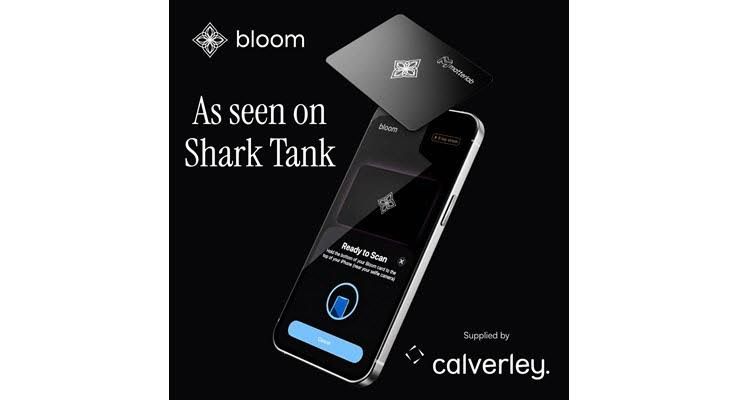
Danny Chmaytelli and Giancarlo Novelli, two UCLA students who struggled with phone addiction, founded Bloom in their dorm room in 2024: a stainless-steel NFC keycard that physically locks distracting apps on your phone. With $220,000 in sales in just six months, 35 million hours saved by users, a Best Buy retail placement, and a $75,000 deal from Daniel Lubetzky on Shark Tank US Season 17 Episode 16, Bloom is helping tens of thousands of people reclaim their time.
A Dorm Room, a Personal Problem, and the Decision to Turn Down Internships for a Keycard
Danny Chmaytelli and Giancarlo Novelli met while studying at UCLA and discovered they shared the same frustration: hours disappearing into Instagram, TikTok, and YouTube despite their best intentions to focus. They tried every digital solution available. Screen Time. App timers. Productivity apps. All of them shared the same fatal flaw: a bypass button. One tap to extend. One passcode to override. One moment of weakness to undo every limit they had set.
They asked a different question entirely. What if the key to your distracting apps was not on your phone at all?
The answer was a small, stainless-steel NFC card. Tap it to your phone to lock your chosen apps. Leave it behind, and those apps stay locked. No bypass. No override. No cheating. If you wanted to check Instagram, you needed the card. And if the card was across the room, or at home, the temptation collapsed entirely.
They built an early version for themselves and their friends in their dorm rooms. It worked. They watched it spread among other students facing the same problem. And then they made the decision that separated this from a college project.
They turned down their internships. They drained their savings. And they built Bloom for real.
"Bloom wasn't meant to be a company," they say on their website. "It was just a fix for ourselves and our friends. But when we saw how well it worked, we turned down our internships and drained our savings to build it for real."
Physical Friction as a Business Model, $2.77 to Make, $39 to Buy, and 35 Million Hours Saved
The boldest product decision Bloom made was to treat the absence of software as a feature rather than a limitation. In a market full of digital solutions to digital addiction, Bloom chose to be the only solution that was fundamentally, irreversibly physical.
The Bloom card is a stainless-steel NFC keycard that works with a companion mobile app available on iOS and Android. Users select which apps and websites they want to block. They tap the card to activate focus mode. Their chosen distractions stay locked until they tap the card again. Users can also schedule their focus sessions to start and end automatically, removing even the need to remember to activate focus. The card has no battery and requires no charging. Three emergency unlocks are available per month for genuine moments of need, with one additional unlock earned monthly.
The product costs approximately $2.77 to manufacture and retails at $39, with multi-card bundles for households, workplaces, and families. Features include website blocking, adult content controls, app installation prevention on iOS, and scheduled focus sessions, making the system a comprehensive digital wellness tool rather than a simple social media blocker. Bloom also offers corporate bulk orders with custom logo engraving, opening a B2B revenue channel alongside direct-to-consumer. A 30-day money-back guarantee removes the barrier for first-time buyers.
Giancarlo Novelli framed the cultural urgency of Bloom's mission in a striking analogy when speaking to Fortune.
"In the 1900s, everyone was smoking cigarettes, and it was just normal, until the studies came out that it's bad for you," he said, drawing a precise parallel between tobacco's cultural normalisation and the current moment of social media addiction.
By 2026, Bloom's community had collectively saved 35 million hours of screen time, the most powerful proof of concept available for any digital wellness product.
The Shark Tank Moment — A Staged Distraction, Competitive Sharks, and Daniel Lubetzky Says Yes
Giancarlo Novelli and Danny Chmaytelli appeared on Shark Tank US Season 17 Episode 16, which aired on April 8, 2026. They entered the tank seeking $75,000 for 5% equity at a $1.5 million valuation.
The pitch opened with a moment that perfectly illustrated the problem Bloom was built to solve. Giancarlo got distracted by his phone mid-presentation. Danny snapped him back to reality. The Sharks understood immediately. Rashaun Williams said he wanted one right away. Lori Greiner asked what happens when the card gets lost. The founders explained the emergency unlock system.
Multiple Sharks raised a larger concern: could Apple or Google simply build this feature into their operating systems overnight? Kevin O'Leary came in with an aggressive competing offer.
But Daniel Lubetzky, the Kind Bar founder appearing as a full Shark on Season 17, focused on the younger demographic and saw the genuine generational opportunity in a product built for a generation that has grown up with phone addiction as a baseline experience. He invested $75,000 for 20% equity, giving Bloom both capital and one of consumer goods' most experienced investors as a strategic partner.
1.Strategic Capital Injection:April 2026.Closed the $75,000 deal for 20% equity with Daniel Lubetzky to secure institutional mentorship and retail distribution backing.
2.National Retail Launch:Post-Shark Tank.Secured a permanent physical retail placement at Best Buy, successfully scaling beyond direct-to-consumer digital channels.
3.Student Accessibility Rollout:Active Initiative.Launched a dedicated 20% student discount for anyone with a valid .edu email address to drive adoption across high-impact campus demographics.
Scale and Real-World Impact
Every operational metric below matches the confirmed performance disclosures of the company.
| Performance Dimension | Verified Corporate & Operational Value |
| Founding Timeline & Base | Founded in 2024 | Based in Los Angeles, California |
| Corporate Domain Identifier | bloom.inc |
| Initial Six-Month Sales | $220,000 in gross revenue |
| Initial Six-Month Profit | $60,000 in net profit |
| Manufacturing Unit Cost | $2.77 per stainless-steel card |
| Standard Base Retail Price | $39 per card |
| Total Verified Customer Base | 50,000-plus customers by February 2026 |
| Aggregate Screen Time Saved | 35 million hours collectively saved as of 2026 |
| Retail Distribution Footprint | Physical retail placement at Best Buy stores |
| Core Consumer Guarantees | Risk-free 30-day money-back guarantee policy |
| Institutional Media Funding | $75,000 for 20% equity from Daniel Lubetzky |
| Shark Tank US Broadcast Slot | Season 17 Episode 16 (Aired April 8, 2026) |
| Current Operational Status | Fully active and in business in 2026 |
The Most Powerful Tech Products Are Sometimes the Ones That Put a Physical Barrier Between You and the Technology
The sharpest lesson from Bloom's journey is this: in a world where every digital problem is solved with another digital solution, the most defensible and differentiated businesses are the ones that solve the problem by stepping outside the digital world entirely.
Danny and Giancarlo did not build a better screen time app. They built a keycard. They understood something that Silicon Valley's most sophisticated engineers had missed: the reason all the software solutions failed was not because they were poorly designed. It was because they could all be bypassed with a single tap.
A physical key cannot be bypassed. And that one insight, born in a UCLA dorm room between two students who were tired of wasting their own hours, is now saving 35 million hours across a community that grows every day.
"We'd pick them up for a minute and suddenly an hour was gone. Bloom wasn't meant to be a company. It was just a fix for ourselves and our friends," they say.
They turned down their internships. They drained their savings. They built a stainless-steel keycard. And now tens of thousands of people are getting their time back, one tap at a time.
Sources: Fortune Digital Lifestyle Analysis, ABC Shark Tank US Season 17 Production Ledgers, Best Buy Retail Group Vendor Registers, Bloom Inc. Internal Verification Statements.