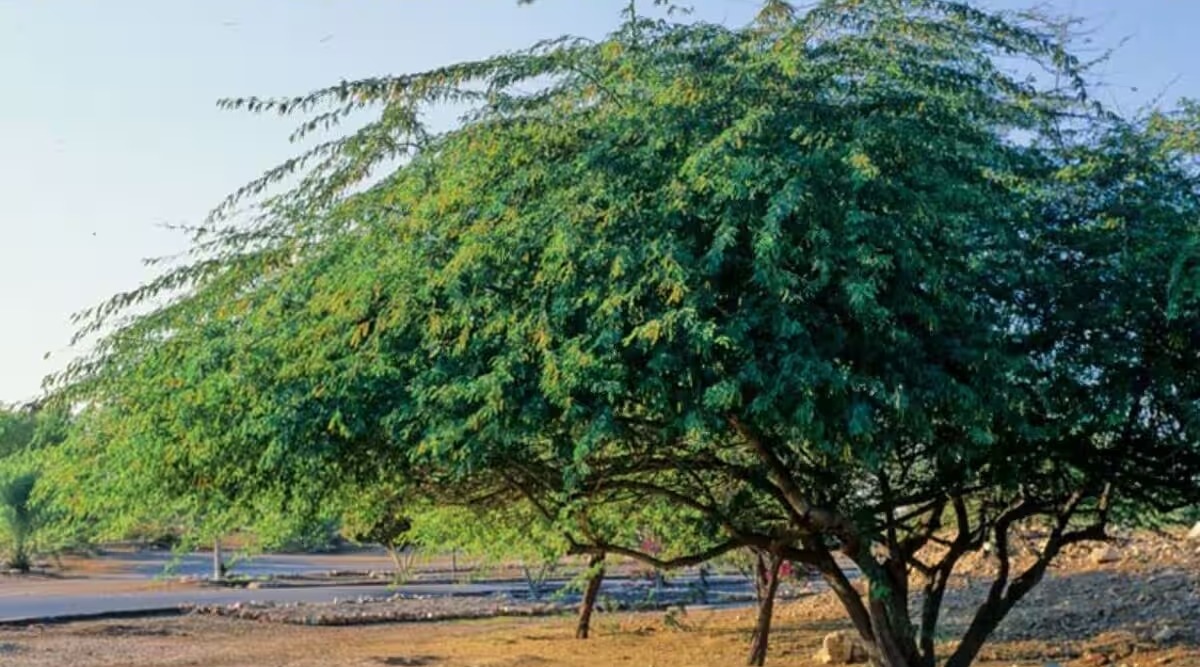
Introduced by British colonial administrators in the late 1870s to combat desertification in the Thar region, the South American tree Prosopis juliflora (Vilayati Babul) has become an invasive ecological problem. While providing fuelwood, its aggressive growth depletes local groundwater tables and degrades native grasslands across multiple Indian states.
JODHPUR, July 30, 2026 — Nearly 150 years after British colonial administrators introduced the South American thorny tree Prosopis juliflora to check desertification in the Thar Desert and survive severe droughts, the invasive species has become a major ecological and socio-economic challenge across India. Known locally as vilayati babul, vilayati kikar, or seemai karuvelam, the fast-spreading plant was brought to the Indian subcontinent during the late 1870s to provide fast green cover, stabilize soil, and yield emergency fuelwood. Today, ecologists, agricultural research bodies, and rural communities report that the tree's deep root systems and aggressive spread are depleting local groundwater tables, suppressing native plant species, and degrading essential pastoral grasslands.
Historical Context: From Colonial Solution to Modern Hazard
According to research documented by the Central Arid Zone Research Institute (CAZRI), Prosopis juliflora was first introduced to the Sindh region in 1877 following recurring famines and droughts across Rajasthan, Gujarat, and parts of southern India. Selected for its ability to thrive in hyper-arid conditions with virtually no human maintenance, colonial forestry authorities promoted the species for afforestation and desert stabilization.
Over decades, the tree naturalized across sandy terrain, rocky wastelands, and roadside corridors in states including Rajasthan, Gujarat, Haryana, Tamil Nadu, and Karnataka. While it provided immediate relief as a fuel source and live boundary fencing for rural populations, its unchecked expansion eventually outpaced indigenous species such as Prosopis cineraria (Khejri) and Acacia nilotica (Babul).
| Historical & Ecological Metrics | Details / Findings |
| Origin & Introduction Date | Native to South America; Introduced to subcontinent in 1877 |
| Local Names | Vilayati Babul, Vilayati Kikar, Seemai Karuvelam, Gando Bawar |
| Key Ecological Drivers | Taproots reaching deep aquifers; high seed production and viability |
| Major Impacted Zones | Thar Desert, Banni Grasslands (Kutch), Delhi Ridge, Southern scrub forests |
Environmental Impact on Water Tables and Native Grasslands
Research conducted by environmental scientists and institutes under the Indian Council of Agricultural Research highlights that Prosopis juliflora possesses deep taproot systems capable of accessing underground water tables at significant depths. This aggressive water uptake lowers localized groundwater levels in semi-arid zones, creating dry conditions that harm neighboring vegetation.
In regions like the Banni Grasslands of Kutch, Gujarat, dense thickets of the thorny tree have encroached upon thousands of hectares of native pastureland. Local pastoral communities, such as the Maldharis, report that the loss of indigenous grass varieties has severely impacted livestock grazing, forcing pastoralists to adapt or seek alternative livelihoods. Additionally, the sharp, rigid thorns of the plant cause injuries to livestock and prevent native wildlife movement.
Economic Dependence vs. Eradication Demands
Despite its ecological drawbacks, Prosopis juliflora remains an important source of income for millions of rural households. According to forestry assessments, the species continues to serve as a primary source of affordable fuelwood for landless populations and underpins rural charcoal manufacturing industries in drought-prone districts.
This duality has created policy debates among conservationists, government ministries, and local Panchayats. While state high courts and environmental groups have periodically advocated for systematic uprooting campaigns, complete eradication is technically difficult and expensive due to the plant's high seed viability and aggressive resprouting capabilities following cutting or burning.
Official Sources Section
According to official research bulletins and field reports published by the Central Arid Zone Research Institute, the Ministry of Environment, Forest and Climate Change, and the Food and Agriculture Organization (FAO), managing invasive alien flora requires long-term restoration frameworks combining mechanical removal with the reintroduction of indigenous drought-resistant species.
Quote Section
"According to officials and ecological researchers, addressing the spread of invasive species like Prosopis juliflora requires balancing immediate rural energy needs with multi-year native vegetation restoration programs."
Why It Matters
The ongoing management debate surrounding Vilayati Babul underscores the long-term consequences of introduced species in climate-sensitive ecosystems. For pastoralists, farmers, and water management authorities across arid regions, balancing the economic utility of the tree against its ecological costs remains vital for maintaining groundwater sustainability and preserving India's native biodiversity.
Key Facts at a Glance
Colonial Introduction: Prosopis juliflora was introduced from South America in the 1870s to combat desertification in the Thar region.
Ecological Threat: Its deep root systems alter soil moisture and lower local water tables in arid zones.
Grassland Infiltration: Encroaches upon native grazing pastures, including the Banni Grasslands of Gujarat.
Rural Economy: Continues to serve as a major source of low-cost fuelwood and raw material for charcoal production.
Management Challenge: Rapid seed dispersal and sturdy roots make complete eradication difficult without multi-year eradication campaigns.
Frequently Asked Questions (FAQs)
What is Prosopis juliflora and why was it brought to India?
Prosopis juliflora (commonly known as Vilayati Babul or Kikar) is a thorny tree native to South America. It was brought to India by British authorities in the late 19th century to check soil erosion, stop Thar desertification, and provide fuelwood during severe famines.
Why is Vilayati Babul considered an invasive threat today?
It grows aggressively, outcompeting native Indian plants like Khejri (Prosopis cineraria). Its deep taproots consume significant groundwater, and its dense thickets block grazing access for livestock on traditional grasslands.
Does the tree offer any economic benefits to local communities?
Yes. It provides an abundant source of low-cost fuelwood for rural households and supports small-scale charcoal manufacturing, offering income opportunities in drought-prone areas.
Where can official ecological reports on invasive flora be accessed?
Official studies and invasive management guidelines are available through the portals of the Central Arid Zone Research Institute and the Ministry of Environment, Forest and Climate Change.
Source: Central Arid Zone Research Institute, Ministry of Environment, Forest and Climate Change, Food and Agriculture Organization, Indian Council of Agricultural Research