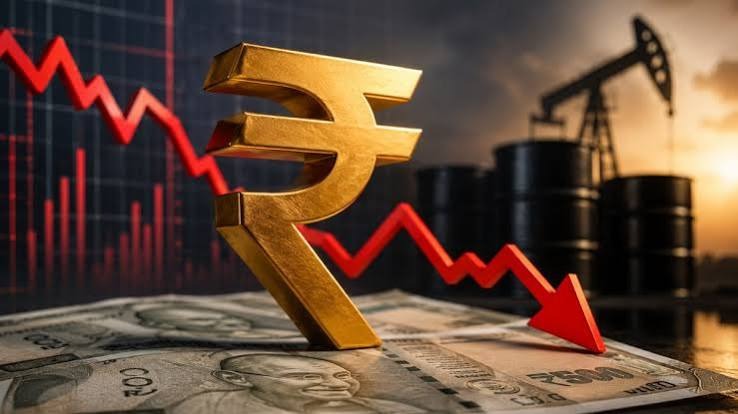
The Indian rupee declined 0.1% to 95.73 against the US dollar as rebounding crude oil prices sparked heavy dollar demand from importers. The Reserve Bank of India quickly intervened, likely selling US dollars to curb excessive volatility and stabilize the domestic currency against shifting global energy headwinds.
MUMBAI — The Indian rupee reversed its early morning gains to trade 0.1% lower at 95.73 against the US dollar on Thursday, July 30, 2026, as rebounding global oil prices placed renewed pressure on the domestic currency. Despite briefly strengthening to an intraday high of 95.5775 earlier in the session, the currency relinquished its momentum amid elevated demand for the greenback from domestic oil marketing companies and importers. To prevent a steeper and more disruptive decline, the Reserve Bank of India (RBI) likely intervened in the foreign exchange market by aggressively selling US dollars, according to active currency traders. This development highlights the ongoing struggle of emerging market currencies to navigate volatile global energy markets and shifting macroeconomic headwinds.
RBI Intervention Shields the Indian Rupee
Foreign exchange traders reported that state-run banks were spotted offering US dollars throughout the morning session, a move widely understood to be on behalf of the Reserve Bank of India. The central bank's timely intervention successfully capped the rupee's downward trajectory, providing a crucial floor for the currency just as it threatened to slide further.
The RBI’s strategy historically revolves around curbing excessive intraday volatility rather than targeting or defending a specific exchange rate. By stepping in to supply dollar liquidity, the central bank helps absorb the sudden spikes in corporate dollar demand, ensuring that the Indian rupee depreciates in an orderly fashion rather than succumbing to speculative attacks. Recent weeks have seen the RBI deploy substantial foreign exchange reserves to stabilize the currency, preventing it from breaching record lows during previous spikes in global energy costs.
Impact of Rising Oil Prices on the Domestic Currency
The primary catalyst behind Thursday's currency pressure is the upward movement of global crude oil prices. India remains heavily dependent on energy imports, purchasing nearly 85% of its crude oil requirements from overseas markets. Consequently, any significant rise in international benchmark prices directly inflates the nation's import bill, leading to a higher trade deficit and increased domestic demand for US dollars to settle those energy transactions.
Over the past few weeks, oil markets have experienced intense fluctuations driven by geopolitical unrest in the Middle East and strategic supply constraints. When oil prices surge, domestic oil refiners are forced to buy more dollars in the spot market, immediately weighing down the Indian rupee. While oil had seen a brief cool-off earlier in the week, the sudden resurgence in prices on Thursday caught the currency market off guard, prompting the reversal from the day's peak of 95.5775 down to 95.73.
Broader Economic Context and Geopolitical Pressures
The depreciation of the Indian rupee must also be viewed through the lens of broader global macroeconomic trends. A persistently strong US dollar, buoyed by the US Federal Reserve's monetary policy stance, continues to exert pressure on emerging market currencies. Foreign institutional investors closely monitor these dynamics, and any capital outflows from Indian equity and debt markets can further exacerbate currency weakness.
Furthermore, geopolitical tensions remain a wildcard. Disruptions in major global shipping routes and unpredictable commodity supply chains force central banks like the RBI to remain hyper-vigilant. The central bank's robust foreign exchange reserves serve as a critical buffer, enabling policymakers to deploy interventions swiftly whenever the Indian rupee faces sudden external shocks.
Official Sources Section
Currency exchange rates, market data, and central bank monetary policy updates are regularly monitored and published by the Reserve Bank of India (RBI).
Energy import data, trade deficit figures, and economic indicators are provided by the Ministry of Finance, Government of India.
Real-time currency quotes and benchmark indices were cross-referenced with exchange data from the National Stock Exchange of India (NSE).
Quote Section
"According to currency traders and market officials, the Reserve Bank of India likely intervened via state-run banks to sell US dollars, aiming to limit the Indian rupee's depreciation as rising oil prices renewed dollar demand from local importers."
Why It Matters
For citizens and consumers, a weaker Indian rupee translates to higher imported inflation. Because crude oil is priced in dollars, a depreciating domestic currency means fuel costs remain elevated, which subsequently drives up transportation and logistics costs for everyday goods. For businesses and importers, increased volatility complicates financial forecasting and hedging strategies. Conversely, a managed depreciation through RBI intervention provides exporters with a competitive edge in global markets while preventing sudden, panic-driven economic shocks.
Key Facts at a Glance
Current Rate: The Indian rupee traded down 0.1% at 95.73 per US dollar.
Intraday Peak: The currency had earlier risen to a high of 95.5775 before shedding gains.
Primary Driver: Rising global crude oil prices increased dollar demand from domestic importers.
Central Bank Action: The RBI likely sold US dollars to stabilize the currency and prevent excessive volatility.
FAQ Section
Why did the Indian rupee fall to 95.73 today?
The currency slipped primarily due to increased domestic demand for US dollars from oil marketing companies as global crude oil prices experienced a sudden rise.
How does the Reserve Bank of India (RBI) protect the currency?
The RBI intervenes in the foreign exchange market by selling US dollars from its reserves through state-run banks. This increases the supply of dollars, preventing the rupee from falling too rapidly.
Why do oil prices affect the Indian rupee so significantly?
India imports a vast majority of its crude oil requirements. Since global oil is traded in US dollars, higher oil prices mean India must spend more dollars, widening the trade deficit and weakening the rupee.
Does the RBI have a fixed target for the exchange rate?
No. The RBI maintains that its interventions are designed strictly to curb excessive market volatility and ensure orderly trading conditions, rather than defending any specific numerical exchange rate target.
Source: Reserve Bank of India (RBI), Ministry of Finance, Government of India, National Stock Exchange of India (NSE)