India observes the 27th Kargil Vijay Diwas on July 26, 2026, honoring 527 fallen bravehearts of Operation Vijay. Marking 27 years of valour, victory and transformed Indian Military capabilities, official ceremonies in Dras highlight how the 1999 conflict spurred comprehensive defense modernization, jointmanship, and indigenous self-reliance across the armed forces.
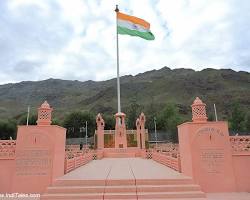
DRAS, LADAKH — India is observing the 27th Kargil Vijay Diwas on Sunday, July 26, 2026, honoring the supreme sacrifice of 527 bravehearts who reclaimed the strategic heights of Ladakh during Operation Vijay in 1999. Commemorative solemnities led by senior military leadership, veterans, and 'Veer Naris' at the Kargil War Memorial in Dras, alongside national tributes, reflect a saga of 27 years of valour, victory and transformed Indian Military capabilities. Ministry of Defence officials emphasized that the legacy of the high-altitude conflict continues to drive India’s defense modernization, jointmanship across the three services, and rapid indigenization under self-reliance initiatives.
Retrospective on Operation Vijay: Reclaiming Strategic Heights
In the summer of 1999, Pakistani military forces and state-backed infiltrators covertly occupied high-altitude positions along the Line of Control (LoC) in the Kargil sector of Jammu & Kashmir (now in Ladakh). These positions, towering over 16,000 to 18,000 feet, directly threatened National Highway 1A, the vital supply vein connecting Srinagar to Leh.
In response, the Indian Armed Forces launched Operation Vijay, supported by the Indian Air Force’s Operation Safed Sagar. Fighting in sub-zero temperatures against steep vertical cliffs, Indian troops executed daring assaults on fortified positions at Tiger Hill, Tololing, Point 4875, and Batalik.
The conflict officially concluded on July 26, 1999, when the Indian Army declared all occupied heights fully restored. For extraordinary gallantry, the nation awarded four Param Vir Chakras—India's highest military honor—to Captain Vikram Batra (posthumous), Lieutenant Manoj Kumar Pandey (posthumous), Grenadier Yogendra Singh Yadav, and Rifleman Sanjay Kumar, along with 9 Maha Vir Chakras and 55 Vir Chakras.
27 Years of Transformation: From Battlefield Lessons to 'Atmanirbharta'
Over the past 27 years, the operational insights gained from the high-altitude war have catalyzed fundamental structural reforms in national security management and military posture.
Key transformation pillars established since the 1999 war include:
Higher Defence Management: The creation of the post of Chief of Defence Staff (CDS) and the Department of Military Affairs (DMA) to promote jointmanship among the Army, Navy, and Air Force.
High-Altitude Warfare & Logistics: Enhanced cold-weather gear, advanced surveillance drones, real-time satellite imagery, and specialized nutritional science tailored for extreme combat environments.
Indigenous Manufacturing: Expanding private defense production, raising Foreign Direct Investment (FDI) limits, and achieving record defense exports.
National Impact: Security, Infrastructure, and Border Readiness
The evolution following the Kargil war has significantly altered India’s strategic posture along northern and western borders, ensuring long-term stability and tactical readiness.
For Citizens and Border Communities: Rapid infrastructure development—including all-weather tunnels, strategic bridges, and border roads—has integrated remote Ladakhi villages into national economic networks while enhancing local mobility.
For Armed Forces Personnel: Upgraded personal protective gear, modernized weaponry, indigenous night-vision tech, and automated surveillance networks have reduced operational risks in harsh terrain.
For Domestic Industry: The shift toward indigenous procurement has created a vibrant defense-industrial ecosystem involving hundreds of micro, small, and medium enterprises (MSMEs).
Official Sources Section
The information in this report is based on formal government releases and official military communications:
Press Information Bureau (PIB Delhi): Release ID 2288840 issued on July 24, 2026.
Ministry of Defence (MoD): Kargil Vijay Diwas 2026 Commemorative Guidelines and Defence Budget allocations.
Northern Command, Indian Army: Official event proceedings at the Kargil War Memorial, Dras, Ladakh.
Quote Section
"The victory in Kargil stands as an enduring symbol of courage, sacrifice, and unbreakable national resolve. Over the last 27 years, the lessons of Kargil have reshaped our defence posture, driving a modernized, integrated, and self-reliant military capable of safeguarding every inch of the nation’s territory."
— Ministry of Defence, Official Press Statement
Why It Matters
Observing Kargil Vijay Diwas reinforces national unity while highlighting the tangible progress in India's defense architecture. The journey over 27 years demonstrates how battlefield lessons translated into higher defense integration, technological advancement, and economic self-reliance, ensuring that the nation remains prepared to tackle modern multi-domain security challenges.
Key Facts at a Glance
Event: 27th Anniversary of Kargil Vijay Diwas (2026).
Commemoration Venue: Kargil War Memorial, Dras, Ladakh.
Historical Operation: Operation Vijay (May–July 1999).
Casualties & Valour: 527 Indian bravehearts martyred; 4 Param Vir Chakras awarded.
Defense Growth: Capital defense expenditure expanded from ₹12,858 crore in 1999 to ₹2.19 lakh crore in FY 2026–27.
Frequently Asked Questions (FAQ)
What is Kargil Vijay Diwas and why is it celebrated on July 26?
Kargil Vijay Diwas is celebrated annually on July 26 to commemorate India’s victory over Pakistani infiltrators during the 1999 Kargil War and to honor the supreme sacrifice of the Indian Armed Forces under Operation Vijay.
How many years of victory does Kargil Vijay Diwas mark in 2026?
July 26, 2026 marks the 27th anniversary of Kargil Vijay Diwas, celebrating 27 years of valour, victory and transformed Indian Military capabilities.
Where is the main official ceremony for Kargil Vijay Diwas held?
The primary national ceremony takes place at the Kargil War Memorial located in Dras, Ladakh, situated at the foothills of Tololing Peak.
Source: Ministry of Defence (MoD), Press Information Bureau (PIB Delhi), Indian Army Northern Command.