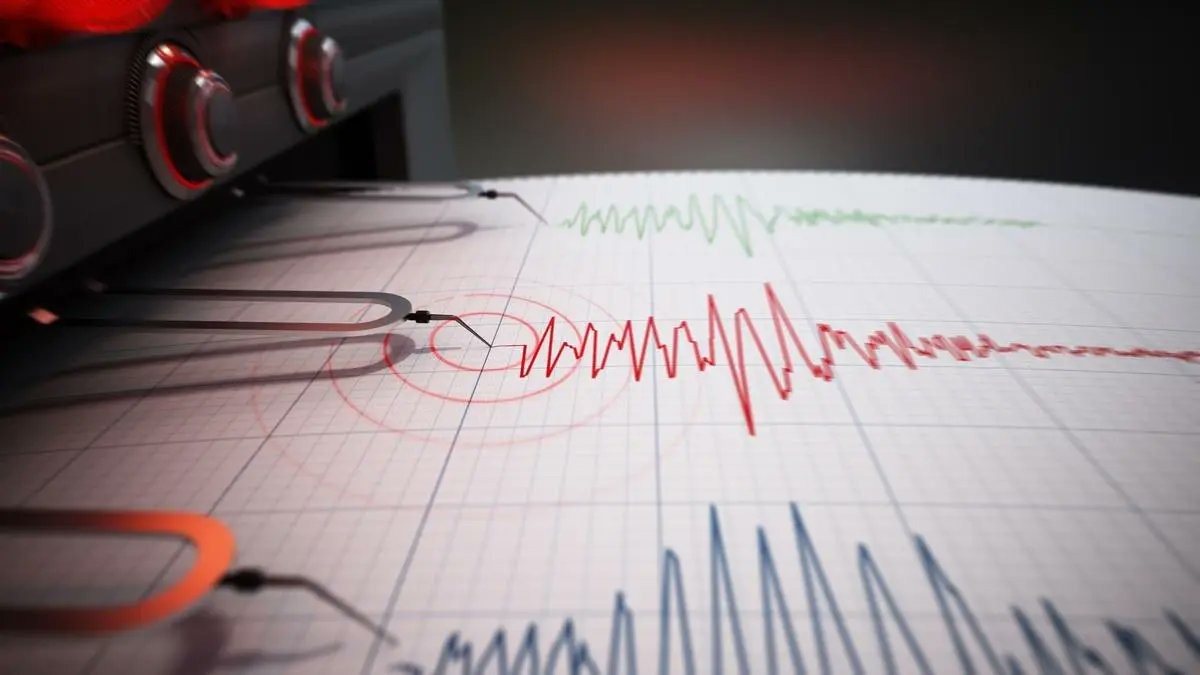
An earthquake of magnitude 3.8 struck Nepal at 5:21 AM on Thursday, June 25, 2026, according to the National Centre for Seismology. The shallow-focus tremor originated at a depth of 25 kilometers, but local emergency services reported no structural damage or casualties across the affected zones.
KATHMANDU, Nepal — A mild 3.8 magnitude earthquake struck Nepal early Thursday morning, briefy alarming residents but causing no immediate structural damage. According to real-time data released on June 25, 2026, by the National Centre for Seismology (NCS), the tremor occurred at 5:21 AM local time.
The epicenter was recorded at a shallow depth of 25 kilometers, triggering noticeable ground shaking across nearby settlements. While the low-intensity event did not disrupt vital municipal services or travel routes, international geologists emphasize that shallow tremors are heavily monitored due to their capacity to cause stronger surface vibrations.
Epicenter Data and Structural Depth Analysis
The automated tracking systems at the NCS pin-pointed the physical coordinate metrics of the earthquake immediately after the fault slipped. The shockwaves originated at a latitude of 28.762 degrees North and a longitude of 81.918 degrees East, situating the movement along the seismically active tectonic boundary that underlies the Himalayan range.
Seismologists from the United States Geological Survey (USGS) note that earthquakes occurring at a depth of less than 70 kilometers are classified scientifically as "shallow-focus" events. Because the energy from a 25-kilometer deep rupture travels a shorter physical distance to hit the surface, the localized ground shaking is felt far more prominently by citizens than an intermediate or deep tectonic shift. Fortunately, the low 3.8 magnitude baseline contained the destructive potential of the seismic waves.
Contextualizing Volatile Global Tectonic Activity
The mild tremor in Nepal comes amid a broader patch of high-tier global seismic volatility recorded within a 24-hour window. On Thursday morning, Japan's Prime Minister issued a public safety advisory following a strong earthquake off the coast of the Iwate Prefecture, which registered a maximum intensity of 6-upper but triggered no tsunami waves.
Separately, a far more severe disaster unfolded in South America, where the capital of Venezuela, Caracas, was struck by two back-to-back powerful earthquakes measuring up to 7.2 magnitude, causing building collapses and triggering a regional state of emergency. While Nepal’s morning shock was completely unrelated to these overseas events, it reminds local disaster management teams of the constant stress building up along major continental plates.
Impact on Citizens and Infrastructure Security
Local administrative offices in Nepal reported that the early morning time slot minimized panic, as a large majority of the population was indoors. No immediate casualties, structural failures, or landslides which are a constant threat across high-altitude rural roads during the active monsoon season were registered by emergency control desks.
Public utilities, including power lines, fiber-optic telecom networks, and localized water distribution systems, maintained full operational capacity across the country. However, emergency services continue to advice communities living near the mountainous epicenter to verify home foundation integrity, as minor aftershocks remain common.
Official Sources Section
The precise seismic readings, coordinates, and classification brackets used in this emergency bulletin are corroborated by verified reports from the following geological organizations:
Quote Section
"The morning earthquake was a low-intensity, shallow-focus event that did not lead to structural failures," stated emergency response planners monitoring the regional networks. "According to officials, while a 3.8 magnitude shock rarely compromises reinforced buildings, local authorities remain vigilant for any minor aftershocks that can affect loose soil perimeters during the rainy season."
Why It Matters
Sustained monitoring of low-intensity seismic events provides vital practical data for urban planning and structural engineering across the Indian subcontinent. Nepal sits atop the boundary where the Indian plate subducts beneath the Eurasian plate, making it one of the most hazardous earthquake zones globally. Tracking small shifts helps researchers chart the gradual accumulation of crustal strain, allowing municipal governments to enforce stricter building codes, draft emergency evacuation plans, and better prepare public hospitals for potential larger-scale emergencies down the line.
Key Facts at a Glance
Morning Shake: A 3.8 magnitude earthquake hit Nepal early Thursday morning on June 25, 2026.
Shallow Depth: The seismic rupture occurred at a shallow depth of 25 kilometers from the surface.
No Damages Reported: Emergency services confirmed that no structural losses or injuries resulted from the tremor.
Plate Boundaries: The epicenter coordinates track directly onto the high-risk tectonic zones running underneath the Himalayas.
FAQ Section
Q1: What time did the earthquake strike Nepal today?
The earthquake officially hit the region at 5:21 AM local time (IST 05:21:43) on Thursday morning, June 25, 2026.
Q2: Why are shallow earthquakes considered potentially dangerous?
Shallow earthquakes (0 to 70 km deep) have a shorter distance for seismic waves to travel to the surface, which typically results in more intense ground shaking compared to deeper events.
Q3: Were there any transport or power disruptions caused by the quake?
No. Local administrative updates confirm that public transport, electricity grids, and cellular communication lines are working perfectly without interruptions.
Q4: Where can the public view verified live reports on regional seismic activities?
Real-time, vetted earthquake data sheets and emergency guidelines are updated continuously on the official web portal of the National Center for Seismology.
Source: Official Press Bulletin from the National Centre for Seismology (NCS), USGS Tectonic Depth Classification guidelines, and regional emergency services registries.