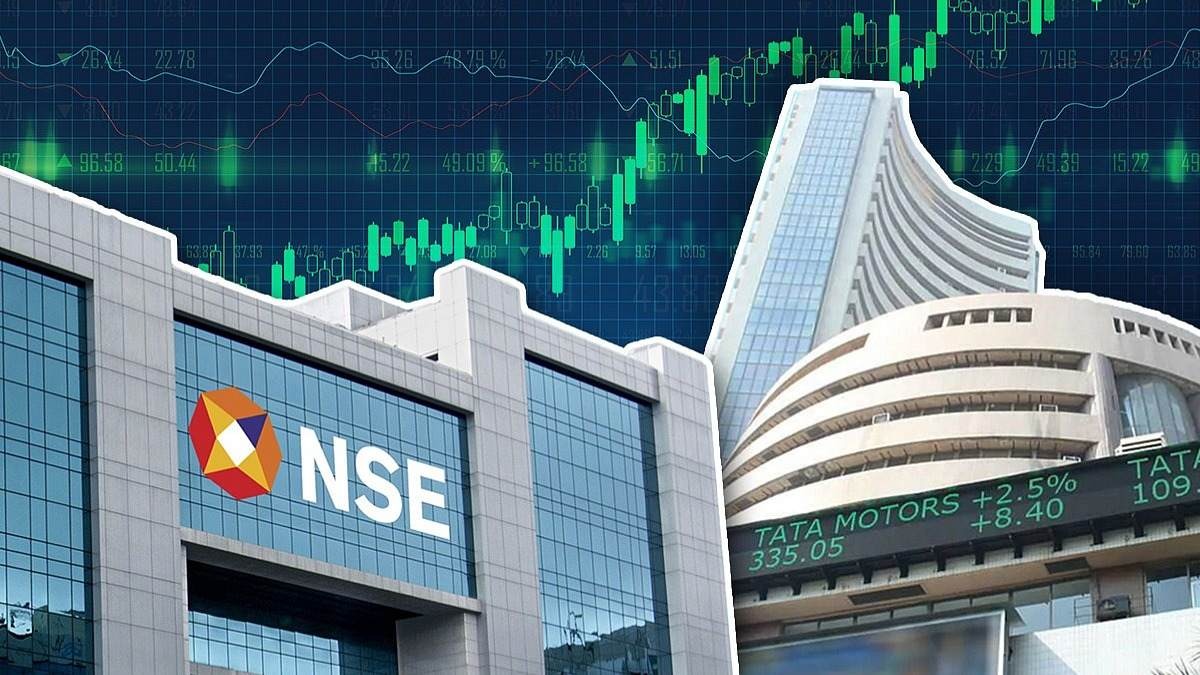
On August 20, 2026, the Indian stock market broke a seven-session losing streak as the Nifty 50 gained 0.7% and the Sensex index jumped 0.8%. The rebound was fueled by positive global cues, easing US Treasury yields, and renewed buying from foreign institutional investors.
MUMBAI — On August 20, 2026, the Indian stock market witnessed a robust recovery as the NSE Nifty 50 index gained 0.7% and the BSE Sensex closed up by 0.8%. Following weeks of sustained selling pressure and a prolonged seven-session slump, domestic equities staged a powerful comeback at the National Stock Exchange (NSE) and the Bombay Stock Exchange (BSE). This upward trajectory was largely driven by softening US Treasury yields, stabilized crude oil prices, and a sudden injection of capital from foreign institutional investors (FIIs). For retail participants, institutional asset managers, and corporate stakeholders, this development is immensely important today as it dispels the immediate threat of a deeper market correction and restores confidence in India's macroeconomic resilience.
Catalysts Behind the Market Rebound
The resurgence of the primary market indices marks a pivotal shift in the trading momentum that has dominated Dalal Street over the previous fortnight. During early trade, the 30-share benchmark jumped by over 550 points to trade comfortably above the 77,400 mark, while the broader NSE benchmark advanced past the critical 24,200 threshold.
According to exchange desk data, the rally was synchronized with a broader Asian market recovery and positive futures trading in the United States. A key macroeconomic trigger was the US Treasury Department's recent decision to initiate a higher buyback of longer-dated government bonds. This strategic move effectively cooled down US bond yields, making emerging markets like India significantly more attractive to global capital. Additionally, stability in the currency markets played a supportive role, with the Indian Rupee strengthening by 17 paise against the US dollar in early trading hours, easing import bill concerns and bolstering domestic market sentiment.
Foreign Institutional Investors Shift Strategy
A defining factor of this latest rally in the Indian stock market has been the sudden reversal of foreign fund outflows. For the better part of 2026, overseas investors maintained an aggressively bearish stance, offloading a record $24.7 billion worth of Indian equities amid high US interest rates and geopolitical uncertainties.
However, provisional exchange data leading up to August 20 indicated a marked shift in this trend. Foreign investors turned net buyers, injecting roughly Rs 4.1 billion into domestic shares. This capital infusion served as a critical buffer, offsetting localized retail panic and institutional short-selling. By returning to the buy side, FIIs are signaling a renewed appetite for Indian equities, viewing the recent market dip as a lucrative entry point for long-term investments.
Sectoral Impact and Investor Relief
The 0.7% gain in the 50-stock index and the 0.8% rise in the BSE benchmark have wide-ranging implications for investors and everyday consumers. Across the board, market breadth remained overwhelmingly positive. Heavyweight sectors such as Information Technology (IT), Financial Services, and Consumer Durables witnessed aggressive buying, lifting the overall market indices.
For mutual fund investors and retail shareholders, the rally provides substantial relief. A prolonged correction often triggers margin calls and diminishes the net asset value (NAV) of retirement and retail portfolios. The stabilization of the indices above technical support levels acts as a psychological cushion, encouraging domestic businesses to proceed with planned capital expenditures and initial public offerings (IPOs) that might otherwise have been delayed by market volatility. Furthermore, a stronger equity market often translates to enhanced corporate borrowing capacity, ultimately stimulating broader economic growth and consumer spending.
Official Sources Section
The trading figures, foreign institutional investment flows, and benchmark index performances mentioned in this report are based on official market data releases and provisional filings published by the National Stock Exchange of India (NSE) and the Bombay Stock Exchange (BSE). Macroeconomic indicators regarding currency movements and US Treasury actions reflect official financial bulletins from global regulatory monitors.
Quote Section
"According to exchange officials, the sudden influx of institutional capital and positive global indices provided the necessary structural support for domestic equities to snap their recent losing streak and secure robust intraday gains."
Why It Matters
For the average citizen and retail investor, the performance of the BSE Sensex and Nifty 50 is directly tied to the health of mutual funds, pension schemes, and broad economic sentiment. When primary benchmarks gain 0.7% and 0.8% respectively after a steep decline, it reassures the public that the financial system remains fundamentally robust. This market stability ensures that corporate entities retain access to essential capital for expansion, which in turn safeguards employment and stabilizes consumer prices across the broader economy.
Key Facts at a Glance
Benchmark Growth: The NSE Nifty 50 gained 0.7%, while the BSE Sensex advanced by 0.8% on August 20, 2026.
Key Levels Achieved: The Sensex reclaimed the 77,400 mark, and the Nifty 50 successfully traded above 24,200.
Trend Reversal: The rally ended a consecutive seven-session losing streak, the longest seen in 11 months.
Foreign Capital: Foreign Institutional Investors (FIIs) returned as net buyers, acquiring Rs 4.1 billion in Indian equities.
Global Catalyst: The surge was supported by the US Treasury’s increased buyback of longer-dated bonds, which eased global yields.
Frequently Asked Questions
Why did the Nifty 50 and BSE Sensex rally today?
The Indian stock market indices rallied due to positive global cues, a drop in US Treasury yields, and the return of foreign institutional buyers who capitalized on lower valuations following a recent market dip.
What was the recent trend in the Indian stock market before this gain?
Prior to this rebound, both indices had experienced a seven-day losing streak, pressured by high global interest rates, geopolitical tensions, and record foreign outflows.
Are foreign investors returning to Indian equities?
Yes, after a prolonged period of selling that saw a record $24.7 billion withdrawn earlier in the year, provisional data shows foreign institutional investors have recently turned into net buyers.
How does this market rally impact everyday investors?
A robust recovery in benchmark indices protects the value of mutual funds, retail stock portfolios, and retirement accounts. It also fosters a positive economic environment that encourages corporate growth and job stability.
Source: National Stock Exchange of India (NSE), Bombay Stock Exchange (BSE)