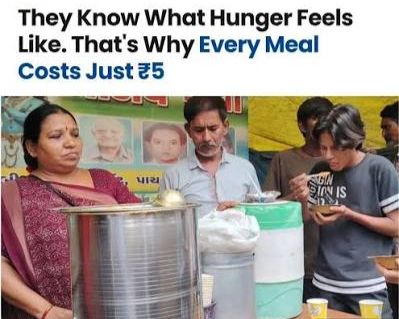
Pankajbhai and Geetaben, a labourer couple in Ahmedabad, provide 200–300 nutritious meals daily to fellow workers for just Rs 5. They charge this nominal fee to preserve the dignity of their peers, using their own hard-earned savings to fuel an initiative born during the COVID-19 pandemic to fight hunger.
In the heart of Ahmedabad’s textile market, a hardworking labourer couple is transforming the lives of hundreds by serving wholesome daily meals for a nominal fee.
In a heart-warming display of community spirit, Pankajbhai Rawal and his wife, Geetaben, have become a beacon of hope for hundreds of daily-wage workers in Ahmedabad, Gujarat. Despite earning a modest combined daily income of approximately Rs 1,000 to Rs 1,500 through physically demanding manual labour, the couple dedicates their time and savings to provide nutritious lunches to fellow labourers for just Rs 5.
The initiative, operating under the name Shantaben Rasoi Manav Seva, serves between 200 and 300 people every day from a spot near the city's textile markets.
Sustaining Dignity Through Service
For many of the workers in the Panchkuva and BBC Market areas, a typical restaurant meal can cost upwards of Rs 50 to Rs 100—a price point that is often out of reach for daily earners. The couple’s service provides a critical, affordable alternative.
When asked why they choose to charge Rs 5 instead of offering the meals for free, the couple emphasizes the importance of self-respect. "We charge this token amount so that people do not feel embarrassed," Pankajbhai explained. "We want them to feel like they are buying their food with dignity, not receiving charity."
Geetaben noted that the initiative was born from the dire circumstances witnessed during the COVID-19 pandemic, when many workers struggled to secure basic sustenance. What began as a free relief effort evolved into a sustainable model to ensure consistent support for their peers.
The Daily Grind: From Labour to Kitchen
The couple’s dedication requires an extraordinary level of discipline. Their day typically begins at 6:00 a.m. Following their shift as manual labourers—where they pack and transport heavy bundles of garments weighing 50–60 kg—they dedicate their midday hours to preparing and serving a rotating menu that includes staples like khichdi, dal rice, vegetable pulao, and puri.
"We’ve been labourers since childhood," Pankajbhai shared. "We earn our living, and with the money we save, we cook food for our community." Their service runs daily from 12:00 noon to 2:00 p.m., even on days when they face logistical challenges like water access.
Why It Matters
This grassroots effort highlights the resilience and empathy found within India's working class. By bridging the gap between unaffordable market prices and the need for high-quality nutrition, the couple’s initiative ensures that hundreds of workers remain energized and cared for, fostering a stronger sense of communal support.
Key Facts at a Glance
The Cause: Providing affordable, nutritious meals to daily-wage labourers in Ahmedabad.
Price Point: A nominal charge of Rs 5 per meal to maintain recipient dignity.
Daily Impact: The couple feeds 200–300 workers in a two-hour window every day.
Menu Variety: Rotating dishes including dal-chawal, vegetable pulao, and puri.
Motivation: Inspired by the hardships witnessed during the COVID-19 pandemic.
Frequently Asked Questions
Why do they charge Rs 5 instead of making it free?
The couple believes that a nominal fee allows the recipients to eat with dignity and prevents them from feeling like they are solely dependent on charity.
Who primarily benefits from this service?
The beneficiaries are mostly daily-wage labourers, taxi drivers, auto-rickshaw drivers, and small traders working in and around the textile market areas.
Do they accept donations?
The couple prefers to fund the initiative through their own savings from their labour work. While they do not actively solicit financial aid, they are open to receiving ingredients like rice or pulses from those who wish to contribute.
Source: ETV Bharat, The Economic Times