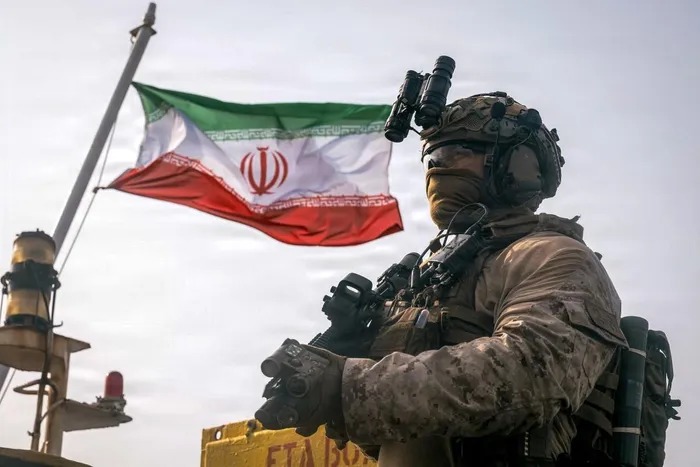
Iranian President Masoud Pezeshkian stated that the Islamic Republic is engaged in a "full-scale war" with the United States as hostilities resumed following a collapsed ceasefire. The declaration coincided with the U.S. military conducting its 10th consecutive night of airstrikes targeting Iranian command sites and maritime infrastructure.
TEHRAN, Iran — Iranian President Masoud Pezeshkian publicly declared that the Islamic Republic of Iran is engaged in a "full-scale war" with the United States. The statement marks an escalation in official rhetoric as a previous June memorandum of understanding and ceasefire framework collapsed.
The announcement followed a 10th consecutive night of retaliatory aerial campaigns launched by U.S. forces against Iranian military infrastructure. The military operations are aimed at neutralizing coastal missile sites, air defense networks, and naval assets enforcing a shipping blockade through the critical Strait of Hormuz.
Escalation of Military Operations and Gulf Retaliation
Addressing citizens in a national televised address, President Pezeshkian urged the country to prepare for the economic and operational impacts of sustained conflict. The escalation follows renewed skirmishes in the Persian Gulf and recent strikes targeting U.S. military personnel and allied assets across the region.
U.S. Central Command confirmed that recent air sorties targeted Iranian command facilities, coastal surveillance networks, drone launch pads, and missile stockpiles in Tabriz and coastal port districts. In response, Iranian forces and regional proxy groups launched drone and missile barrages toward regional infrastructure, including air defense systems in Bahrain and military logistics corridors in Jordan.
Global Energy Disruption and Mediation Efforts
The ongoing conflict centered around the Strait of Hormuz—a maritime chokepoint through which approximately one-fifth of global petroleum supplies pass—has disrupted international shipping lanes. Commercial tanker traffic through the narrow waterway has declined sharply following missile attacks on merchant vessels, causing global crude oil and transit insurance benchmarks to surge.
Despite active military engagements, diplomatic channels facilitated by international mediators remain open. Mediators have reportedly submitted temporary 10-day ceasefire proposals to both Washington and Tehran to halt military escalation and restore commercial navigation through international waters.
Official Sources Section
Military movement updates, casualty reports, and diplomatic statements are provided via official briefings issued by the U.S. Department of Defense, U.S. Central Command, press statements published by the Islamic Republic News Agency (IRNA), and diplomatic briefings archived by the United Nations Security Council.
Quote Section
"The reality is that today the Islamic Republic of Iran is engaged in a full-scale war, and we must be realistic and accept the natural consequences of this resistance," stated Iranian President Masoud Pezeshkian in an official address broadcast by state media.
Why It Matters
For Global Energy Markets: Disruptions in the Strait of Hormuz threaten global crude oil shipments, raising commercial shipping costs and global energy prices.
For Regional Security: Expands military risk across Middle Eastern transit hubs, affecting commercial aviation, maritime shipping routes, and regional infrastructure.
For International Supply Chains: Prolonged maritime blockades force commercial container ships to reroute around alternative African routes, increasing transit times and global freight rates.
Key Facts at a Glance
Formal Statement: Iranian President Pezeshkian declares Iran is in a "full-scale war" with the U.S.
U.S. Action: U.S. military executes 10th straight night of airstrikes targeting missile and naval assets.
Strait of Hormuz Impact: Maritime trade through the primary oil transit bottleneck remains heavily disrupted.
Diplomatic Status: International mediators continue efforts to negotiate a short-term ceasefire framework.
Frequently Asked Questions (FAQ)
What triggered the declaration of a "full-scale war" by Iran?
The declaration follows the collapse of a previous ceasefire framework, renewed U.S. airstrikes against Iranian military targets, and retaliatory strikes on regional military assets.
Is the Strait of Hormuz currently open for commercial shipping?
Commercial transit through the Strait of Hormuz is severely restricted due to active naval blockades, drone attacks, and missile strikes targeting commercial vessels in the area.
Are diplomatic negotiations between the U.S. and Iran still ongoing?
Yes. Despite ongoing airstrikes and military engagements, diplomatic mediators are attempting to establish a temporary ceasefire to reopen shipping routes and resume negotiations.
Source: Statements broadcast by the Islamic Republic News Agency (IRNA), operational briefings published by U.S. Central Command,