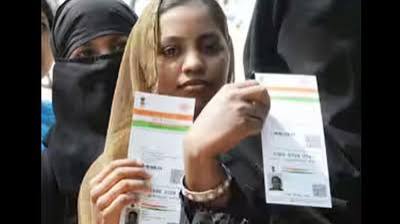
While foundational identity verification is strictly mandated across thousands of public welfare schemes for ordinary citizens, central government bureaucrats have successfully resisted similar linking requirements for the Central Government Health Scheme. This double standard continues to draw criticism regarding transparency and resource allocation across public-funded medical programs.
NEW DELHI — While identity authentication has become a mandatory prerequisite for over 3,100 Direct Benefit Transfer (DBT) schemes and 360 public welfare initiatives targeted at ordinary citizens, the bureaucracy governing these systems has consistently resisted implementing similar verification protocols for its own medical framework. Central government employees, pensioners, and elite beneficiaries enrolled in the Central Government Health Scheme (CGHS) continue to push back against binding identity integration.
Successive executive directives aimed at coupling CGHS beneficiary profiles with Ayushman Bharat Health Account (ABHA) IDs—which utilize foundational biometric validation—have repeatedly faced administrative pushback. Although parallel public health networks like the Ex-Servicemen Contributory Health Scheme and the railway health network have successfully enforced digital verification rules, the civilian bureaucratic apparatus has maintained voluntary compliance parameters for its own medical coverage.
Policy Pushbacks and Implementation Stalls
Efforts by administrative authorities to mandate digital identity integration within government medical frameworks date back to mid-2015. Most recently, an executive directive issued to couple CGHS beneficiary profiles with digital health architectures was placed in abeyance following sharp internal dissent. Consequently, the linkage remains optional for central civil servants, creating a stark policy dichotomy where marginalized citizens must verify identity parameters to secure basic welfare provisions.
Internal resistance has largely centered on administrative classification arguments. While welfare disbursements funded through the Consolidated Fund of India universally require strict authentication to eliminate duplicate or ineligible recipients, administrative stakeholders have argued that contributory systems like CGHS operate under distinct fiscal frameworks. However, policy analysts note that approximately 90 percent of overall scheme expenditures draw directly from public exchequer revenues rather than employee contributions alone.
According to official government disclosures, policy briefs, and administrative filings:
Welfare Verification: Over 3,100 DBT schemes enforce mandatory identity authentication for public beneficiaries.
Previous Directives: Office memoranda attempting mandatory CGHS-ABHA integration were deferred following employee pushback.
Comparative Compliance: Interconnected networks such as the railway health system and military medical schemes have fully integrated mandatory identity checks.
Exchequer Exposure: Roughly 90 percent of cumulative CGHS expenditure originates from the Consolidated Fund of India.
Official Sources Section
Press Information Bureau (PIB) Official Releases: Policy statements regarding targeted delivery systems, transparency metrics, and digital governance frameworks.
Central Government Health Scheme (CGHS) Portal: Administrative circulars, beneficiary guidelines, and digital integration frameworks.
Quote Section
"According to administrative analysts and policy monitoring reports, the discrepancy between enforcing rigorous identity verification for marginalized welfare recipients while maintaining voluntary compliance for elite institutional schemes highlights a persistent governance paradox."
Why It Matters
For fiscal transparency and administrative efficiency, reconciling verification standards across all government-backed programs is vital to preventing resource leakages and eliminating inactive or ineligible beneficiaries. The exemption of civil servants from verification protocols that bind the broader public undermines equity in state-administered welfare delivery.
Key Facts at a Glance
Primary Issue: Differential enforcement of identity verification between general welfare recipients and government employees.
Target Scheme: Central Government Health Scheme (CGHS) serving serving/retired officials and dependents.
Status of Integration: Digital ID linking remains voluntary following administrative resistance.
Precedent: Defense and railway medical programs have successfully adopted mandatory digital integration.
FAQ Section
Why are identity linking requirements treated differently for CGHS beneficiaries?
While foundational identification checks are strictly enforced across public welfare programs to curb leakages, administrative resistance and policy pushbacks have kept linking voluntary for central government employees under CGHS.
Are other government health programs exempt from identity verification rules?
No. Alternative central health systems, including the Ex-Servicemen Contributory Health Scheme and railway medical frameworks, have already instituted mandatory identity coupling.
What proportion of CGHS funding is supported by public revenues?
Independent analyses indicate that approximately 90 percent of total expenditure supporting the scheme stems from the Consolidated Fund of India.
Where can stakeholders monitor official health scheme guidelines?
Administrative updates, policy memos, and procedural guidelines are accessible via the Central Government Health Scheme Portal.
Source: Press Information Bureau, Central Government Health Scheme Portal, The Times of India Policy Desk, Ministry of Health and Family Welfare Disclosures