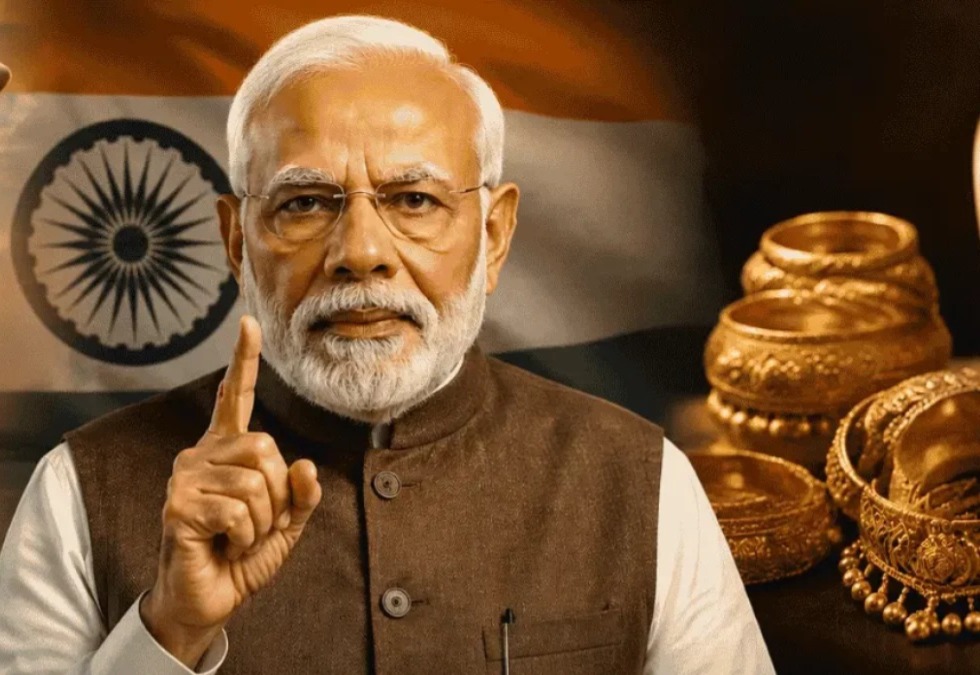
India's economy expanded by a stronger-than-expected 7.8% in the first quarter of FY27. Concurrently, Prime Minister Narendra Modi urged citizens to curb gold purchases and foreign travel, a move economists view as a strategic effort to minimize foreign exchange leakage and stimulate domestic economic demand.
NEW DELHI — India’s real gross domestic product (GDP) expanded by 7.8 percent in the first quarter of fiscal year 2026–27 (April–June), outpacing the Reserve Bank of India’s (RBI) projection of 7 percent. Amid this economic momentum, Prime Minister Narendra Modi cautioned citizens against non-essential foreign leisure travel, overseas destination weddings, and unnecessary gold purchases. Speaking on the importance of self-reliance, the Prime Minister emphasized that prioritizing domestic goods and tourism is vital for transforming India into a developed nation by 2047.
Macroeconomic Impact of Foreign Leakages
The appeal targets major components of the country's current account deficit—specifically foreign exchange outflows driven by outbound tourism, overseas destination events, and bullion imports. According to trade data, India imported roughly 721 tonnes of gold valued near $72 billion in the previous fiscal year, while outbound travel and airfare expenditures crossed the $47–50 billion threshold.
Economists note that while purchasing physical gold or booking overseas trips contributes to individual consumption or measured asset accumulation, it results in capital leakage abroad rather than directly generating domestic industrial capacity or local employment. Shifting those expenditures toward domestic hospitality, transport, retail, and financial assets helps retain capital within the local ecosystem, reinforcing the "Vocal for Local" and "Swadeshi" frameworks.
Official Sources Section
Quote Section
"According to economic analysts and policy experts, redirecting high-value discretionary spending from foreign tourism and imported bullion toward domestic alternatives effectively plugs foreign exchange leakage while strengthening domestic demand, employment generation, and local retail ecosystems."
Why It Matters
For everyday consumers and investors, balancing wealth preservation through gold with domestic financial instruments directly influences national foreign exchange reserves and currency stability. For domestic businesses, retaining consumer spending inside the country stimulates local services, manufacturing, and job creation across urban and regional markets.
Key Facts at a Glance
Q1 FY27 GDP Growth: Registered at 7.8 percent, surpassing the RBI's 7 percent forecast.
Core Appeal: Reduction of non-essential foreign leisure trips, overseas weddings, and bullion imports.
Foreign Exchange Leakage: Outbound travel and gold imports account for tens of billions of dollars in annual capital outflow.
Strategic Objective: Fostering domestic manufacturing, local tourism, and financial savings to achieve Viksit Bharat by 2047.
FAQ Section
Why did Prime Minister Modi advise against buying gold and traveling abroad?
The appeal aims to curb foreign exchange leakage, reduce high-value import dependencies, and redirect consumer spending into domestic goods, local tourism, and financial savings.
How much did India's GDP grow in the first quarter of FY26-27?
India's real GDP grew by 7.8 percent year-on-year for the April–June quarter, exceeding the central bank's projections.
Does spending on gold and foreign travel impact national GDP?
While physical gold purchases factor into national accounts as valuables, they do not necessarily expand domestic productive capacity or create localized jobs in the same manner as domestic service and manufacturing outlays.
Where can official macroeconomic data and GDP reports be accessed?
Complete statistical releases and periodic output tracking are published directly through the MoSPI Portal.
Source: Ministry of Statistics and Programme Implementation, Prime Minister's Office India, Reserve Bank of India, Mint Economy Desk