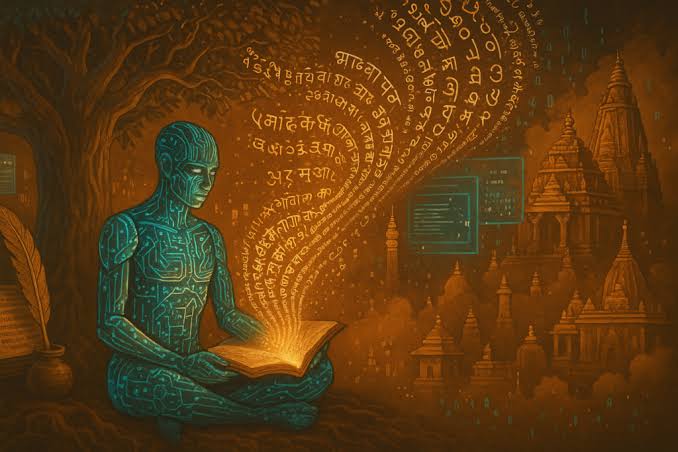
Artificial intelligence is transforming literature by bridging linguistic gaps and automating complex research tasks. Startups like NAAV AI are using human-refined translation to make regional Indian literature globally accessible, while researchers leverage AI to synthesize vast academic datasets, marking a significant evolution in how human knowledge is preserved and shared.
BENGALURU — As of July 2026, the integration of artificial intelligence into literature is moving beyond mere text generation to address one of the most persistent barriers in the publishing world: accessibility through translation. Bengaluru-based startup NAAV AI is currently utilizing an AI-assisted, human-refined process to translate India’s rich body of writing, aiming to bring regional literary treasures to global and domestic audiences that were previously unreachable due to linguistic silos.
The initiative, led by historian Vikram Sampath and technologist Sandeep Singh Chauhan, is part of a broader shift in how technology is applied to the humanities. The project’s flagship product, "Translit," generates a first draft of book translations, which are then meticulously refined by human experts. This hybrid model is currently being applied to translate long-form content into 11 Indian languages—including Hindi, Kannada, Tamil, and Malayalam—as well as five foreign languages.
Redefining the Translation Landscape
For decades, the translation of Indian literature has remained a largely manual, expensive, and time-consuming process. According to Sampath, only 5% to 6% of India consumes content in English, leaving the "soul of the country" embedded in various Bharatiya bhashas (Indian languages) largely inaccessible to those outside their native regions.
The significance of this development was highlighted by the translation of Sampath’s own award-winning biography, My Name is Gauhar Jaan, into Kannada. The book, which details the life of the first Indian artiste to commercially record her voice, serves as a symbolic bridge between historical artistic innovation and modern technological advancement.
Beyond Translation: The Broader AI Integration
The application of AI in literature extends beyond the translation of classic or contemporary texts. In 2026, the academic and research communities have increasingly adopted AI tools for literature reviews and discovery. Platforms such as Elicit, Consensus, and NotebookLM are now standard for researchers, enabling the rapid synthesis of vast archives of academic papers, the identification of knowledge gaps, and the mapping of conceptual relationships across disciplines.
However, this rapid adoption has not been without controversy. Recent studies from the Oxford Internet Institute and Hasso Plattner Institute have raised concerns regarding "algorithmic bias," finding that AI writing and summarization tools can inadvertently alter the original intent of a user's prose, particularly on sensitive sociopolitical topics.
Official Sources
Information regarding the NAAV AI initiative was detailed in recent reports citing co-founders Vikram Sampath and Sandeep Singh Chauhan. Broader context on the state of AI in research and literature is supported by findings from the Reuters Institute for the Study of Journalism, the American Psychological Association’s 2026 assessments on AI and cognitive skills, and ongoing studies on machine learning bias in academic and publishing workflows.
Quote Section
"As a historian, I look at patterns," says Vikram Sampath. "When Gauhar Jaan embraced recording technology, many musicians said it would destroy music or anger the gods. Today, writers and publishers have similar doubts about AI. History is repeating itself."
Why It Matters
The deployment of AI in literature provides significant practical implications:
Cultural Preservation: It allows for the rapid preservation and wider dissemination of regional literature that might otherwise be lost to translation barriers.
Academic Efficiency: For researchers, AI tools are reducing the time spent on literature reviews by 70% to 80%, shifting the focus from manual collation to original analysis.
Accessibility: By breaking down language barriers, more readers gain access to diverse perspectives, enriching the global literary discourse.
Key Facts at a Glance
Language Reach: Current AI-assisted translation platforms now support up to 11 Indian and five foreign languages.
Efficiency Gains: Researchers using AI for literature reviews report saving significantly on time, allowing for deeper focus on critical analysis.
Hybrid Workflow: The industry is increasingly adopting a "human-in-the-loop" approach to balance AI speed with the nuance required for literary and academic accuracy.
Bias Risks: Research in 2026 highlights the potential for AI tools to introduce biases into text, necessitating careful human oversight.
FAQ
How does AI assist in literary translation?
AI tools like Translit generate high-quality first drafts of long-form content, which are then reviewed and refined by human translators to ensure cultural and linguistic nuance.
Are there risks to using AI for literature?
Yes, experts note risks such as "skill erosion" if users become over-reliant on AI, as well as the potential for AI to introduce unintended biases into the text.
What is the impact on historical research?
AI allows historians to map intellectual patterns, trace the evolution of ideas across decades, and uncover connections between disparate fields that were previously difficult to visualize.
Source: The New Indian Express, Reuters Institute for the Study of Journalism, American Psychological Association