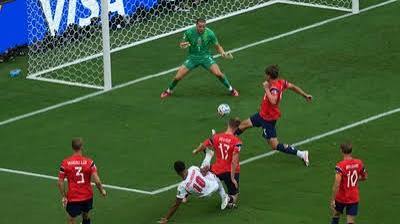
FIFA has dismissed claims that a controversial England goal against Norway hit an overhead camera cable, citing definitive sensor data. Jude Bellingham’s equalizer stood, helping England secure a 2-1 extra-time victory and a place in the 2026 World Cup semi-finals, following a match marked by high intensity and VAR interventions.
MIAMI GARDENS, FL — FIFA has officially addressed the controversy surrounding England’s first goal during their 2-1 World Cup quarter-final victory against Norway on July 11, 2026. Following widespread speculation that the ball struck an overhead camera cable in the build-up to Jude Bellingham’s equalizer, FIFA released a statement confirming that sensor technology found no evidence of any contact.
The incident occurred just before halftime at Miami Stadium, when a goal kick from Norway goalkeeper Ørjan Nyland appeared to clip one of the "Spidercam" cables suspended above the pitch. Norway players immediately protested, believing that under the Laws of the Game, play should have been stopped for a dropped ball. However, the game continued, and moments later, Bellingham slotted home a precise strike to level the score at 1-1.
FIFA’s Clarification via Sensor Technology
In a statement issued via its media channel on X (formerly Twitter), FIFA moved to quell the uproar, citing the "Connected Ball Technology" used throughout the 2026 tournament.
"Before England's goal in minute 45+2 against Norway, the sensor in the Connected Ball showed no peak in the 'heartbeat of the ball' when in the air, and therefore no evidence that the ball touched the overhead wire and changed the movement of the ball," the organization stated.
The technology, which tracks the ball's movement and physical impacts in real-time, is designed to provide definitive data for offsides and contested contact scenarios. By dismissing the claim, FIFA has effectively validated the legitimacy of Bellingham's equalizer, which served as the catalyst for England’s comeback.
Match Context and Aftermath
The quarter-final was a high-stakes encounter that ultimately saw England secure a spot in the semi-finals. Andreas Schjelderup had initially given Norway a lead in the 36th minute, capping off a dominant start for the Scandinavian side. Following Bellingham’s contested equalizer, the match remained deadlocked through the second half, with both sides seeing goals disallowed by VAR—including a Norway effort by Torbjørn Heggem for a foul by Erling Haaland.
Bellingham eventually netted the decisive goal in the 93rd minute of extra time, pouncing on a rebound after a fierce strike from teammate Morgan Rogers. The result ensures England’s progression to the semi-final stage, where they are scheduled to face either Argentina or Switzerland on July 15 at Atlanta Stadium.
Why It Matters
For tournament officials, the incident served as a high-pressure test of the 2026 World Cup's reliance on integrated technology. The ability to provide an immediate, data-backed explanation mitigated what could have been a lasting controversy regarding the integrity of the match. For fans, the clarification highlights the increasing role of sensor-based analytics in defining the outcome of modern international football.
Key Facts at a Glance
Official Ruling: FIFA confirmed via ball sensors that no contact occurred with the camera cable.
Goal Scorers: Andreas Schjelderup (Norway); Jude Bellingham (England, brace).
Result: England defeated Norway 2-1 after extra time.
Next Match: England advances to the semi-finals on July 15, 2026, in Atlanta.
FAQ
Why did players think the ball hit the cable?
During the build-up to the 45+2' goal, Norway players believed the ball’s trajectory was altered after clipping an overhead Skycam cable, which would require an immediate stoppage of play under current rules.
What is "Connected Ball Technology"?
It is a sensor-based system embedded inside the FIFA World Cup match balls that records movement and impact data, allowing officials to verify instances of contact or offside positioning.
What happens if the ball actually hits a cable?
According to the Laws of the Game, if the ball touches an outside object—such as an overhead cable—the referee must stop play and restart with a dropped ball.
Source: FIFA Media, Associated Press, Hindustan Times