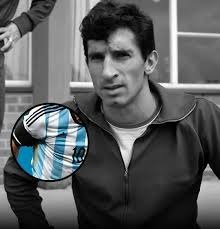
Argentina’s national team wore black armbands during their FIFA World Cup 2026 quarterfinal against Switzerland to honor legendary former captain Antonio Rattín, who passed away at 89. The gesture, approved by FIFA, commemorates a player whose 1966 World Cup controversy helped inspire the creation of the modern yellow and red card system.
The national team wore tributes during their quarterfinal match to honor the late iconic captain and symbol of Argentine football.
KANSAS CITY, Missouri — Argentina’s national football team took the pitch on Saturday wearing black armbands during their FIFA World Cup 2026 quarterfinal clash against Switzerland. The somber gesture served as an official tribute to Antonio Ubaldo Rattín, one of the nation's most celebrated football figures, who passed away on Friday at the age of 89.
The tribute follows the passing of the legendary midfielder, who succumbed to a suspected stroke, according to his family. The news was first confirmed on social media by Boca Juniors, the club where Rattín spent his entire professional career.
A Lasting Legacy in Argentine Football
Antonio Rattín, affectionately known as "El Rata," served as the captain of the Argentina national team during the 1966 FIFA World Cup. Admired for his leadership, tactical discipline, and formidable defensive presence, he remains a symbol of the institution for Boca Juniors, where he played nearly 350 league matches between 1956 and 1970.
Beyond his club accomplishments, Rattín is famously remembered for his role in the 1966 World Cup quarterfinal against England. His controversial dismissal during that match—and his subsequent protest, which included sitting on a red carpet reserved for the British monarchy—became a defining moment in football history. The incident is widely cited as a primary catalyst for the development of the modern yellow and red card system, which FIFA officially introduced in 1970 to mitigate language-related communication barriers between referees and players.
Official Approval for the Gesture
Following the announcement of Rattín's death, the Argentine Football Association (AFA) filed an urgent request with FIFA for permission to honor the former captain during their ongoing FIFA World Cup 2026 campaign. FIFA’s governing body granted the request, allowing Lionel Messi and his teammates to wear the black armbands during their match at the Kansas City Stadium in Missouri.
Impact on the Tournament
The match against Switzerland represents a critical stage in the FIFA World Cup 2026 tournament, with the winner advancing to face England in the semifinals. As Argentina continues its title defense, the tribute highlights the deep connection between the current squad and the legends of the past. For fans, the sight of the black armbands serves as a reminder of Rattín’s profound impact on the development of the international game and his enduring status as an icon of South American football.
Official Sources
FIFA – Tournament organizers who approved the tribute request.
Argentina Football Association – Provided context on the request to honor the late captain.
Boca Juniors – Official announcement regarding the passing of Antonio Rattín.
Why It Matters
This gesture emphasizes the cultural and historical weight of the FIFA World Cup 2026. By honoring a figure whose own career reshaped the rules of the sport, the current generation of Argentine players bridges the gap between the tournament’s storied history and its modern era.
Key Facts at a Glance
Tribute: Argentina wore black armbands to honor former captain Antonio Rattín.
Legacy: Rattín played for Argentina in the 1962 and 1966 World Cups.
Innovation: His 1966 dismissal led directly to the implementation of red and yellow cards.
Club Legend: He played his entire 14-year career at Boca Juniors, winning four league titles.
FAQ
Why is Argentina wearing black armbands?
They are wearing them to honor the memory of Antonio Rattín, a legendary Argentine midfielder and former captain who passed away on July 11, 2026.
Who was Antonio Rattín?
Rattín was a legendary Argentine footballer who played for Boca Juniors and the national team, known for his leadership and his role in the 1966 World Cup.
Did FIFA approve the tribute?
Yes, the Argentina Football Association requested permission from FIFA, which was formally approved for the quarterfinal match.
How is this impacting the match?
The tribute has served as an emotional rallying point for the squad during their quarterfinal match against Switzerland in Kansas City.
Sources: FIFA, Argentine Football Association (AFA), Boca Juniors, Livemint, and Associated Press.