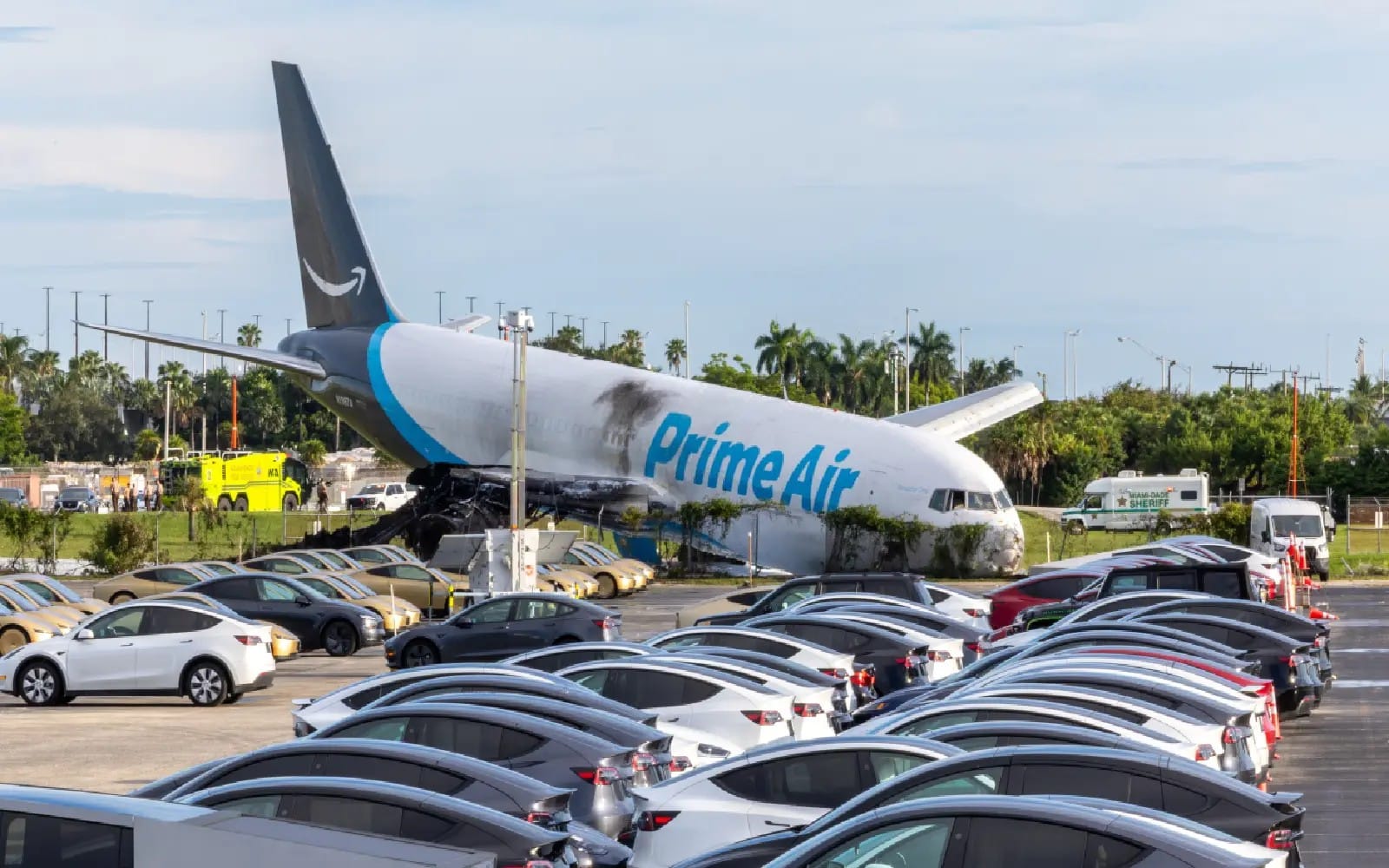
Federal investigators in Miami have successfully recovered the flight data and cockpit voice recorders from an Amazon-contracted cargo plane that overran a runway, resulting in five ground fatalities. The NTSB is examining aircraft mechanics, weather conditions, and airport safety infrastructure to determine the cause.
Investigation and Scene Assessment
Following the fatal runway overrun on Sunday afternoon, the National Transportation Safety Board (NTSB) confirmed the recovery of both "black boxes" from the wreckage of the Boeing 767-300. The aircraft, operated by Miami-based 21 Air LLC on behalf of Amazon Air, overshot the paved surface by approximately 1,300 feet.
NTSB Chairwoman Jennifer Homendy described the accident site as a scene of "utter devastation". After exiting the runway, the jet struck navigational equipment and a perimeter fence before colliding with two ground vehicles, including an airline cleaning contractor van and a passenger SUV. Five individuals were killed on the ground, and five others sustained injuries, three critically. The two flight crew members on board survived.
Official Sources and Regulatory Findings
Federal teams consisting of 32 aviation specialists have deployed to the site to examine aircraft performance, maintenance history, weather factors, and air traffic control logs.
According to officials, the recovered flight recorders are being transported to NTSB headquarters in Washington for secure data extraction and detailed analysis.
Authorities noted that the 32-year-old aircraft was completing its third flight of the day, arriving from San Juan, Puerto Rico, following an earlier route from Cincinnati. Investigators are also evaluating whether the runway geometry and the absence of an Engineered Materials Arresting System (EMAS) contributed to the severity of the overrun.
Practical Implications for Aviation and Logistics
The accident has triggered immediate logistical and operational repercussions across domestic freight networks and regional passenger transit:
For Airport Operations: Temporary closures of multiple airport runways have caused widespread flight delays and schedule adjustments during the busy holiday travel window.
For Air Freight Operators: Increased scrutiny is expected regarding safety protocols, aircraft age parameters, and ground-perimeter safety barriers at major commercial hubs.
For Logistics Providers: Supply chain networks relying on regional cargo transshipments face minor routing adjustments while federal authorities secure and clear the accident perimeter.
Key Facts at a Glance
Incident Date: Sunday afternoon, September 6, 2026.
Aircraft Details: Boeing 767-300 operated by 21 Air LLC for Amazon Air.
Casualties: Five fatalities recorded on the ground; five others injured.
Recorders Recovered: Both the flight data recorder (FDR) and cockpit voice recorder (CVR) secured by NTSB.
Frequently Asked Questions
What caused the Amazon cargo plane to crash in Miami?
The exact cause remains under active investigation by the NTSB, which is currently analyzing the recovered flight data and cockpit voice recorders.
Were there any fatalities aboard the aircraft?
No. Both crew members on board survived the crash, while all five fatalities occurred in vehicles struck outside the runway perimeter.
What is the role of the recovered black boxes?
The flight data recorder and cockpit voice recorder provide vital technical metrics, pilot communications, and systems performance parameters leading up to the impact.
How long will the NTSB investigation take?
While initial on-scene evidence documentation is expected to last over a week, a final determination regarding the probable cause typically takes several months.
Source: National Transportation Safety Board (NTSB), Federal Aviation Administration (FAA), Miami-Dade Fire Rescue Official Releases, 21 Air LLC Company Statements