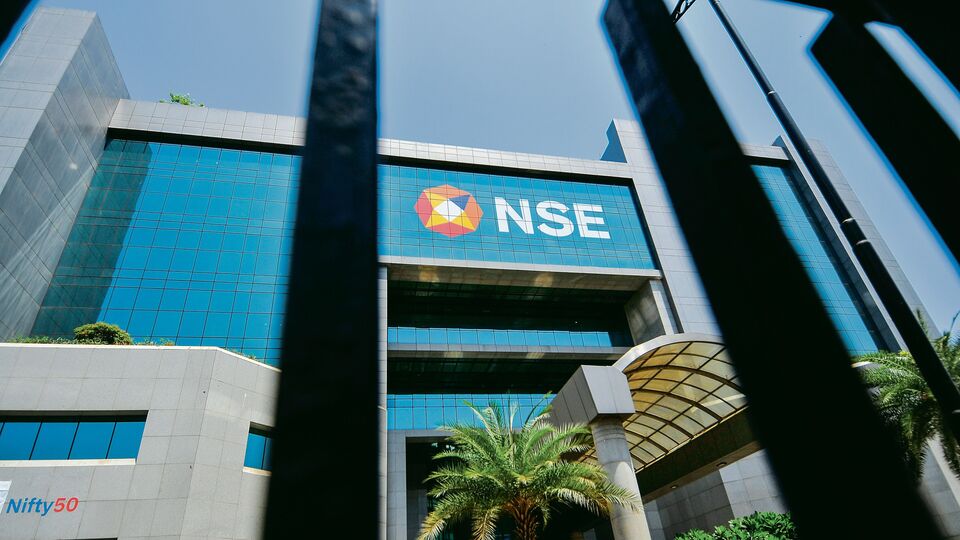
India's Nifty 50 settled 0.61% lower and the BSE Sensex fell 0.73% on Tuesday, widening morning pre-auction losses. The Indian rupee slipped 0.35% to close at 94.8175 per U.S. dollar, weighed down by oil-importer demand, near-$100 global crude benchmarks, and persistent foreign institutional portfolio outflows.
MUMBAI — India’s benchmark stock indices settled lower on Tuesday, September 8, 2026, with the NSE Nifty 50 dropping 0.61% and the S&P BSE Sensex falling 0.73%, while the Indian rupee weakened 0.35% to end at 94.8175 against the U.S. dollar.
The closing losses extended pre-market auction deficits of 0.58% on the Nifty and 0.71% on the Sensex, reflecting sustained risk aversion across domestic trading desks. The simultaneous retreat in equity valuations and currency strength comes as international crude oil benchmarks hover near $97 to $100 per barrel, heightening concerns over imported inflation, expanding trade deficits, and prolonged foreign institutional investor (FII) capital outflows.
Benchmarks Extend Pre-Auction Declines at the Close
Selling momentum persisted throughout Tuesday's session across the National Stock Exchange of India (NSE) and BSE Limited. The Nifty 50 closed 0.61% lower, compounding its opening auction dip of 0.58%. Similarly, the 30-share BSE Sensex settled down 0.73%, widening from its initial 0.71% pre-market discount.
Market breadth tilted negative, with heavy selling observed across interest-rate-sensitive financial services, automobile manufacturers, consumer cyclicals, and real estate developers. Blue-chip private lenders, including HDFC Bank and ICICI Bank, led the downward drift, while state-run defense and select metal names provided isolated resilience against the broader market retreat.
Trading volume in index futures and options confirmed active hedging among institutional participants, as domestic benchmarks struggled to find intermediate support amidst global emerging-market volatility.
Rupee Weakens Past 94.81 on Corporate Dollar Bids
In the interbank foreign exchange market, the Indian rupee retreated 0.35% to settle at 94.8175 per U.S. dollar, down from its previous close of 94.4850.
Currency traders attributed the decline to persistent dollar bidding by state-run oil marketing companies and commercial importers needing to cover near-term payment commitments against expensive energy shipments. Elevated U.S. Treasury yields and expectations of tighter global monetary policy prompted foreign portfolio funds to pull capital from emerging-market equities, adding sustained structural pressure on the domestic exchange rate.
While state-run banks intervened intermittently on behalf of the Reserve Bank of India (RBI) via spot and forward dollar sales, the intervention aimed to contain disorderly volatility rather than anchor the exchange rate to an absolute ceiling.
Macroeconomic Headwinds and Capital Outflows
The coordinated decline across Indian stocks and the currency reflects converging domestic and global macro factors:
Elevated Energy Import Costs: With India importing approximately 85% to 90% of its crude requirements, Brent crude prices sustaining levels near $97–$100 per barrel elevate the national import bill and widen the trade deficit.
Foreign Portfolio Disinvestment: Foreign institutional investors maintained steady net outflows from the domestic cash segment, seeking safety in dollar-denominated assets and high-yielding U.S. sovereign debt.
Monetary Policy Constraints: Persistent currency softness and input price spikes complicate the Reserve Bank of India's inflation management, diminishing expectations for domestic benchmark interest rate cuts in the near term.
Market and Sectoral Implications
The market sell-off generates widespread effects across the Indian economy:
Equity Investors: Retail and mutual fund portfolios face mark-to-market declines, prompting defensive sector rotations into domestic pharmaceuticals and sovereign debt paper.
Importers and Downstream Manufacturers: Auto ancillary, chemical, and paint companies confront compressed operating margins as a weaker rupee magnifies the landed cost of petroleum feedstocks.
Exporters: Information technology and pharmaceutical exporters gain marginal margin support from foreign currency realizations, though broader global demand uncertainty offsets currency tailwinds.
Consumers and Travelers: A softer rupee increases retail price pressures on imported consumer electronics and raises foreign educational and travel expenses for domestic households.
Official Sources
According to market closing bulletins published by the National Stock Exchange of India (NSE) and the BSE Limited, benchmark indices settled in the red, with the Nifty 50 down 0.61% and the Sensex down 0.73%.
Foreign exchange reference rates and clearing statistics verified by the Reserve Bank of India (RBI), the Foreign Exchange Dealers' Association of India (FEDAI), and the Clearing Corporation of India Limited (CCIL) confirmed the USD/INR closing benchmark at 94.8175. National macroeconomic assessments remain overseen by the Ministry of Finance.
Market Commentary
According to officials and treasury dealers familiar with the day's transactions, macro pressures continue to guide portfolio flows:
"The closing weakness across both the equity benchmarks and the rupee highlights the direct impact of high global crude oil prices on domestic asset valuations. With oil hovering near key psychological levels and foreign capital rotating toward higher U.S. yields, Indian markets are adjusting for imported inflation and near-term corporate margin pressures."
Market analysts noted that trading over upcoming sessions will depend heavily on crude supply dynamics, international central bank announcements, and institutional support from domestic mutual funds.
Why It Matters
The joint decline of the equity indices and the domestic currency carries significant practical implications:
Inflation Pass-Through: A softer rupee paired with high crude oil prices increases transportation costs, threatening to push retail and wholesale inflation higher.
Corporate Balance Sheets: Elevates debt-servicing costs for Indian corporations carrying unhedged foreign-currency loans.
Valuation Adjustments: Forces a re-rating of high-multiple consumer and discretionary stocks as input expenditures rise.
Key Facts at a Glance
Nifty 50 (.NSEI): Settled 0.61% lower, extending pre-auction drops of 0.58%.
BSE Sensex (.BSESN): Settled 0.73% lower, extending pre-auction drops of 0.71%.
Indian Rupee (INR=IN): Ended down 0.35% at 94.8175 per U.S. dollar (previous close: 94.4850).
Primary Catalysts: Crude oil prices near $97–$100/bbl, institutional outflows, and elevated U.S. bond yields.
Key Laggards: Financials, IT, automotive, and consumer discretionary shares.
Frequently Asked Questions
Why did both the Nifty 50 and Sensex fall today?
The benchmark indices fell by 0.61% and 0.73%, respectively, driven by foreign institutional selling, elevated crude oil prices increasing domestic cost pressures, and broad weakness across major banking and consumer shares.
What caused the Indian rupee to weaken to 94.8175 per dollar?
The rupee weakened 0.35% due to high commercial dollar demand from domestic oil marketing companies and importers settling energy shipments, alongside foreign portfolio outflows into higher-yielding U.S. assets.
How do rising crude oil prices impact the Indian market?
India imports roughly 85% to 90% of its oil needs. High crude prices expand the national trade deficit, weaken the rupee, increase domestic inflation, and compress corporate profit margins across transport, chemicals, and manufacturing sectors.
Did the Reserve Bank of India intervene in the market?
The RBI maintained an active presence through state-run commercial banks to smooth out sharp intraday exchange rate fluctuations, drawing on substantial national foreign exchange reserves.
Source: Real-time closing feeds and market operations notices from the National Stock Exchange of India (NSE) and BSE Limited, currency benchmarks from the Reserve Bank of India (RBI), interbank trade reconciliations from the Foreign Exchange Dealers' Association of India (FEDAI), and fiscal disclosures by the Ministry of Finance.