Union Cooperation Minister Amit Shah has ordered NAFED and NCCF to eliminate middlemen and buy pulses and oilseeds directly from farmers within two years. Supported by the new NAFEX.in digital auction portal, the policy enforces direct bank transfers within 48 hours to boost domestic production and cut India's heavy reliance on food imports.
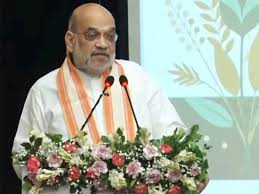
NEW DELHI — In a major structural overhaul of India’s domestic agricultural marketing framework, Union Cooperation Minister Amit Shah directed central cooperative bodies to completely eliminate intermediaries and purchase pulses and oilseeds directly from growers. Speaking at the launch of four major digital initiatives for the National Agricultural Cooperative Marketing Federation of India (NAFED) today, June 23, 2026, Shah issued a binding directive to both NAFED and the National Cooperative Consumers' Federation of India Limited (NCCF) to establish an agency-free procurement ecosystem within the next two years.
The policy directive comes at a critical time as the central government intensifies efforts to curb retail food inflation, secure domestic food buffer stocks, and end India’s long-standing reliance on high-volume foreign agricultural imports.
Direct Transfer Overhaul Targets Strategic Crop Import Deadlines
Addressing an executive assembly at the Atal Akshay Urja Bhawan, which included Union Agriculture Minister Shivraj Singh Chouhan, Shah stressed that while India’s aggregate output of pulses and oilseeds has climbed steadily over recent seasonal cycles, true national self-sufficiency has remained elusive. The core roadblock, according to government evaluations, is that statutory Minimum Support Prices (MSP) fail to reach grassroot farmers because local traders and licensed middlemen continually intercept regional wholesale volumes.
"There is a need to get rid of middlemen," Shah stated during the policy unveiling. "The time has come for both NAFED and NCCF to procure pulses and oilseeds directly from farmers to ensure benefits reach them."
The Cooperation Ministry has set an absolute multi-year deadline, guaranteeing that by 2028, not a single grain of mandated pulses or oilseeds will be sourced through market merchants. Under the newly designed framework, registered growers will upload seasonal crop data directly or through localized Primary Agricultural Credit Societies (PACS) and Farmer Producer Organisations (FPOs). Once a crop is received at a designated collection warehouse, central procurement desks must execute direct bank transfers using secure electronic networks within 48 hours.
Digital Integration via NAFEX.in to Guarantee Transactional Transparency
To support this direct-procurement mandate, the Ministry of Cooperation launched four centralized digital tools designed to replace third-party administrative software:
NAFEX.in Platform: An independent, state-owned electronic auction portal designed to handle the transparent sale and liquidation of roughly 20 lakh tonnes of government-procured buffer stocks annually. This platform completely replaces private corporate auction services previously managed by entities like mjunction and NEML.
DRISHTI Portal: A nationwide, real-time enterprise resource planning (ERP) and digital inventory management system providing direct analytical overwatch of regional oilseed and pulse reserves.
NAFED-KALYAN Initiative: A targeted social corporate responsibility fund providing educational scholarship checks directly to the children of registered smallholder farmers.
The financial recovery of NAFED underpins this aggressive technology expansion. Government records reveal that after hitting a severe structural credit crisis in 2013 that required emergency structural bailouts, NAFED’s annual operational turnover expanded from a baseline of ₹500 crore to ₹30,000 crore in the fiscal year ending March 2025, actively supporting over 76 lakh farmers. Shah challenged the board of directors to expand this operational footprint to a ₹50,000 crore target under the consolidated "Sahkar Se Samriddhi" cooperative blueprint.
Economic Implications for Consumers, Farmers, and Import Markets
The aggressive pivot toward direct purchasing significantly alters the economics of India's commodity trade:
For Domestic Farmers
Growers receive guaranteed statutory price floors directly in their bank accounts, insulating them from arbitrary price discounts imposed by local cartels. This income security is expected to encourage farmers to shift fields away from water-heavy crops like rice and toward pulses, which also naturally deposit 30 to 40 kilograms of nitrogen per hectare back into regional soils.
For Consumers and Import Matrices
By taking control of the domestic supply chain, state agencies can systematically lower customer acquisition costs and build steady buffer stocks. India currently imports 6 to 7 million tonnes of pulses and 15 to 16 million tonnes of edible oils annually to meet domestic shortfalls. Scaling direct-to-farm procurement channels directly lowers the country's foreign exchange exposure and insulates local grocery buyers from volatile international price shocks.
Official Sources Section
The operational directives, technical portal frameworks, and historical financial performance metrics are officially documented and maintained via public press distributions hosted by the Press Information Bureau (PIB) and structural policy briefs archived by the Ministry of Cooperation.
Quote Section
"According to officials present at the inter-ministerial symposium, the two-year transition period is fully backed by budget allocations for automated grain infrastructure. Management stated that removing commission agents will allow public funds to be directly converted into 50 percent profit margins over production costs for local cultivators."
Why It Matters
The direct-procurement initiative demonstrates a structural shift away from historical wholesale market yards toward a state-monitored digital supply chain. Eliminating middlemen allows the government to pass financial incentives directly to producers, driving agricultural diversification, preserving critical groundwater levels, and building national self-reliance in vital food categories.
Key Facts at a Glance
Intermediary Ban: NAFED and NCCF must completely bypass commercial middlemen and brokers within a strict two-year development timeline.
Sovereign Platform: The newly launched NAFEX.in portal shifts annual open-market auctions of 20 lakh tonnes of pulses away from private corporate platforms.
Turnover Target: Following its recovery from a 2013 credit crisis, NAFED’s annual turnover target has been raised from ₹30,000 crore to ₹50,000 crore.
Import Realities: The procurement overhaul aims to eliminate India's reliance on annual imports of up to 7 million tonnes of pulses and 16 million tonnes of edible oils.
FAQ Section
Q1: What did Minister Amit Shah direct NAFED and NCCF to do regarding crop purchases? A: Minister Amit Shah directed both cooperatives to buy all pulses and oilseeds directly from farmers, completely removing middlemen and merchant brokers from the procurement chain within two years.
Q2: What is NAFEX.in and how does it assist the agricultural sector? A: NAFEX.in is a newly launched, state-owned digital auction portal designed to bring transparency and efficiency to the sale of government-held buffer stocks, replacing third-party private platforms.
Q3: How fast will farmers receive payments under the new direct system? A: According to official policy guidelines, once crops are logged at designated collection centers, electronic payments must be deposited directly into the farmer's mapped bank account within 48 hours.
Q4: Which states are immediately affected by these centralized portal rollouts? A: The direct-buying infrastructure handles core pulse-growing regions across multiple states, including Maharashtra, Madhya Pradesh, Andhra Pradesh, Telangana, Gujarat, Karnataka, Rajasthan, and Jharkhand.
Source: Official operational circulars and national launch documentation published by the Press Information Bureau (PIB) and the National Agricultural Cooperative Marketing Federation of India (NAFED).