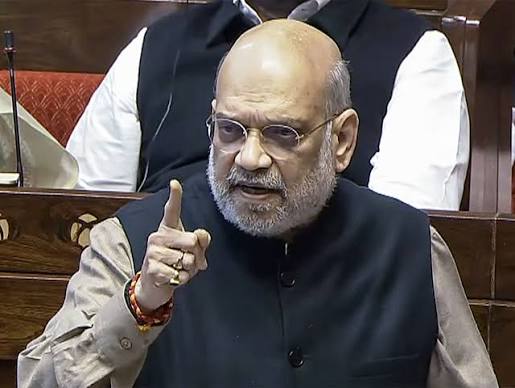
Union Home Minister Amit Shah is introducing the Prevention of Insults to National Honour (Amendment) Bill, 2026, to grant the National Song, Vande Mataram, statutory protection against insults or obstruction. The bill, set for introduction in the Rajya Sabha, has drawn both support and criticism regarding its constitutional implications and potential for legal compulsion.
NEW DELHI — Union Home Minister Amit Shah is set to introduce the Prevention of Insults to National Honour (Amendment) Bill, 2026, in the Rajya Sabha on July 20, 2026, marking the opening day of the Monsoon Session of Parliament. The proposed legislation seeks to criminalize the intentional obstruction of or insult to the National Song, Vande Mataram, by granting it legal protections equivalent to those currently afforded to the National Anthem, Jana Gana Mana.
The move comes as India celebrates the 150th anniversary of the historic song, which played a pivotal role in the Indian freedom struggle. If passed, the amendment to the Prevention of Insults to National Honour Act, 1971, will render any intentional act of preventing the singing of Vande Mataram or causing disturbance to an assembly engaged in its rendition a punishable offence, with a maximum penalty of three years' imprisonment, a fine, or both.
Expanding Legal Safeguards for National Symbols
Under the current framework of the 1971 Act, desecration or disrespect toward national symbols—including the National Flag, the Constitution, and the National Anthem—is already a criminal offence. The new Bill seeks to substitute Section 3 of the existing Act to formally include the National Song within its ambit.
The government's statement of objectives emphasizes that while Vande Mataram is honoured as the National Song, there is currently no specific legal provision to penalize those who intentionally prevent its singing or disrupt its performance. This amendment is intended to ensure that Vande Mataram receives the same statutory dignity as other high symbols of the republic.
Parliamentary Debate and Opposition Concerns
The introduction of the Bill has sparked immediate political debate within the Rajya Sabha. CPI(M) MP John Brittas has formally objected to the move, calling for the Bill's withdrawal in a letter addressed to the Union Home Minister. Brittas argued that the proposed legislation departs from a "carefully evolved constitutional settlement" that has historically governed the status of the National Anthem and the National Song.
Brittas contended that criminalizing conduct related to the National Song could "inadvertently convert a cherished national symbol into an instrument of legal compulsion," potentially unsettling the constitutional balance founded upon pluralism and liberty of conscience. Conversely, proponents of the Bill, including BJP Rajya Sabha MP Sanjay Seth, have welcomed the move, asserting that it provides necessary recognition to a song interwoven with India's struggle for independence.
Why It Matters
The potential passage of this legislation represents a significant shift in legislative policy regarding national symbols. By establishing penal consequences for obstruction or insult, the government aims to codify the respect due to Vande Mataram. However, the debate highlights broader tensions regarding the scope of state-mandated patriotism versus individual constitutional rights, such as freedom of speech and expression under Article 19(1)(a).
Key Facts at a Glance
Legislation: Prevention of Insults to National Honour (Amendment) Bill, 2026.
Proposed Penalties: Up to three years in prison, a fine, or both for intentional obstruction or insult.
Legal Status: Seeks to provide Vande Mataram the same statutory protection as the National Anthem.
Timeline: Introduced on the first day of the Monsoon Session, July 20, 2026.
FAQ
What does the Bill propose to change?
The Bill amends the Prevention of Insults to National Honour Act, 1971, to include the National Song, Vande Mataram, under the same legal framework and penal protections as the National Anthem.
What constitutes an offence under the proposed law?
According to the Bill, intentional obstruction of the singing of the National Song or causing disturbance to any assembly engaged in its singing would be considered a punishable offence.
How has the Opposition reacted?
Some opposition members, such as CPI(M) MP John Brittas, have argued that the Bill is unconstitutional and risks unsettling the delicate balance of pluralism and voluntary patriotism in India.
Source: Press Information Bureau (PIB), The Hindu, Indian Express, ANI News