Union Home Minister Amit Shah urged industry leaders on September 13, 2026, to capture the projected 50-fold lab-grown diamond volume boom. Backed by tax exemptions, common facility centers, and the Navi Mumbai Jewellery Park, India aims to transition from cut-and-polish contractor status to full vertical dominance across reactor machinery, branding, and global retail.
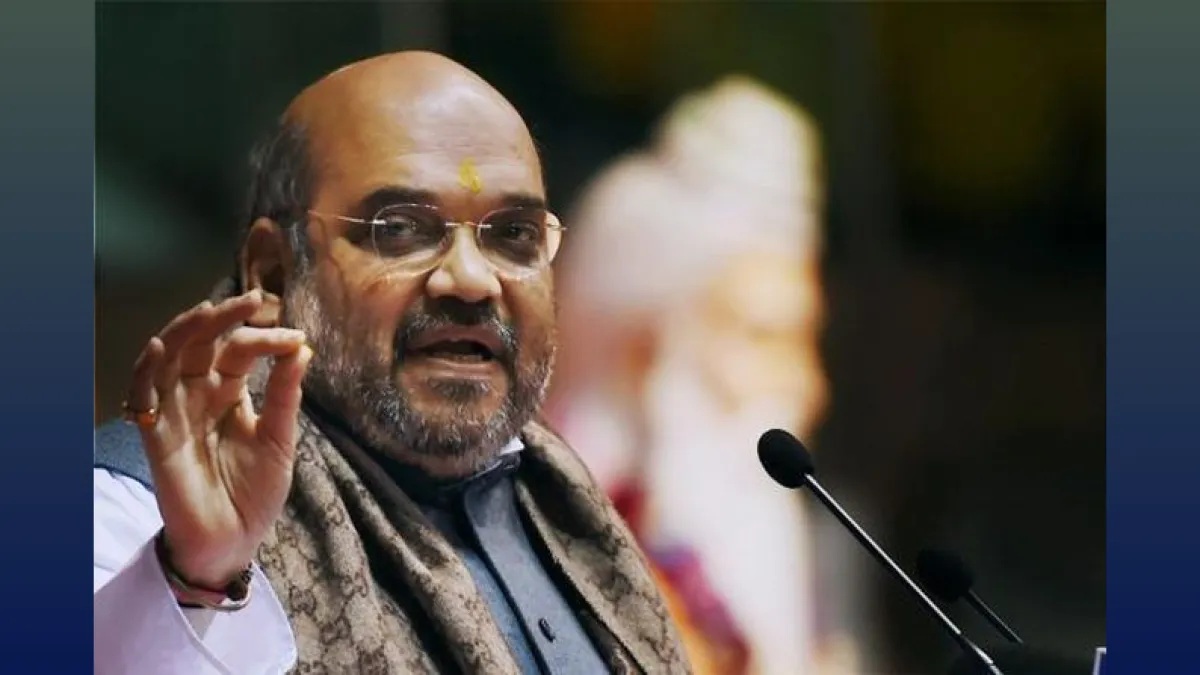
MUMBAI — Union Home Minister Amit Shah urged domestic industry stakeholders on Sunday, September 13, 2026, to command the entire lab-grown diamond (LGD) value chain from high-tech equipment manufacturing to international retail. Speaking as chief guest at the 52nd India Gem & Jewellery Awards in Mumbai, Shah projected a near 50-fold volume expansion for the global LGD market [cite: 1.1.1], asserting that India possesses the industrial infrastructure, financial capital, and entrepreneurial base to bypass historical colonial-era lag and dictate global terms [cite: 1.1.9].
Value-Chain Independence and Volume Horizon
Addressing industry leaders at the Bharat Diamond Bourse, Shah framed the LGD transition not as a pricing disruption, but as a volume-scale mandate [cite: 1.1.9]. Global LGD volume demand is projected to scale up to 50 times legacy natural diamond volumes [cite: 1.1.9].
To capture this upside, Shah outlined a five-tier domestic control framework:
Machinery Production: Indigenous synthesis reactors, chemical vapor deposition (CVD) equipment, and laser cutting/sorting hardware.
Core Synthesis: Large-scale commercial reactor scaling in hubs like Surat and Mumbai.
Crafting & Design: High-precision cutting, polishing, and high-value precious metal setting.
Brand Equity: Intellectual property creation replacing white-label manufacturing with Indian luxury houses.
Global Retail: Direct-to-consumer flagship storefronts across North American, European, and West Asian commercial districts.
Macroeconomic Footprint and Export Context
Data presented during the award ceremony placed India’s 2025 gems and jewellery merchandise exports at Rs 2.44 lakh crore, representing 6.3% of national merchandise exports and supporting roughly 75 million direct and indirect livelihoods [cite: 1.1.1]. Surat handles approximately 90% of global diamond-cutting operations, while over 90% of the world's cut-and-polished diamond volume undergoes processing in India [cite: 1.1.1].
Leveraging existing bilateral and regional trade pacts with the European Union, UAE, Australia, Oman, and the UK, policymakers aim to convert processing dominance into branded margin capture.
State and Federal Policy Interventions
The Union government and state administrations in Gujarat and Maharashtra are formulating dedicated LGD industrial frameworks [cite: 1.1.1]. Key operational enablers highlighted by leadership include:
Taxation Relief: 15-year income tax exemptions for rough diamond trading entities operating within designated Special Notified Zones under the Taxation and Other Laws (Amendment) Act, 2026 [cite: 1.1.2].
Infrastructure Hubs: The 1.25-lakh-square-foot Bharat Ratnam mega common facility centre featuring 3D printing, casting, and refining suites [cite: 1.1.2].
Regional Parks: The Navi Mumbai India Jewellery Park—backed by stamp duty waivers, competitive industrial electricity pricing, and targeted Floor Space Index (FSI) concessions—projected to attract Rs 50,000 crore in capital expenditure and 100,000 jobs [cite: 1.1.2]. Maharashtra Chief Minister Devendra Fadnavis announced project execution starting from Dussehra [cite: 1.1.7].
Official Sources Section
Policy frameworks, export metrics, and ministerial directives verified via official statements from Union Home Minister Amit Shah at the 52nd India Gem & Jewellery Awards, Gem and Jewellery Export Promotion Council (GJEPC) disclosures, Maharashtra state administrative releases, and the Taxation and Other Laws (Amendment) Act, 2026.
Quote Section
According to Union Home Minister Amit Shah addressing industry stakeholders in Mumbai, "it is my appeal to you that lab-grown diamonds' entire ecosystem should be in the control of people of Bharat. India should emerge as a founder member and founder industry in the business, while Indian brands should become global brands."
Why It Matters
Moving from contract processing to full-spectrum IP and retail ownership shields Indian exporters from cyclical rough-monopoly pricing pressures. For capital allocators and manufacturing firms, scaling indigenous CVD machine fabrication eliminates foreign capital leakage and anchors high-margin luxury valuation multiples within domestic corporate balance sheets.
Key Facts at a Glance
Event Context: 52nd India Gem & Jewellery Awards, Mumbai (September 13, 2026) [cite: 1.1.1].
Market Projection: ~50-fold volume expansion in global LGD demand [cite: 1.1.1].
Baseline Scale: Rs 2.44 lakh crore export turnover in 2025 (~6.3% of national merchandise exports; ~75 lakh jobs) [cite: 1.1.1].
Key Enablers: 15-year tax exemption in SNZs, Bharat Ratnam CFC, Navi Mumbai Jewellery Park (Rs 50,000 crore target) [cite: 1.1.2].
Strategic Mandate: Vertical integration from CVD/HPHT reactor machinery to international storefront retail [cite: 1.1.9].
Frequently Asked Questions
What does Amit Shah mean by controlling the LGD ecosystem "from machines to brands"?
India should manufacture the synthesis machinery (CVD/HPHT reactors), grow and cut the stones, design the jewellery, build sovereign consumer luxury brands, and operate international retail outlets rather than stopping at job-work processing.
What government tax incentives support LGD and rough trading in India?
Entities trading rough diamonds within Special Notified Zones qualify for 15-year income tax exemptions under legislative amendments [cite: 1.1.2].
What infrastructure projects anchor this manufacturing push?
Projects include the Bharat Ratnam common facility centre in Mumbai and the upcoming Navi Mumbai India Jewellery Park offering custom FSI, power tariffs, and administrative streamlining.
Source: Union Home Ministry official event dispatches; Gem and Jewellery Export Promotion Council (GJEPC) archive filings; Maharashtra state government industrial policy briefs.