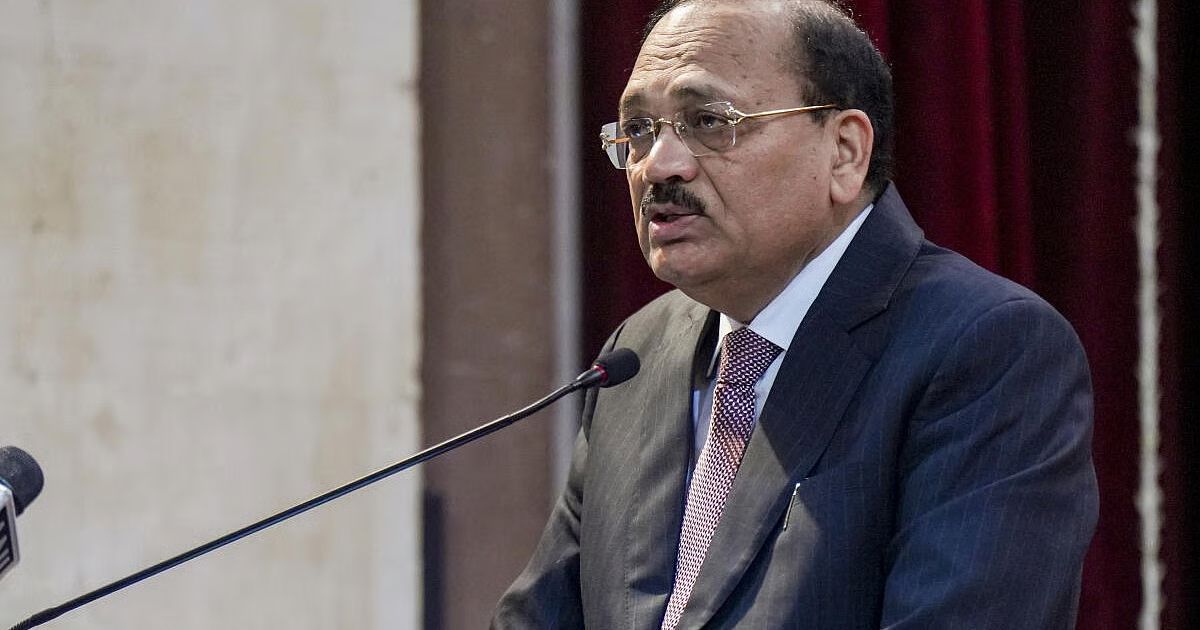
Chief Justice Surya Kant cautioned newly qualified Advocates-on-Record in New Delhi against chasing online fame, stressing that social media visibility is not professional credibility. Speaking at a SCAORA event, he emphasized that lasting legal careers are built on rigorous courtroom preparation, ethical advocacy, and dedicated hard work.
Chief Justice Surya Kant warns newly qualified Advocates-on-Record in New Delhi that social media visibility is not professional credibility.
Addressing a gathering of newly qualified Advocates-on-Record (AORs) in New Delhi on Wednesday, July 22, 2026, Chief Justice of India (CJI) Surya Kant delivered a stern reminder about the realities of legal practice. Speaking at the felicitation ceremony organized by the Supreme Court Advocates-on-Record Association (SCAORA), the CJI cautioned legal practitioners against chasing digital fame, stressing that online popularity does not equate to professional competence or courtroom respect.
The ceremony honored lawyers who cleared the Supreme Court AOR examination, a prestigious qualification authorizing practitioners to file appearances and pleadings in the apex court.
Visibility Versus Credibility in Modern Legal Practice
According to official event speeches and press disclosures, CJI Surya Kant emphasized that enduring legal careers are built on rigorous preparation, meticulous drafting, and courtroom dedication rather than viral online presence. He remarked that lawyers should not operate like television channels worried about TRPs, urging them to resist the distractions of digital validation during their early years of practice.
The CJI noted that while modern tools like artificial intelligence and social media offer quick visibility, they cannot replace human intellect, empathy, or professional integrity. Supreme Court judges K.V. Viswanathan and Vipul Pancholi, alongside Attorney General R. Venkataramani and SCAORA President Devvrat, also addressed the gathering, reinforcing the values of ethical advocacy.
Impact on Legal Professionals, Litigants, and Aspirants
For young lawyers and upcoming legal professionals, the guidance serves as an essential compass in an increasingly digitalized era. Balancing public visibility with foundational legal craftsmanship remains vital for maintaining public trust in the judiciary.
Legal analysts point out that prioritizing rigorous casework over social media clout protects the sanctity of judicial proceedings, ensuring that litigants receive dedicated representation based on legal merit rather than online promotion.
Why It Matters
Upholding traditional standards of professional excellence safeguards the integrity of the judicial system. Reminding legal practitioners that reputation stems from courtroom mastery rather than digital metrics helps preserve public confidence in legal advocacy.
Key Facts at a Glance
Event: SCAORA felicitation ceremony for newly qualified Advocates-on-Record.
Location: New Delhi, India.
Key Speaker: Chief Justice of India Surya Kant.
Core Message: Visibility on social media is not synonymous with professional credibility; long-term success requires diligent casework.
Frequently Asked Questions
What did CJI Surya Kant advise the newly qualified Advocates-on-Record?
The CJI advised lawyers to avoid chasing online popularity via social media, emphasizing that true career success is built on courtroom competence and hard work.
What is an Advocate-on-Record (AOR)?
An AOR is a specially qualified lawyer authorized by the Supreme Court of India to file appearances, petitions, and documents on behalf of clients in the apex court.
Why did the CJI caution against social media and AI in law?
He noted that while modern tools offer quick visibility or drafts, they cannot replace human understanding, rigorous preparation, and ethical courtroom advocacy.
Source: Supreme Court of India, The Economic Times, LawBeat, SCAORA