Gurugram Police restricted two-wheelers and autos from main highway lanes during the Kanwar Yatra to protect pilgrims. Announced in July 2026, the traffic management plan mandates service lane usage on NH-48 and Sohna Road, diverting heavy vehicles to outer expressways to ensure safety.
Gurugram Police enforce strict entry restrictions on key highway routes for two-wheelers and autos during the Kanwar Yatra.
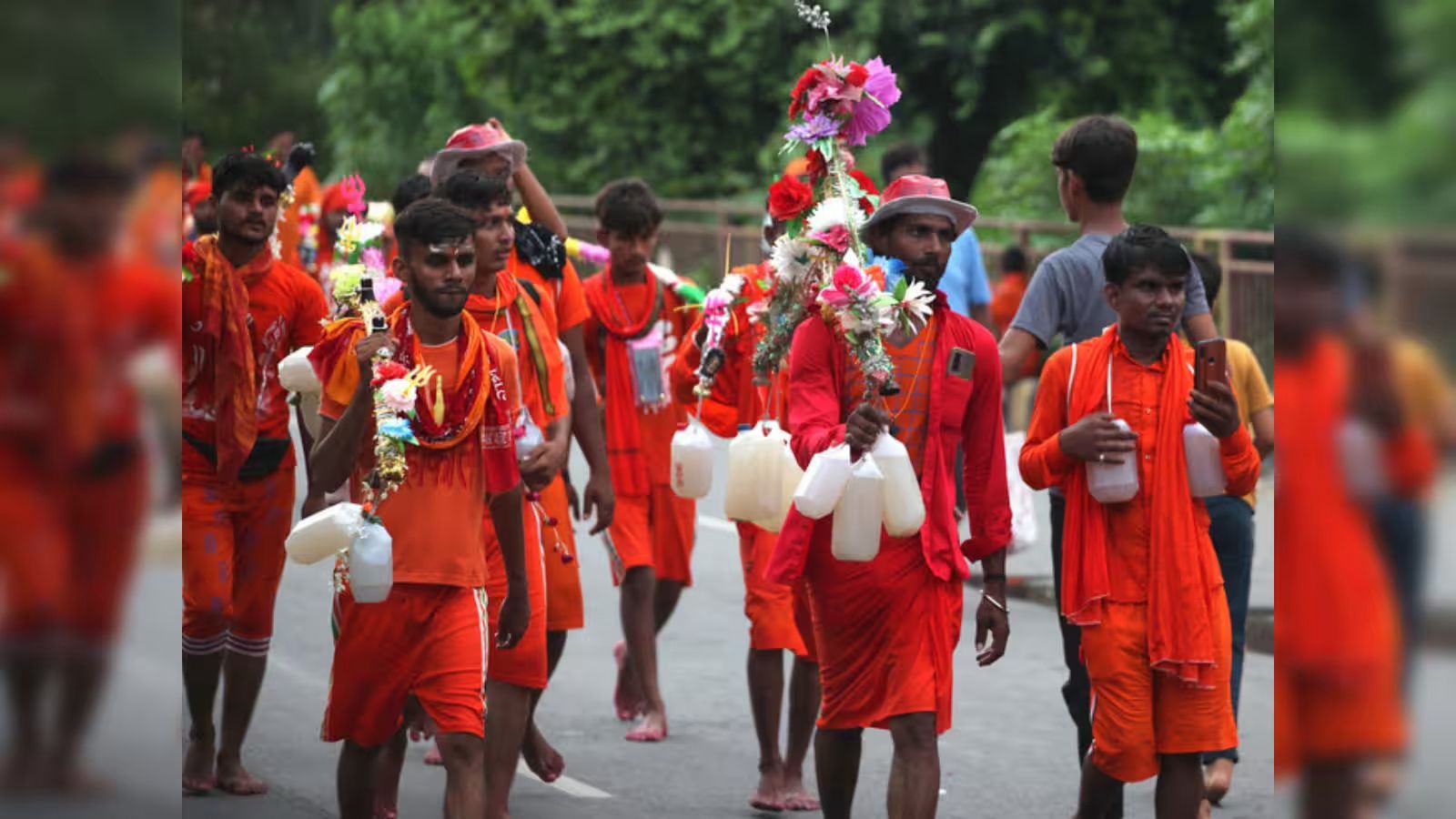
To ensure the safety of thousands of pilgrims participating in the annual Kanwar Yatra, the Gurugram Police have implemented comprehensive traffic restrictions across major routes. According to official traffic advisories issued in Gurugram on Wednesday, July 22, 2026, slow-moving vehicles—including two-wheelers, auto-rickshaws, and e-rickshaws—are strictly prohibited from plying on the main carriageways of key highway stretches, including the Delhi-Jaipur Expressway (NH-48) and Sohna Road.
The administrative measures are designed to prevent accidents and manage heavy pedestrian movement as millions of Kanwariyas traverse the region heading toward neighboring states.
Designated Routes and Traffic Management Framework
According to official security disclosures, the restrictions mandate that two-wheelers and three-wheelers utilize designated service lanes rather than high-speed main lanes. Dedicated pedestrian corridors, marked clearly with ropes, cones, and reflective tapes for night-time visibility, have been established along major transit routes like the Sarhaul Border to Kherki Daula stretch and Rajiv Chowk to Sohna Road.
The traffic department has deployed additional personnel and established drone surveillance systems to monitor crowd density around pilgrim camps and major intersections. Heavy transport vehicles are simultaneously being diverted onto outer bypasses like the Kundli-Manesar-Palwal (KMP) Expressway to minimize congestion.
Impact on Commuters, Daily Travelers, and Motorists
For daily commuters, office-goers, and commercial transport operators navigating the Delhi-NCR expressway network, the temporary traffic regulations require advance route planning and additional travel time.
Road safety experts and traffic officials note that separating slow-moving traffic from high-speed vehicular corridors drastically reduces the risk of fatal collisions during peak pilgrimage days. Motorists found violating lane restrictions or entering restricted highway segments face immediate prosecution and fines under the Motor Vehicles Act.
Why It Matters
Enforcing targeted vehicle restrictions on high-speed corridors protects vulnerable road users and foot pilgrims. Managing traffic flow efficiently during mass religious gatherings maintains public safety and prevents gridlock across interstate transport routes.
Key Facts at a Glance
Restricted Vehicles: Two-wheelers, auto-rickshaws, and e-rickshaws.
Affected Corridors: Delhi-Jaipur Expressway (NH-48) main carriageway and Sohna Road.
Alternative Route: Designated service lanes running parallel to the main highways.
Enforcement Agency: Gurugram Police Traffic Department.
Frequently Asked Questions
Are two-wheelers allowed on the main Gurugram expressway during the Kanwar Yatra?
No, two-wheelers and three-wheelers are barred from the main carriageways of key highways like NH-48 and must use designated service lanes.
Why has the Gurugram Police imposed these traffic restrictions?
The restrictions are implemented annually during the Kanwar Yatra to ensure the safety of thousands of walking pilgrims and maintain smooth traffic flow.
What alternative routes are suggested for heavy commercial vehicles?
Heavy transport vehicles are diverted toward outer bypasses such as the Kundli-Manesar-Palwal (KMP) Expressway.
Source: Gurugram Police, The Indian Express, Hindustan Times, Delhi Traffic Police