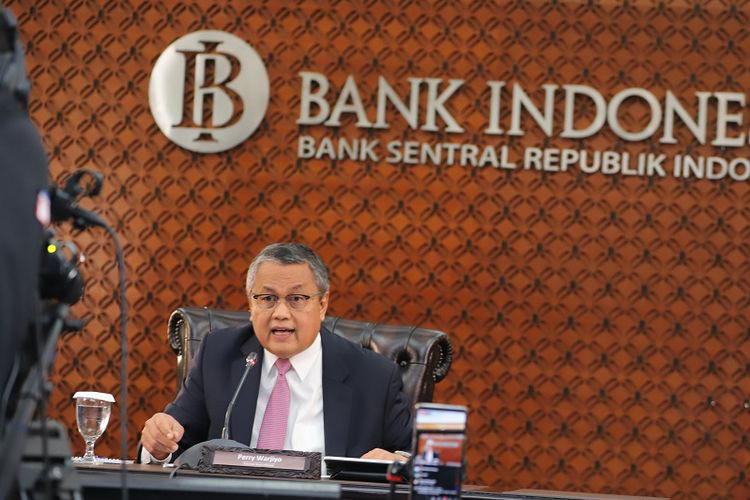
Bank Indonesia Governor Perry Warjiyo continues to lead the central bank despite calls for his resignation during parliamentary hearings. The government and BI have downplayed currency volatility, implementing a seven-point strategy—including tightened dollar purchase limits and bond market support—to stabilize the rupiah through the second half of 2026.
JAKARTA — Bank Indonesia (BI) Governor Perry Warjiyo has remained firmly in his position despite mounting calls for his resignation from political figures amid the ongoing depreciation of the Indonesian rupiah. Reports suggesting that the government has asked the Governor to step down are unsubstantiated, as both the central bank and the administration of President Prabowo Subianto have consistently downplayed the currency’s volatility as a seasonal, manageable phenomenon.
The pressure on the Governor intensified in mid-May 2026, when the rupiah hit a record low against the US dollar, trading past the 17,600 mark. During a heated hearing with the House of Representatives (DPR) Commission XI, lawmaker Primus Yustisio of the National Mandate Party publicly urged Warjiyo to step down, arguing that the currency's decline reflected a broader crisis of confidence in the central bank's leadership.
Stability Strategy Amid Economic Headwinds
Governor Warjiyo has rejected these calls, asserting that the central bank’s monetary policy remains sound. Speaking before Parliament, Warjiyo attributed the rupiah’s weakness to seasonal demand for foreign currency, which typically peaks between April and June. He expressed confidence that the currency would begin to stabilize and strengthen throughout July and August 2026.
To mitigate market pressure, Bank Indonesia has implemented a multi-pronged intervention strategy approved by President Prabowo Subianto. These measures include:
Active Market Intervention: Utilizing foreign exchange reserves to stabilize the rupiah in both onshore and offshore markets.
Bond Market Operations: Purchasing significant volumes of government bonds (SBN) in the secondary market to maintain liquidity and prevent sharp yield spikes.
Rupiah Securities (SRBI): Issuing BI Rupiah Securities to attract foreign capital inflows.
Speculation Controls: Tightening the monthly limits for US dollar purchases that lack supporting underlying assets, reducing the ceiling from 100,000 USD to 25,000 USD per person.
Impact on Stakeholders
The ongoing currency volatility has created a challenging environment for Indonesian businesses and consumers. Importers face higher costs due to the depreciated rupiah, while the central bank’s defensive measures—such as interest rate management and liquidity support—are being closely watched by investors. Despite these pressures, the central bank maintains that the current year-to-date volatility of 5.4% is within a manageable range compared to historical benchmarks.
Official Sources
Official statements regarding monetary policy and market interventions have been issued by Bank Indonesia and the Executive Office of the President. The central bank continues to emphasize its mandate of maintaining rupiah stability, balancing exchange rate fluctuations with the need for domestic market liquidity.
Quote Section
"According to officials," the central bank’s strategy is designed to balance the conservation of foreign exchange reserves with the necessity of maintaining market confidence. Addressing the calls for his resignation, Governor Warjiyo has maintained his focus on executing the central bank's defensive strategies, reiterating his confidence in the strength of Indonesia's underlying economic fundamentals.
Why It Matters
The stability of the rupiah is vital for Indonesia’s inflation management and overall fiscal health. As the central bank navigates global instability—including rising US Treasury yields and geopolitical tensions—its ability to manage currency fluctuations without overly constricting domestic liquidity remains a key test for the institution’s credibility and the nation’s economic resilience.
Key Facts at a Glance
Governor Status: Perry Warjiyo remains in office; resignation calls are political and not indicative of a government-led removal.
Currency Performance: The rupiah reached a record low of approximately 17,669 per US dollar in May 2026.
Strategic Shift: BI has moved from a "dovish" rate-cutting cycle to a "pro-stability" defensive stance.
Intervention Limits: Monthly dollar purchase limits for individuals without underlying assets have been lowered to 25,000 USD.
FAQ
Is Perry Warjiyo stepping down?
No. While opposition lawmakers have called for his resignation, there is no official government move to replace the Governor, who maintains the support of the administration.
Why is the rupiah depreciating?
The weakness is attributed to a combination of global factors—including a strong US dollar and rising energy inflation—and seasonal domestic demand for foreign currency.
What is the central bank doing to fix the rupiah?
Bank Indonesia is employing a "pro-stability" strategy involving forex market interventions, bond purchases, and tighter controls on speculative dollar buying.
Source: Bank Indonesia, Jakarta Globe, The Straits Times