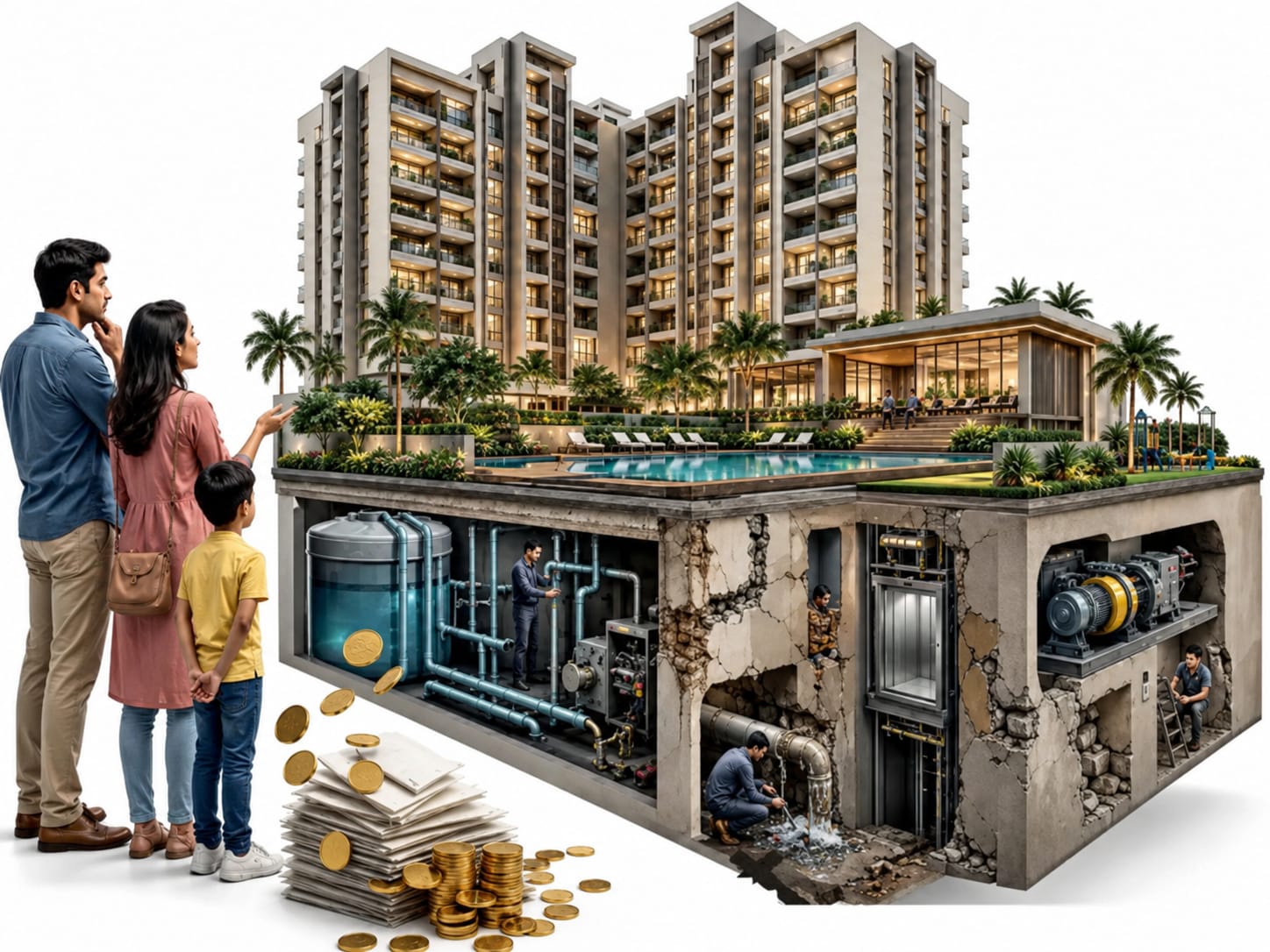
Buying a flat in a large gated society requires evaluating more than just basic amenities. Prospective home buyers must verify water supply reliability, elevator-to-flat ratios, developer construction history, and long-term maintenance costs to avoid operational bottlenecks and protect their property's future resale value.
NEW DELHI — Homebuyers investing in large gated communities are increasingly facing major operational and infrastructural challenges after taking possession. Reports published by The Economic Times on August 31, 2026, indicate that failing to evaluate critical operational details before purchase can quickly turn a dream home investment into a financial and logistical nightmare.
While high-rise gated societies advertise luxury amenities like swimming pools, clubhouses, and landscaped parks, buyers frequently run into severe daily disruptions. Widespread issues include severe water shortages, persistent elevator breakdowns, poor water quality, and escalating monthly maintenance charges. Industry analysts recommend four critical checkpoints every homebuyer must verify before signing a sale agreement.
4 Critical Factors to Evaluate Before Purchasing
1. Water Infrastructure and Source Reliability
Water scarcity and poor supply quality are among the most frequent grievances voiced by residents in large housing societies. Buyers must confirm whether the project relies on municipal water lines or external private water tankers. Dependency on private tankers significantly inflates monthly living costs and leads to acute supply disruptions during peak summer seasons. Assessing groundwater quality and checking for installed reverse osmosis (RO) treatment plants is essential.
2. Elevator Ratios and Power Backup Load
In massive high-rise developments, inadequate elevator planning leads to long wait times and severe congestion during peak morning and evening hours. Buyers should evaluate:
The ratio of elevators to the total number of apartments per tower.
Dedicated service lift provisions for maintenance staff and deliveries.
Dual-source power backup infrastructure capable of running elevators and common areas uninterrupted during local grid outages.
3. Builder Track Record and Construction Quality
A developer's delivery history provides critical signals about long-term building health. Experts advise inspecting older projects completed by the same developer to examine structural durability, seepage issues, paint conditions, and overall maintenance standards. Relying solely on staged sample flats often masks lower-quality materials used in the actual construction.
4. Long-Term Maintenance Costs and Association Handover
High maintenance fees can substantially alter the affordability of a flat. Buyers must inspect the preliminary maintenance agreement to review the breakdown of recurring costs per square foot. Furthermore, verifying the timeline for handing over project management to the Resident Welfare Association (RWA) ensures that maintenance funds are managed transparently.
Official Sources Section
Information in this report is sourced from official real estate analysis published in The Economic Times Wealth edition (August 31, 2026), regulatory filings under the Real Estate Regulatory Authority (RERA) framework, and legal guidelines from the Indian Registration Act.
Quote Section
According to real estate experts cited in The Economic Times report:
"Water quality remains one of the single biggest concerns in modern gated societies. Had buyers known about critical infrastructure limitations earlier, it would have directly influenced their decision to purchase."
Why It Matters
Purchasing an apartment in a large gated society is typically the largest financial commitment a consumer makes. Overlooking operational factors like water supply, maintenance escalations, and elevator capacities leads to hidden expenses and diminished resale value down the line. Conducting thorough pre-purchase due diligence protects both lifestyle quality and long-term capital appreciation.
Key Facts at a Glance
Water Supply Risks: Heavy reliance on private water tankers significantly increases recurring monthly expenses.
Elevator Capacity: High density without adequate elevator ratios creates severe daily commute bottlenecks.
Quality Verification: Sample flats can be misleading; inspecting older projects by the developer reveals true structural quality.
Financial Transparency: Unclear RWA handover schedules often cause maintenance fee hikes and operational mismanagement.
Frequently Asked Questions
What are the main risks of buying in a large gated society?
The main risks include unexpected maintenance cost hikes, water scarcity, long lift waiting times, and delayed RWA handovers by the builder.
How do I check the water supply of a gated society before buying?
Inquire with current residents, check municipal supply permits filed under RERA disclosures, and ask whether the complex relies on private tanker deliveries or internal water treatment plants.
Why should I inspect a developer's past projects?
Inspecting completed projects helps you evaluate long-term construction durability, seepage issues, structural maintenance, and whether the builder delivered on promised amenities.
How much should maintenance fees factor into my home purchase budget?
Maintenance charges are recurring monthly costs that increase over time. High maintenance fees reduce net rental yields and add to ongoing living costs alongside home loan EMIs.
Source: The Economic Times Wealth Edition, Adani Realty Regulatory Disclosures, Ministry of Housing and Urban Affairs (RERA Guidelines)