The Ministry of Tribal Affairs and CIIL hosted the National Conclave on Tribal Languages & Museums in Mysuru, launching the upgraded Adi Vaani platform, new multilingual school primers, and strategic frameworks to modernize India's tribal museums and cultural archives.
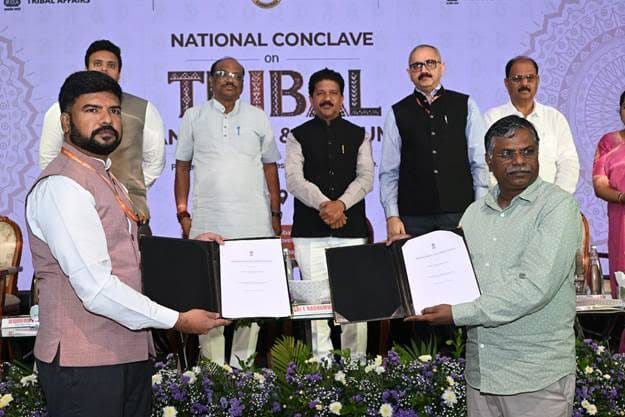
The Ministry of Tribal Affairs, in collaboration with the Central Institute of Indian Languages (CIIL), launched a three-day National Conclave on Tribal Languages & Museums in Mysuru, Karnataka. Running from August 24 to August 26, 2026, at Hotel Southern Star, the high-profile event addresses urgent paradigms in linguistic preservation, cultural heritage documentation, and institutional museum management. Bringing together linguistic researchers, policy makers, and tribal community delegates, the meeting serves as a core platform for advancing the central government's objective of safeguarding marginalized indigenous knowledge systems under national development frameworks.
Advancing Tribal Language Preservation and Digital Tools
Discussions during the opening sessions centered on tackling the vulnerabilities facing hundreds of unwritten and orally transmitted tribal dialects across India. Experts evaluated structural mechanisms for documenting native vocabularies, folklore, and indigenous ecological knowledge systems.
A central highlight of the event was the official rollout of the upgraded Adi Vaani digital platform, which integrated five new tribal languages alongside a dedicated iOS application. Organizers also emphasized the implementation of Multilingual Education (MLE) frameworks, highlighted by the release of Class 1 Jenukuruba primers and associated multilingual learning aids developed by the Karnataka State Tribal Research Institute (KSTRI) and the State Tribal Welfare Department.
Upgrading Tribal Museums and Freedom Fighter Exhibits
A significant portion of the deliberations focused on the architectural planning, storyline development, and operational frameworks of specialized exhibition centers, specifically Tribal Museums and Tribal Freedom Fighter Museums (TFFMs). Panels analyzed the integration of modern immersive technologies—including Augmented Reality (AR), Virtual Reality (VR), and interactive digital kiosks—to engage visitors while retaining authentic historical context.
Furthermore, administrative panels addressed the long-term financial sustainability of these cultural hubs. Proposals included establishing ancillary facilities such as traditional tribal cuisine cafes, guest houses, and structured weekend cultural programs to improve visitor engagement and local economic self-sufficiency.
Official Sources and Institutional Coordination
The conclave was jointly organized by the Ministry of Tribal Affairs, the Central Institute of Indian Languages (CIIL) Mysuru, the Karnataka State Tribal Welfare Department, and the Karnataka State Tribal Research Institute (KSTRI). Inaugurated by Union Minister of State for Tribal Affairs Durgadas Uikey, the event involved coordinated panels featuring federal bureaucrats, academic researchers, and institutional curators.
"Organizers stated that the active involvement of indigenous community representatives is mandatory to ensure that museum narratives and language archives reflect authentic historical realities rather than generalized external interpretations."
Practical Implications for Heritage and Education
The outcomes of the Mysuru conclave carry direct operational impacts for state-level educational curricula, museum design standards, and cultural tourism infrastructure. By embedding mother-tongue primers into early-grade classrooms and expanding digital repositories like Adi Vaani, the initiative aims to reduce school dropout rates among tribal youth while preventing linguistic extinction. For cultural institutions, the push toward technologically enhanced, community-driven exhibits means future public museums will offer more interactive, contextually accurate portrayals of regional indigenous histories.
Key Facts at a Glance
Event Location: Mysuru, Karnataka (Hotel Southern Star).
Dates: August 24–26, 2026.
Core Organizers: Ministry of Tribal Affairs, CIIL Mysuru, KSTRI, and Karnataka Tribal Welfare Department.
Key Technological Launch: Upgraded Adi Vaani digital platform featuring an iOS application and five newly added tribal languages.
Educational Milestones: Release of Class 1 Jenukuruba language primers and supplementary educational flashcards for multilingual classrooms.
Frequently Asked Questions
What was the primary objective of the National Conclave in Mysuru?
The conclave aimed to deliberate on strategies for preserving endangered tribal languages through digital archiving and multilingual education, while simultaneously modernizing the design and operational management of tribal museums across India.
Which organizations jointly hosted the event?
The event was organized by the Ministry of Tribal Affairs, the Central Institute of Indian Languages (CIIL), the Karnataka State Tribal Research Institute (KSTRI), and the State Tribal Welfare Department.
What is the Adi Vaani platform?
Adi Vaani is a digital initiative designed to support tribal language documentation, translation, and learning resources. Its recent upgrade introduced support for five additional languages and an official iOS application.
How do these developments impact primary education?
By introducing official primary-level textbooks and flashcards in indigenous tongues—such as the Jenukuruba primer for Kannada and environmental studies—children can acquire foundational education in their native language, bridging home life and formal schooling.
Source: Ministry of Tribal Affairs, Central Institute of Indian Languages (CIIL), Press Information Bureau (PIB), and Karnataka State Tribal Research Institute (KSTRI) official releases.