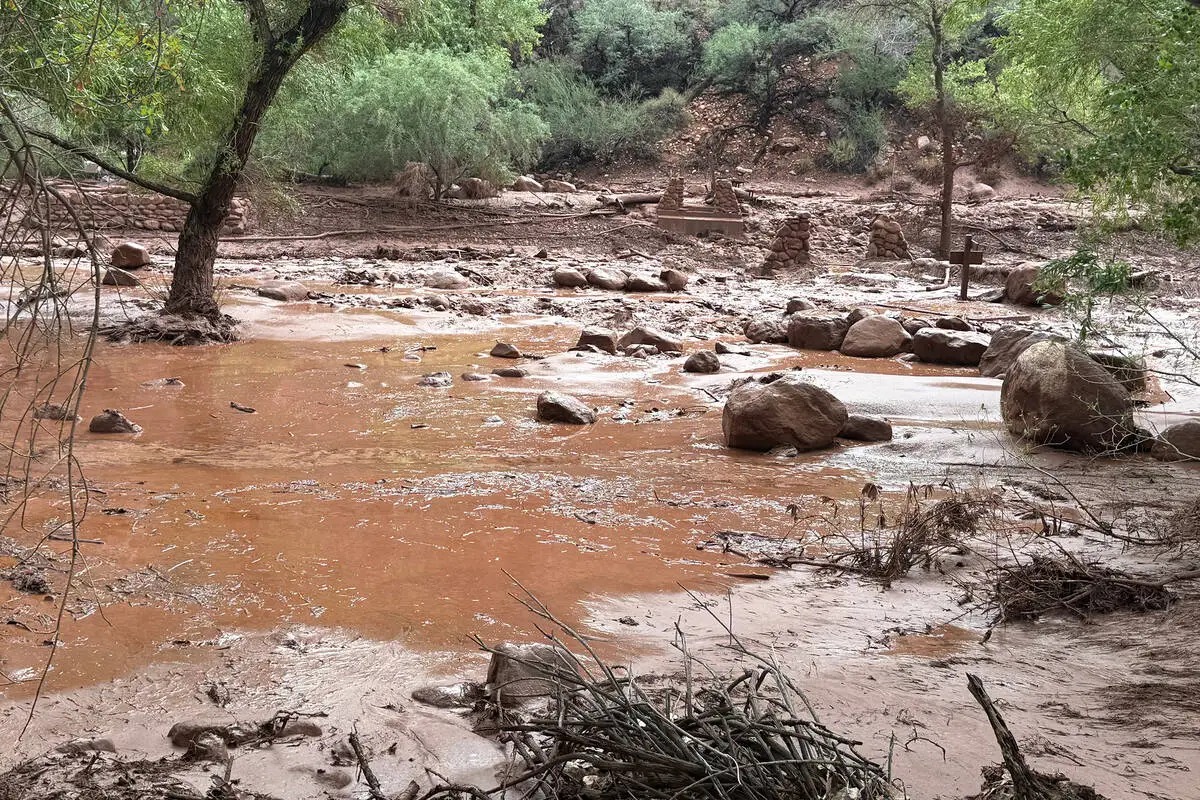
A powerful flash flood struck Arizona's Grand Canyon National Park on August 29, 2026, after heavy rain swamped the North Rim. The deluge destroyed critical footbridges, damaged the primary water pipeline, and forced the helicopter evacuation of 62 people, while authorities search for approximately 15 missing individuals.
A catastrophic flash flood swept through Arizona's Grand Canyon National Park on Saturday afternoon, leaving approximately 15 people missing, displacing dozens, and critically damaging regional infrastructure.
Heavy localized rainfall on August 29, 2026, dropped up to an inch of rain in roughly 30 minutes over the North Rim watershed, triggering rapid runoff down Bright Angel Creek. The resulting disaster has disrupted park operations, closed major inner-canyon trails, and forced emergency water conservation measures.
Infrastructure Damage and Emergency Evacuations
The flash flood severely impacted the Bright Angel Canyon and Phantom Ranch areas. According to federal reports, nearly all pedestrian footbridges spanning Bright Angel Creek were completely destroyed, cutting off hiker access. Raging floodwaters carried heavy debris, boulders, and structures into the main channel of the Colorado River, prompting an immediate closure of river traffic.
Emergency teams from the National Park Service and the Arizona Department of Public Safety coordinated helicopter airlifts to rescue stranded campers and hikers. Over 62 people were safely evacuated from Phantom Ranch and Bright Angel Campground by Sunday afternoon.
Impact on Park Resources and Tourism
The disaster severely compromised the Transcanyon Waterline, the sole water pipeline serving residents and visitors within the Grand Canyon National Park. In response to the pipeline failure, park administrators suspended all overnight lodging stays starting Monday, and year-round residents were ordered to severely restrict water usage.
Popular tourist zones, including the North Kaibab Trail, Bright Angel Campground, and Phantom Ranch cabins, remain closed indefinitely. Travel operators have canceled active river rafting excursions and inner-canyon backpacking itineraries as weather monitors track incoming monsoonal moisture.
Quote Section
"Grand Canyon National Park staff, in coordination with the Arizona Department of Public Safety, are continuing evacuation and response efforts and working to account for individuals who may have been in the affected area," organizers stated.
Why It Matters
The flash flood highlights the severe vulnerability of desert canyon infrastructure to sudden meteorological events. For travelers and local businesses, the incident enforces strict safety protocol shifts, immediate trip cancellations, and long-term utility challenges as the park repairs critical water pipelines. Additionally, ongoing search efforts underscore the unpredictable nature of monsoon season hazards in remote terrain.
Key Facts at a Glance
Approximately 15 individuals remain unaccounted for following the flash flood.
At least 62 hikers and campers were successfully evacuated from Phantom Ranch.
Between 0.5 and 1 inch of rain fell in a 30-minute span, causing immediate runoff.
The park's sole water pipeline suffered heavy structural damage, prompting overnight lodging suspensions.
Bright Angel Campground, Phantom Ranch, and the North Kaibab Trail are closed until further notice.
FAQ Section
Are there any reported injuries from the Grand Canyon flash flood?
No direct injuries were officially reported among the evacuees, though search and rescue operations for missing persons remain active.
Which areas of the Grand Canyon are currently closed?
Phantom Ranch, Bright Angel Campground, the North Kaibab Trail, and local river transit corridors are closed indefinitely due to debris and bridge collapses.
How are tourists affected by the water pipeline failure?
Overnight hotel and lodge stays have been suspended, and visitors are barred from inner-canyon camping until pipeline repairs are stabilized.
Who should family members contact regarding missing hikers?
The National Park Service urges anyone with information on backpackers in the Bright Angel Creek corridor to contact the NPS Investigative Services Branch tip line.
Source: National Park Service, National Weather Service, Grand Canyon National Park, Arizona Department of Public Safety
Official Sources Section
Information regarding the scale of the disaster, rescue operations, and facility closures is based on official updates and statements released by the following entities: