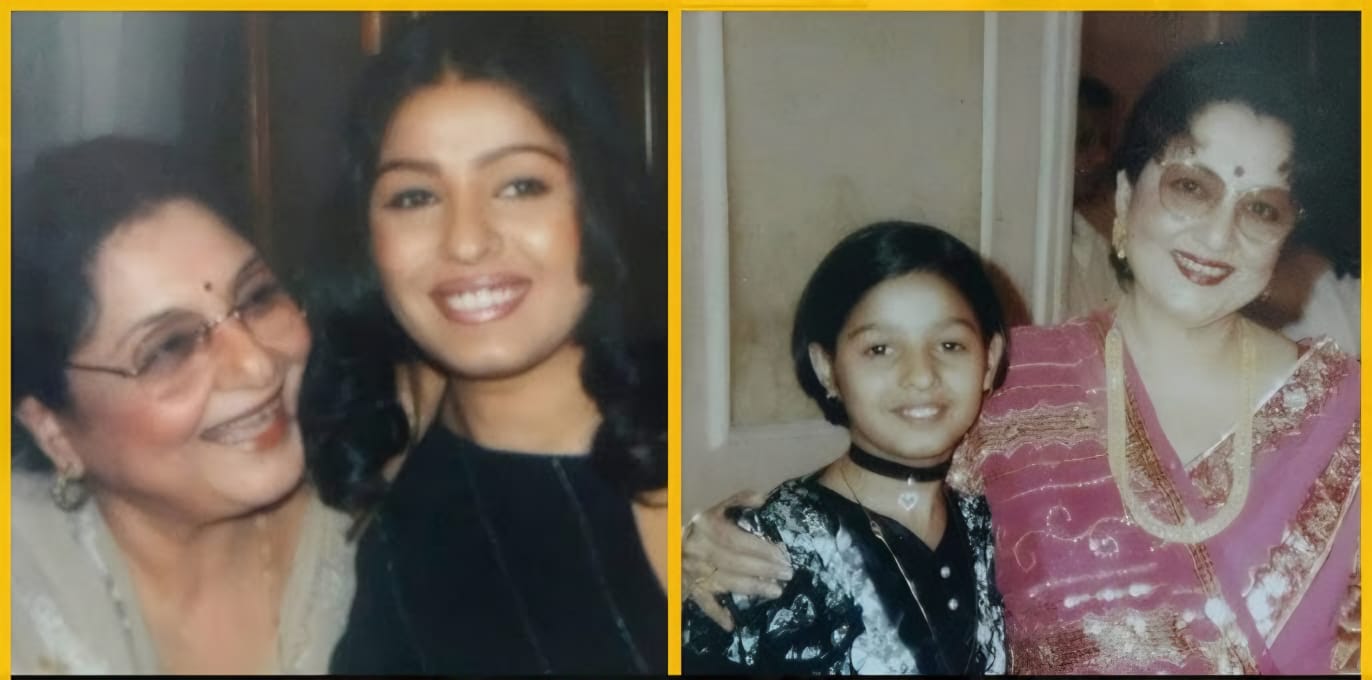
Playback singer Sunidhi Chauhan revealed how veteran host Tabassum facilitated her family's move from Delhi to Mumbai during her childhood. Tabassum arranged a critical audition with legendary composer Kalyanji, who listened to Chauhan sing for 45 minutes straight before inducting her into his "Little Wonders" training troupe.
MUMBAI, India — Renowned Indian playback singer Sunidhi Chauhan has publicly reflected on the foundational moments of her musical career, crediting late veteran actor and talk-show host Tabassum Govil for facilitating her family's relocation from New Delhi to Mumbai. Speaking in a recent retrospection on her journey in the Indian music industry, Chauhan shared details regarding how Tabassum discovered her talent during childhood stage performances and subsequently facilitated an audition with iconic music composer Kalyanji Virji Shah.
The early intervention proved decisive in establishing Chauhan's presence in Hindi cinema playback singing, leading to her formal training under Kalyanji-Anandji’s "Little Wonders" troupe before her national breakthrough on televised talent competitions.
From Delhi Stage Shows to Tabassum's Recommendation
Chauhan began singing at local community events and prayer gatherings in New Delhi at a very young age. During one such stage appearance in the early 1990s, her vocal range caught the attention of Tabassum, who was attending as a guest host. Recognizing her potential, Tabassum urged Chauhan's father, Dushyant Kumar Chauhan, to relocate the family to Mumbai, the center of India's entertainment industry.
Tabassum personally advised the family that pursuing formal training in Mumbai would unlock professional playback opportunities that were unavailable in New Delhi at the time. Acting on this recommendation, the family made the decision to transition to Mumbai, opening doors to industry network auditions.
The 45-Minute Audition With Composer Kalyanji
Upon arriving in Mumbai, Tabassum arranged an audition for the young singer with composer Kalyanji Virji Shah, half of the legendary music director duo Kalyanji-Anandji. Chauhan recalled that during the initial meeting, Kalyanji asked her to sing multiple classical and contemporary compositions back-to-back.
The audition, which was originally slated as a brief vocal check, extended into an uninterrupted 45-minute session:
Vocal Endurance: Kalyanji tested Chauhan's pitch control, rhythm variations, and vocal stamina across diverse musical scales.
Little Wonders Induction: Following the 45-minute assessment, Kalyanji immediately inducted her into "Little Wonders," a specialized troupe designed to nurture child musical talent.
Professional Guidance: Under Kalyanji's mentorship, Chauhan received structured stage practice and vocal discipline, laying the groundwork for her eventual playback debut in the 1996 film Shastra at age 13.
Official Statements
According to archival interviews and official documentation preserved by the Film & Television Producers Guild of India, Chauhan’s early entry into mainstream cinema was supported by industry mentorship initiatives that identified young vocal talent during the 1990s.
Historical records from the Ministry of Information and Broadcasting highlight the role of television showcases such as Meri Awaz Suno, which Chauhan won shortly after her training with Kalyanji, in establishing her credibility among leading film composers.
Artist Reflection and Industry Context
Reflecting on her journey, Chauhan highlighted the significance of guidance during an era when entry into the playback industry required direct physical auditions with legendary music directors.
"According to officials and archival retrospectives, early mentorship by established figures like Tabassum and Kalyanji played a crucial role in creating structured pathways for young talent entering the Indian music industry."
Chauhan noted that Kalyanji’s insistence on continuous 45-minute vocal exercises built the endurance that later enabled her to handle complex, high-energy compositions across a career spanning over two decades and thousands of tracks in multiple Indian languages.
Why It Matters
Chauhan's account provides insight into the historical talent discovery mechanisms of the Hindi film industry prior to the digital streaming era. For aspiring musicians and industry historians, her experience illustrates how early mentorship networks, rigorous live auditions, and structured stage exposure were instrumental in shaping enduring playback careers in Indian cinema.
Key Facts at a Glance
Early Relocation: Sunidhi Chauhan credits veteran host Tabassum for urging her family to move from New Delhi to Mumbai to pursue music professionally.
Critical Audition: Legendary composer Kalyanji listened to Chauhan sing for 45 minutes continuously during her first formal audition in Mumbai.
Mentorship Platform: The audition led directly to her induction into Kalyanji-Anandji’s "Little Wonders" troupe for young vocalists.
Career Breakthrough: Chauhan went on to win the national TV contest Meri Awaz Suno and build a career spanning over 2,000 recorded songs.
Frequently Asked Questions (FAQ)
Q1: How did Tabassum help Sunidhi Chauhan in her early career?
Tabassum spotted Chauhan’s talent at a stage show in New Delhi, encouraged her family to move to Mumbai, and facilitated her crucial introduction to composer Kalyanji.
Q2: How long was Sunidhi Chauhan’s first audition with Kalyanji?
Composer Kalyanji listened to Chauhan sing for 45 minutes straight during her introductory audition before accepting her as a student.
Q3: What was the "Little Wonders" troupe?
"Little Wonders" was a musical platform created by composers Kalyanji-Anandji to train, mentor, and showcase talented young singers and performers across India.
Sources: Archival Industry Documentation: Film & Television Producers Guild of India, Cultural Heritage & Broadcasting Records: Ministry of Information and Broadcasting