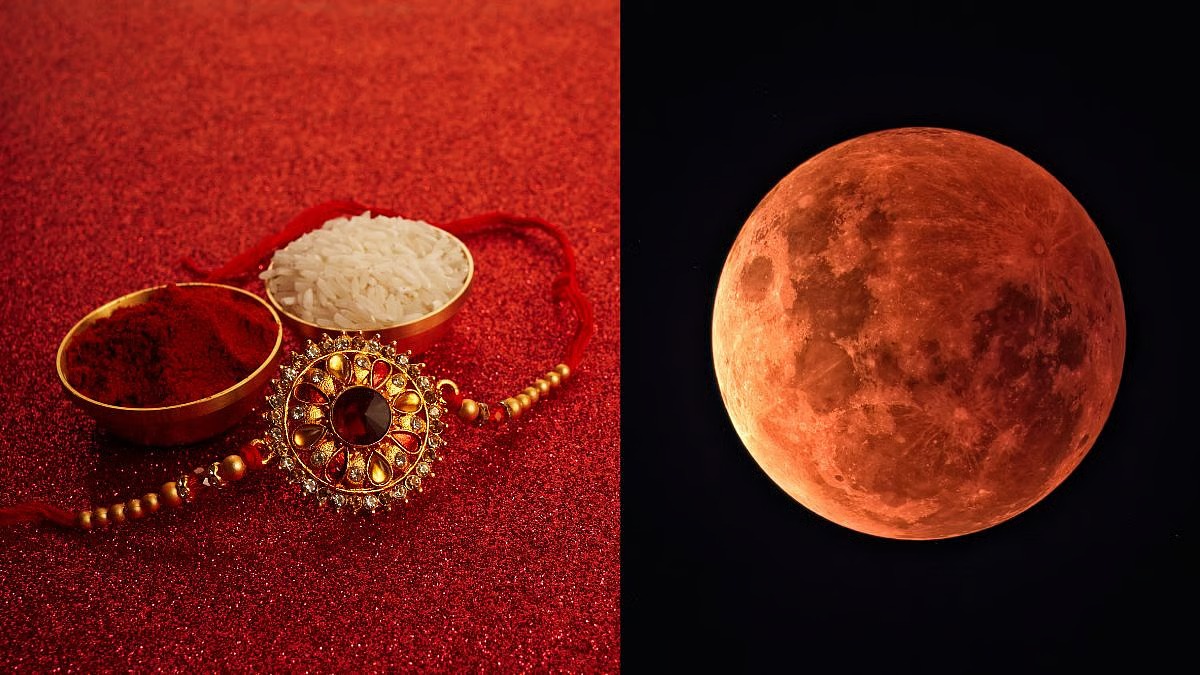
The partial lunar eclipse on August 28, 2026, will coincide with Raksha Bandhan but will remain invisible in India as it occurs during daylight hours. Astronomical and cultural authorities confirm that traditional Sutak restrictions are inapplicable, allowing uninterrupted festival celebrations across the country.
Chandra Grahan 2026 occurs on August 28, coinciding with Raksha Bandhan, though the lunar eclipse will not be visible in India and requires no Sutak restrictions.
Executive Summary
A partial lunar eclipse (Chandra Grahan) is scheduled for August 28, 2026, coinciding with the Hindu festival of Raksha Bandhan. According to astronomical updates and astronomical calculations, the celestial event will occur entirely during daytime hours in India, rendering it invisible across the country. Consequently, religious authorities and panchang computations confirm that traditional Sutak observances and temple closure rules will not apply to citizens across Indian cities.
Timings and Visibility of the August 28 Lunar Eclipse
NEW DELHI — Astrological and astronomical assessments indicate that the upcoming partial lunar eclipse will take place on Thursday, August 28, 2026. Global tracking data shows that the penumbral phase begins at 06:53 AM IST, with the partial eclipse phase running from 08:04 AM IST to 11:21 AM IST, and maximum eclipse peaking at 09:43 AM IST. The entire event concludes by 12:32 PM IST.
According to official astronomical updates published by agencies and scientific observers, the celestial event will not be visible anywhere in India, as the Moon remains below the horizon during daytime hours. Visibility is instead restricted to regions across North America, Central America, South America, and parts of Europe and Africa. Because the event cannot be observed locally, traditional inauspicious periods—known as Sutak Kaal—are officially inapplicable, allowing households to proceed with festival rituals without interruption.
Impact on Raksha Bandhan Celebrations and Rituals
The alignment of Chandra Grahan with Shravan Purnima and Raksha Bandhan has drawn widespread public interest. Cultural and astrological sources emphasize that because the shadow phenomenon remains out of sight across the subcontinent, standard festival preparations can proceed according to local muhurtas. In New Delhi and surrounding northern regions, the auspicious window for tying the sacred thread spans from early morning hours until 09:48 AM IST, matching the conclusion of the Purnima Tithi.
Temples, households, and community organizers will maintain normal operational schedules. Citizens can engage in customary morning prayers, family gatherings, and traditional sweets distribution without adhering to ritualistic fasts or cleansing closures typically mandated during visible eclipses.
Official Sources Section
Information regarding the astronomical timing, visibility zones, and calendar alignment is sourced from reports published by The Hindu Scientific Desk, astronomical calculations archived by The Times of India Astrology Portal, and panchang advisories compiled via The Economic Times.
Quote Section
"According to officials and astronomical calculations, the lunar eclipse on August 28, 2026, will occur during daylight hours in India, making it invisible locally and nullifying any traditional Sutak restrictions for domestic festivities."
Why It Matters
For citizens and families celebrating Raksha Bandhan, understanding that the lunar eclipse lacks local visibility provides clarity and removes unwarranted apprehensions regarding ritual timings. Ensuring that temples and kitchens remain unrestricted preserves the festive spirit of communal harmony and family interaction across the nation.
Key Facts at a Glance
Event Date: Thursday, August 28, 2026.
Eclipse Type: Partial Lunar Eclipse (Anshika Chandra Grahan).
Peak Timing: 09:43 AM IST.
Visibility in India: None (Occurs during daytime).
Sutak Status: Not applicable across India due to lack of visibility.
FAQ Section
Will the Chandra Grahan on August 28, 2026, be visible in India?
No, the lunar eclipse will not be visible in India because it occurs during daylight hours when the Moon is below the horizon.
Is the Sutak period applicable for people living in India?
No, since the eclipse is invisible in the region, traditional Sutak restrictions and temple closures do not apply.
Can families celebrate Raksha Bandhan normally on this day?
Yes, festival rituals, morning prayers, and the tying of rakhis can proceed without interruption during the designated morning muhurtas.
Where will the lunar eclipse be visible globally?
The eclipse will be visible across parts of North, Central, and South America, alongside select regions of Europe and Africa.
Source: The Hindu, The Times of India, The Economic Times