Following a viral incident in Gwalior where a car covered in 3,400 lipstick kiss marks led to police fines, traffic authorities have reiterated strict regulations against unauthorized vehicle modifications. Delhi motorists face stringent legal limits on body paint changes, window tints, and structural alterations under the Motor Vehicles Act.
From unusual viral aesthetics like Gwalior's lipstick-covered car to illegal window tints, traffic authorities are cracking down on unauthorized vehicle alterations.
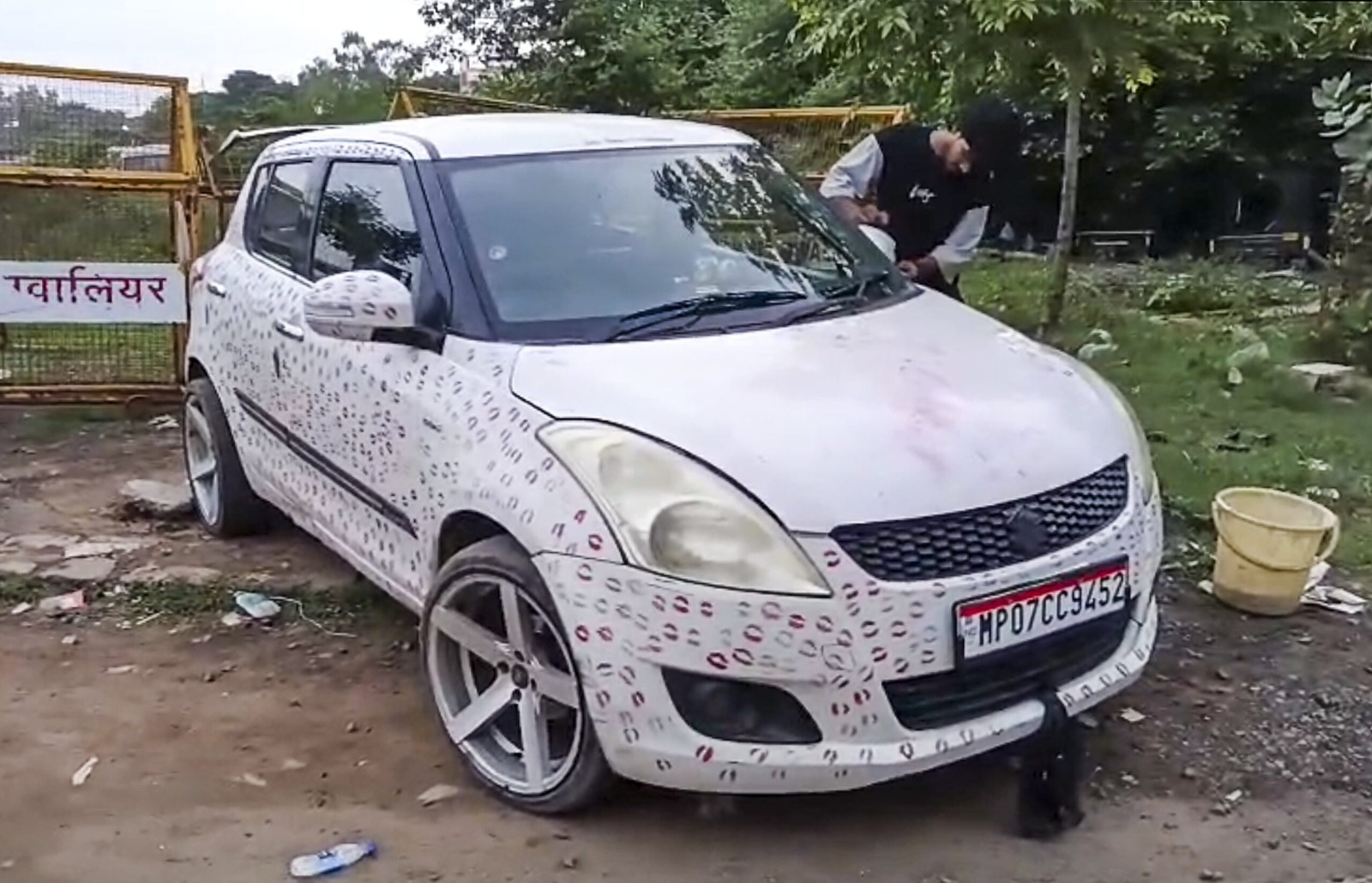
NEW DELHI — Recent enforcement actions by law enforcement agencies have thrown a spotlight on the legal boundaries governing vehicle personalization in India. Following a viral social media stunt in Gwalior, Madhya Pradesh, where a vehicle was blanketed in approximately 3,400 lipstick kiss marks, traffic enforcement units penalized the owner and mandated the removal of the unorthodox aesthetic.
The incident has prompted traffic departments across major metropolitan areas, including the Delhi Traffic Police, to remind motorists of strict statutory limits governing car modifications. Under the provisions of the Motor Vehicles Act, altering a vehicle's core visual appearance, structural framework, or safety compliance parameters without prior regulatory approval attracts substantial monetary fines and potential vehicle impoundment.
The Gwalior Incident and Regulatory Enforcement
The nationwide debate began when a Gwalior resident customized his car exterior using thousands of lipstick imprints as part of an online trend. Local traffic police tracked the vehicle via digital surveillance, penalizing the owner ₹5,500 and compelling him to scrub the body panels clean.
According to regional transport officials, transforming a registered vehicle into an unapproved moving canvas violates standard safety and registration norms. In metropolitan centers like Delhi, where monitoring systems use automated optical character recognition and traffic cameras, unauthorized wrapping, extensive paint alterations, or decorative fixtures that obscure standard vehicle profiles invite swift legal intervention.
Window Tints and Glass Regulations in the Capital
While exterior decals and wraps often attract penalties for altering vehicle classification, window tinting remains one of the most frequently violated regulations among Delhi motorists. Supreme Court directives and Delhi Traffic Police guidelines explicitly prohibit black films and excessive aftermarket tinting on safety glass.
Windscreen and Rear Window: Factory-fitted glass must maintain a minimum Visible Light Transmission (VLT) of 70 percent.
Side Windows: Side glass panels must permit at least 50 percent VLT, ensuring unhindered visibility for law enforcement officers and drivers alike.
Impact on Vehicle Owners, Insurers, and Commuters
For daily commuters, private vehicle owners, and commercial operators, non-compliance with modification laws carries heavy financial and legal repercussions. Beyond roadside fines issued by traffic officers, unauthorized alterations can invalidate third-party motor insurance claims. Insurance investigators routinely check for unnotified structural or mechanical changes when assessing accident claims, meaning illegal modifications can result in total claim rejections.
Furthermore, modifications such as pressure horns exceeding decibel limits, unauthorized high-intensity discharge (HID) lamps, and non-standard registration plates continue to be primary targets for special enforcement drives across the National Capital Region.
Official Guidelines and Enforcement Stance
Transport authorities and police agencies maintain that strict compliance is vital to maintaining road discipline and public safety standards.
"According to officials, any unauthorized cosmetic or structural alteration that deviates from the vehicle's original manufacturer specifications violates statutory registration rules and compromises safety enforcement on public roads."
Law enforcement bodies have intensified checks at major intersections, utilizing both manual patrols and digital surveillance networks to identify non-compliant automobiles.
Key Facts at a Glance
Legal Framework: Governed strictly by the Central Motor Vehicles Act and regional transport directives.
Window Transparency Limits: Windshields require 70% VLT, while side windows require a minimum of 50% VLT.
Recent Precedent: A Gwalior car owner was fined ₹5,500 and ordered to strip off 3,400 lipstick kiss marks.
Insurance Risks: Unauthorized modifications can lead to direct rejection of motor insurance claims during mishaps.
Frequently Asked Questions (FAQ)
Are aesthetic wraps and stickers completely illegal on cars in India?
Major modifications to a vehicle's primary color or body profile require endorsement on the Registration Certificate (RC). Temporary or extensive decorative applications that obscure identity features can attract penalties.
What are the permissible tint limits for car windows in Delhi?
The law mandates that the front and rear windshields must allow at least 70% light transmission, while side windows must allow a minimum of 50% transmission.
Can vehicle modifications affect my car insurance policy?
Yes. Insurance companies can reject claims if an accident involves an illegal vehicle modification that was not declared or approved by regional transport authorities.
Source: Delhi Traffic Police, Ministry of Road Transport and Highways, The Tribune, and The Economic Times.