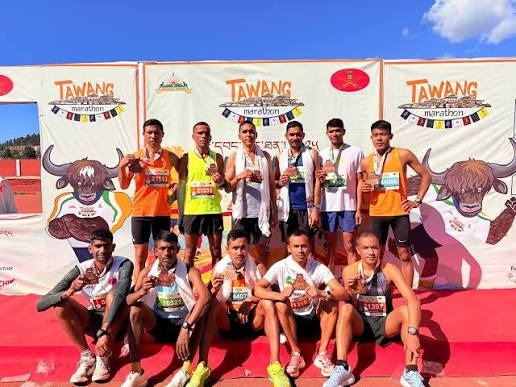
Co-organized by the Government of Arunachal Pradesh and the Indian Army, the Tawang Marathon brings elite athletes and defense personnel to a demanding high-altitude course 10,000 feet above sea level. The event aims to boost regional adventure tourism, foster national integration, and showcase the pristine Himalayan landscape.
The Government of Arunachal Pradesh and the Indian Army have officially outlined preparations for the upcoming high-altitude Tawang Marathon, drawing elite long-distance athletes to the Himalayan frontier.
TAWANG, INDIA — Distance runners, defense personnel, and adventure enthusiasts from across India are preparing for a rigorous test of endurance as the Government of Arunachal Pradesh and the Indian Army finalize arrangements for the high-altitude Tawang Marathon. Set against the backdrop of the Eastern Himalayas at an elevation exceeding 10,000 feet above mean sea level, the event has rapidly evolved into one of the country's most challenging long-distance fixtures since its inception.
Organizers emphasize that the gathering serves a dual purpose: promoting elite athletic competition under demanding environmental conditions and positioning the remote border region as a premier hub for sustainable adventure tourism. With participants facing thin air and steep ascents, the event requires meticulous physical preparation, drawing intense interest from civilian running clubs and professional sporting circuits alike.
Rigorous High-Altitude Terrain and Event Categories
Staged out of the Gyalwa Tsangyang Gyatso High Altitude Stadium in Tawang, the sports fixture encompasses multiple competitive brackets tailored to varying thresholds of physical endurance. According to event technical coordinators, the schedule features a full 42.195-kilometer marathon, a 21.09-kilometer half marathon, alongside dedicated 10-kilometer and 5-kilometer runs.
Because oxygen levels drop significantly at 10,000 feet, medical planners have established stringent safety protocols. Acclimatization guidelines and structured medical check-ins are mandatory for all registered athletes. Specialized support teams, including emergency medical units from the armed forces and local civil administration, will be stationed along the unpaved and winding mountain trails to monitor runner vitals throughout the morning hours.
Strategic Collaboration Between Civil Administration and Defense Forces
The collaboration between the state administration and the military underscores a broader initiative to integrate frontier regions into the national mainstream through cultural and athletic exchanges. Alongside civilian contenders, heavily represented contingents from the Indian Navy, Indian Air Force, and Central Armed Police Forces—including the Indo-Tibetan Border Police (ITBP) and Sashastra Seema Bal (SSB)—will field competitive teams.
According to state officials, the partnership highlights civil-military cooperation while stimulating local economic growth. Small businesses, homestay operators, and hospitality providers in Tawang anticipate a substantial surge in seasonal commerce as visiting support crews, families, and spectators arrive ahead of race day.
Official Statements and Administrative Outlook
State authorities and defense spokespersons have underscored the broader significance of hosting a competition of this scale in a geographically sensitive sector.
"Organizers stated that the Tawang Marathon is designed to push human boundaries while celebrating national unity, resilience, and the majestic landscape of Arunachal Pradesh. The event transcends sport, acting as a bridge that brings diverse communities together in one of India's most breathtaking frontiers."
Civil administration updates note that logistics, transport integration, and route safety audits are proceeding on schedule to accommodate the influx of participants traveling through difficult mountain terrain.
Practical Implications for Travelers and Participants
For athletes and tourists planning to travel to the region, the high-altitude environment mandates careful planning. Logistics coordinators recommend arriving in Tawang at least two to three days prior to race morning to allow physiological adaptation to low barometric pressure.
Travel Logistics: Transport packages and permitted inner-line travel corridors are managed via coordinated state channels.
Economic Impact: Local hoteliers and transport unions expect near-capacity bookings, providing a vital post-monsoon economic stimulus.
Infrastructure: Regional authorities have expedited road maintenance along the key transit axis connecting Guwahati and Tezpur to Tawang to ensure smooth transit for heavy vehicular traffic.
Key Facts at a Glance
Elevation: Hosted across challenging Himalayan terrain averaging 10,000 feet above mean sea level.
Organizers: Jointly administered by the Government of Arunachal Pradesh and the Indian Army.
Race Categories: Full Marathon (42.195 km), Half Marathon (21.09 km), 10 km run, and 5 km run.
Institutional Participation: Features professional squads from the Indian Army, Air Force, Navy, ITBP, and SSB.
Venue: Flagging off from the Gyalwa Tsangyang Gyatso High Altitude Stadium in Tawang.
Frequently Asked Questions (FAQ)
What makes the Tawang Marathon uniquely challenging?
The primary challenge stems from its extreme altitude above 10,000 feet, where reduced oxygen levels place heavy demands on the cardiovascular system, requiring thorough physiological acclimatization.
Are amateurs allowed to register alongside elite runners?
Yes. While the full and half marathons test elite and seasoned endurance athletes, the 10-kilometer and 5-kilometer categories are structured to accommodate intermediate runners and fitness enthusiasts.
What safety and medical measures are in place for participants?
The Indian Army and local health authorities deploy emergency medical response teams, mobile aid stations, and oxygen support kiosks along the entire length of the race track.
How does the event impact local tourism?
The marathon serves as the cornerstone of the state's adventure tourism campaign, driving seasonal hotel occupancies, spotlighting local culture, and increasing visitor traffic to landmarks like the Tawang Monastery.
Source: Government of Arunachal Pradesh, Indian Army Official Dispatches, District Sports Office Tawang, and administrative event updates.