A senior Indian steel official, Ms. Swapna Bhattacharya, stated on July 23, 2026, that the nation must aggressively diversify its export destinations toward the Gulf countries and Africa. Emphasizing that domestic markets alone cannot sustain growing production capacities, the strategy aims to secure international footprints across high-demand developing regions.
As India solidifies its position as one of the world's leading crude steel producers, government and industry stakeholders are recalibrating trade strategies to safeguard long-term industrial growth. Speaking on the evolving export landscape, Ministry of Steel Deputy Director General Ms. Swapna Bhattacharya stressed on Thursday, July 23, 2026, that domestic consumption, while robust, cannot entirely absorb accelerating manufacturing outputs. To maintain operational viability and prevent domestic oversupply, Indian manufacturers must actively diversify outbound shipments, sinking their teeth into lucrative international markets across the Gulf Cooperation Council (GCC) and the African continent.
Expanding Reach Beyond Traditional Trade Corridors
The strategic push toward the Gulf and African regions comes at a time when global steel trade patterns are shifting due to regulatory adjustments, protective tariffs in Western economies, and fluctuating demand. Historically, Indian finished steel exports have heavily relied on traditional European and Southeast Asian buyers. However, rapid urbanization, massive infrastructure developments, and soaring construction activities across the Middle East and emerging African economies present substantial greenfield opportunities for Indian mill operators.
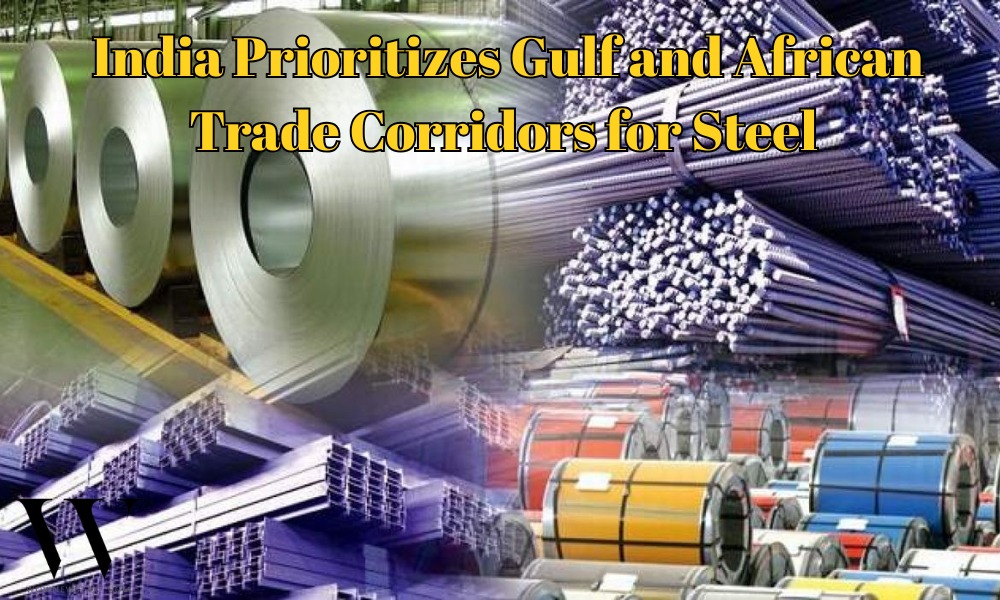
Ms. Swapna Bhattacharya and other representatives from the Ministry of Steel (India) noted that capturing these markets requires competitive pricing, stringent quality control, and adherence to international grade specifications. Value-added products such as galvanized sheets, structural steel, and specialized alloy bars are expected to spearhead this targeted export drive.
Balancing Domestic Growth with Global Integration
India's crude steel capacity has expanded significantly under government-backed frameworks like the National Steel Policy and Production-Linked Incentive (PLI) schemes for specialty steel. While domestic demand remains exceptionally high, fueled by national rail, road, and real estate projects, policymakers argue that maintaining an export buffer is vital for capacity utilization. Diversifying into the Gulf states and African nations helps mitigate regional economic shocks and protects domestic producers from localized demand contractions.
Official Announcements and Regulatory Frameworks
According to official updates from the Joint Plant Committee (JPC) and insights shared by Ministry of Steel Deputy Director General Ms. Swapna Bhattacharya, trade facilitation measures—including bilateral trade agreements and local currency settlement mechanisms—are being evaluated to reduce transaction barriers for exporters venturing into developing international markets.
"According to officials, domestic market dependence must be balanced with aggressive global outreach, and Indian steel producers need to sink their teeth into high-growth markets across the Gulf and Africa to secure long-term commercial sustainability."
Why It Matters
For Indian steel manufacturers, logistics providers, and commercial investors, this strategic pivot opens new revenue streams and reduces vulnerability to domestic price volatility. For international buyers in the Gulf and Africa, a reliable, cost-competitive supply of Indian structural and finished steel supports ongoing infrastructural transformation without straining local production chains.
Key Facts at a Glance
Strategic Shift: India's steel sector is prioritizing export diversification toward Gulf countries and Africa to offset domestic market saturation.
Key Official: Insights spearheaded by Ministry of Steel Deputy Director General Ms. Swapna Bhattacharya.
Core Objective: Moving beyond complete reliance on local consumption by expanding international market share in high-growth infrastructure zones.
Target Products: Focus on value-added items, structural steel, TMT bars, and specialized alloy products.
Oversight Bodies: Strategic updates are coordinated alongside data from the Ministry of Steel (India) and the Joint Plant Committee (JPC).
FAQ Section
Who outlined the steel export diversification strategy?
The export strategy focusing on the Gulf and Africa was emphasized by Ministry of Steel Deputy Director General Ms. Swapna Bhattacharya.
Why is India focusing on steel exports to the Gulf and Africa?
India is targeting the Gulf and African regions because rapid urbanization and infrastructure expansion in these areas present massive, high-demand markets that can absorb growing Indian steel production.
Can domestic markets alone sustain India's steel production?
According to steel officials, while domestic consumption is robust, it cannot entirely support expanding manufacturing capacities, making international market diversification essential.
What types of steel products are in demand in these export regions?
Construction-grade materials such as structural steel, TMT bars, galvanized sheets, and specialized industrial alloys are seeing high demand abroad.
Where can stakeholders monitor official trade data for Indian steel?
Official trade statistics, export volumes, and policy updates are published regularly by the Ministry of Steel (India) and the Joint Plant Committee (JPC).
Source: Ministry of Steel (India), Joint Plant Committee (JPC), Press Information Bureau (PIB)