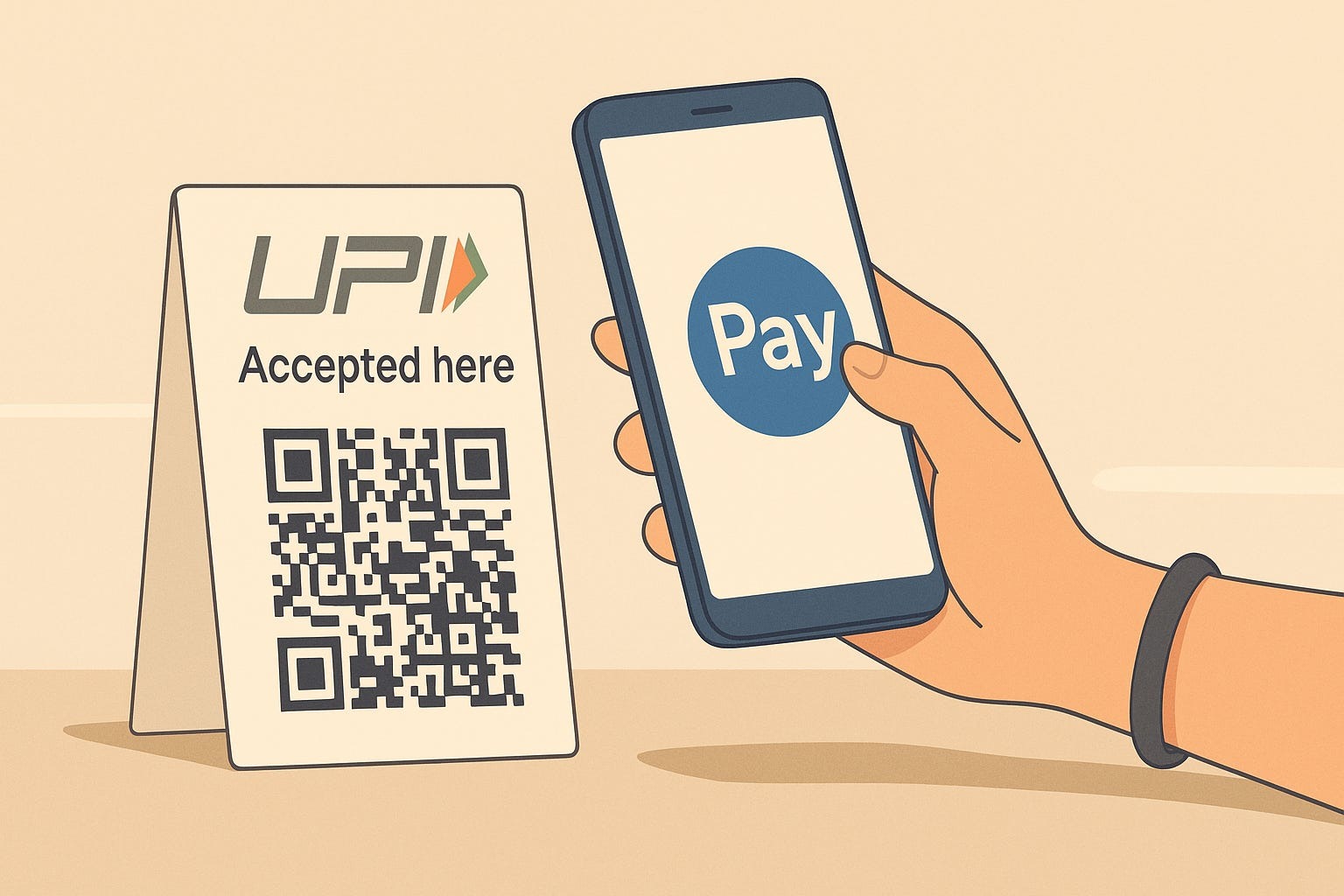
The Unified Payments Interface (UPI) is expanding rapidly beyond India's major cities, with over 70% of active users now residing in Tier-2, Tier-3, and rural regions. Propelled by multilingual interfaces, feature-phone solutions, and widespread merchant QR deployments, the platform is transforming semi-urban commerce and driving deep financial inclusion.
The Unified Payments Interface (UPI) is rapidly expanding far beyond India’s major metropolitan centers, fundamentally transforming commercial transactions across Tier-2, Tier-3, and rural regions. Data compiled by the National Payments Corporation of India (NPCI) and industry analysts highlights that a substantial majority of newly registered digital payment users now originate from semi-urban districts, marking a pivotal shift in the country's financial ecosystem.
The nationwide acceleration is redefining retail trade, micro-enterprises, and peer-to-peer exchanges outside traditional economic hubs. As digital infrastructure penetrates deeper into the hinterlands, policymakers note that real-time payment rails are successfully bridging longstanding financial inclusion gaps.
The Shift to Semi-Urban and Rural Markets
While early adoption of instant digital payments was largely concentrated in Tier-1 tech corridors such as Bengaluru, Mumbai, and Delhi-NCR, recent metrics demonstrate an aggressive surge in smaller towns. According to aggregated market data, over 70% of active UPI users now reside outside metropolitan boundaries, driven by widespread merchant QR code deployments at local kirana stores, weekly markets, and transit hubs.
This expansion has been heavily supported by targeted technological adaptations. Features such as UPI 123PAY for feature phones and offline-capable solutions like UPI Lite have systematically dismantled barriers for populations with limited smartphone access or intermittent internet connectivity.
Catalysts Driving Regional Expansion
Merchant QR Penetration: Small-scale merchants in Tier-2 and Tier-3 cities have rapidly adopted zero-cost QR code acceptance, viewing digital settlements as a safer alternative to managing physical cash.
Government Support and Direct Benefits: Central and state welfare initiatives leveraging digital distribution channels have familiarized rural citizens with instant electronic transfers.
Multilingual and Voice Interfaces: The introduction of regional language interfaces and voice-activated payment confirmations has eased onboarding for non-English-speaking users.
Impact on Local Economies and Small Businesses
The proliferation of real-time transactions has delivered measurable benefits to regional economies. Small and medium-sized enterprises (SMEs) operating outside major cities report improved working capital management and faster transaction reconciliation.
Furthermore, local consumers benefit from reduced friction in daily retail purchases, eliminating the inconvenience of carrying physical cash or finding exact change for micro-transactions. Financial analysts observe that this deep liquidity flow is integrating regional commercial hubs more tightly into the formal national economy.
Official Sources Section
According to official updates and periodic data releases from the National Payments Corporation of India (NPCI) and the Reserve Bank of India (RBI), transaction volumes on the infrastructure continue to scale exponentially, crossing historic milestones month-over-month. Regulatory filings emphasize that interoperability, robust cybersecurity mandates, and sustained institutional backing remain the cornerstones of this nationwide rollout.
"According to officials, the rapid adoption of digital payment systems across non-metro regions reflects a fundamental transformation in India's payment habits, driven by accessible technology and robust public digital infrastructure."
Why It Matters
The expansion of digital payments beyond Tier-1 cities carries profound practical implications for financial democratization and macroeconomic transparency. By formalizing retail trade in semi-urban and rural areas, the infrastructure helps build verifiable credit histories for millions of micro-entrepreneurs who previously lacked access to institutional banking credit. This data-driven inclusion paves the way for broader access to micro-loans, insurance, and other financial services outside major urban centers.
Key Facts at a Glance
Core Infrastructure: Unified Payments Interface (UPI) developed by NPCI.
Geographic Trend: Over 70% of active users now reside outside Tier-1 metropolitan cities.
Key Enablers: UPI Lite, UPI 123PAY, and widespread multi-lingual merchant QR adoption.
Economic Impact: Enhanced formalization and credit readiness for semi-urban and rural micro-enterprises.
FAQ Section
Is UPI usage growing faster in smaller towns than in metros?
Yes, recent transaction and registration trends indicate that growth rates in Tier-2 and Tier-3 cities are outpacing saturated metropolitan markets, with the majority of new users hailing from semi-urban regions.
How do users without smartphones participate in UPI outside big cities?
Initiatives like UPI 123PAY enable feature-phone users to securely execute digital transactions using interactive voice response (IVR) and missed-call banking channels without needing an internet-connected smartphone.
Are small merchants in rural areas charged fees to accept UPI?
Under current regulatory frameworks, person-to-merchant (P2M) transactions processed through standard UPI channels remain free of merchant discount rate (MDR) charges for basic QR setups, encouraging widespread adoption among small shopkeepers.
What is the impact of rural UPI adoption on local businesses?
Small businesses benefit from immediate liquidity settlements, reduced cash-handling risks, and the ability to maintain digital sales records, which facilitates easier access to formal bank credit.
Source: National Payments Corporation of India (NPCI), Reserve Bank of India (RBI), Press Information Bureau (PIB)