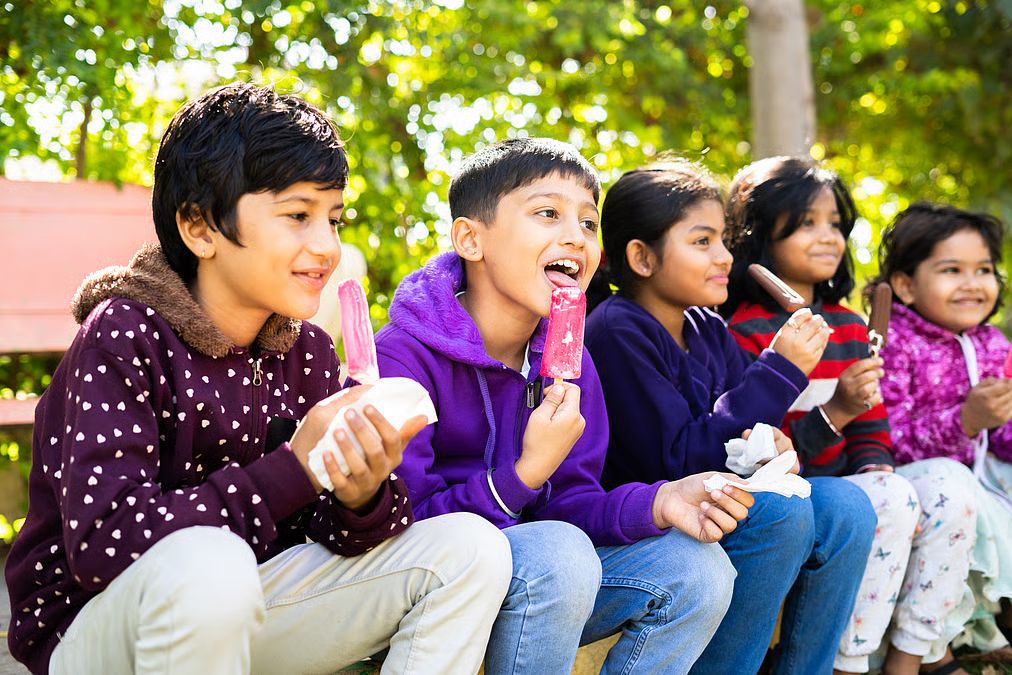
Through a nationwide U-Report survey under the 'Let's Fix Our Food' initiative, over 140,000 Indian adolescents shared insights on advertising, high costs, and food access. Conducted by ICMR-NIN and UNICEF, the project highlights that listening to young voices is crucial for building sustainable and healthy dietary environments across India.
Shifting away from top-down dietary rules, a landmark nationwide survey reveals how listening to adolescents is reshaping the future of child nutrition across the country.
Challenging decades of top-down nutritional planning where adults dictating children's diets was the norm, a new nationwide movement highlights the power of listening to youth. Released in August 2026, findings from a massive U-Report survey conducted under the 'Let's Fix Our Food' initiative—spearheaded by the Indian Council of Medical Research–National Institute of Nutrition (ICMR-NIN) and UNICEF—captured the honest experiences of more than 140,000 adolescents across India. By analyzing what young people face daily—ranging from pervasive digital food marketing to restricted access to affordable healthy options—the initiative underscores why children and adolescents must be treated as active partners rather than passive recipients in public health policymaking.
Uncovering Real Barriers in the Modern Food Environment
For generations, public health strategies relied heavily on classroom lectures and parental oversight, frequently ignoring the commercial and social realities confronting children outside the home. The survey results exposed how modern digital ecosystems—including Instagram reels, YouTube advertisements, and aggressive corporate marketing—flood young minds with cues to consume ultra-processed foods.
Key findings and environmental pressures identified by respondents include:
Pervasive Digital Marketing: Daily exposure to influencer endorsements and online food advertising heavily influences what children crave and buy.
Accessibility and Cost Barriers: Many adolescents reported that fresh, healthy foods are frequently too expensive or difficult to source locally compared to cheap packaged alternatives.
Label Confusion: Young participants expressed a strong desire to understand nutritional labeling better to decode what is actually inside packaged snacks.
School Perimeter Pressures: Brightly colored retail shops stacked with sugary beverages, instant noodles, and salty chips directly outside school gates undermine healthy eating habits.
Impact on Citizens, Consumers, Policymakers, and Schools
For policymakers, educators, and public health investors, these insights demand a structural shift in how national nutrition programs are designed. Rather than placing the entire burden of healthy eating on individual willpower, the initiative demonstrates that improving food environments—by regulating school-zone vendors, enforcing transparent food labeling, and curbing predatory advertising—is essential. Empowering students with nutrition literacy equips them to become active advocates within their homes and communities, transforming passive consumers into change-makers.
Why It Matters
Tackling childhood malnutrition and obesity requires looking beyond textbooks to address the economic and physical realities of modern food markets. By incorporating the direct feedback of over 140,000 young citizens, public health frameworks gain practical accuracy, ensuring that future interventions match the actual challenges faced by the next generation.
Key Facts at a Glance
Participant Scope: Over 140,000 adolescents participated across India.
Core Organizers: Conducted via a nationwide U-Report survey under the 'Let's Fix Our Food' initiative by ICMR-NIN and UNICEF.
Key Finding: Children's eating choices are heavily dictated by advertising, product affordability, and local availability rather than a lack of basic awareness.
Primary Goal: Transitioning youth from passive recipients of health advice to active partners in designing healthier food systems.
FAQ Section
What is the 'Let's Fix Our Food' initiative?
It is a collaborative public health effort led by ICMR-NIN and UNICEF to evaluate and improve children's nutrition and food environments in India.
How was data collected from the 140,000 participants?
Insights were gathered through a nationwide U-Report survey that asked adolescents about their daily dietary challenges, school environments, and marketing pressures.
What were the primary obstacles to healthy eating identified by adolescents?
Young respondents highlighted aggressive food marketing, high costs of fresh foods, confusing package labels, and a lack of healthy options around schools.
Where can readers review the detailed survey results?
Complete analytical reports and ongoing updates are published through institutional platforms like UNICEF India and ICMR-NIN.
Source: ICMR, UNICEF India, National Institute of Nutrition, Down To Earth