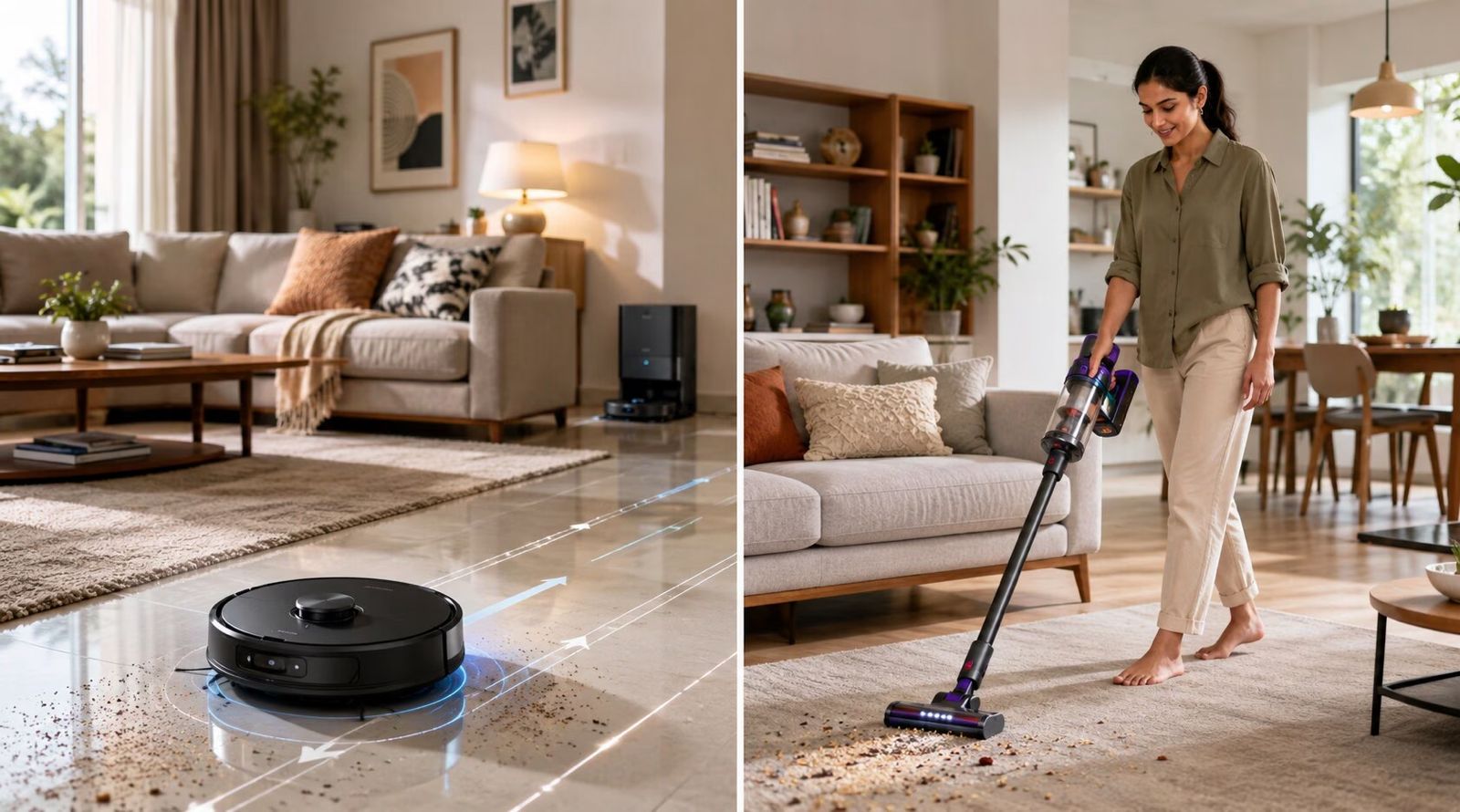
As urban Indian households grapple with rising particulate pollution and busy lifestyles, appliance analysts and consumer experts are evaluating whether modern vacuum cleaners can entirely replace traditional manual sweeping. While brooms remain effective for heavy spot cleaning, automated vacuums offer superior micro-dust extraction and indoor air quality management.
As urban Indian households face rising particulate pollution and shifting schedules, consumer appliance analysts examine whether modern suction technology can substitute traditional daily floor sweeping.
For generations, the combination of a traditional broom and a wet mop has served as the baseline standard for household cleanliness across India. However, rapid urbanization, changing architectural layouts, and escalating urban air pollution have prompted a critical reassessment of daily cleaning habits. Speaking on household technology trends in August 2026, consumer appliance analysts and home care specialists noted a significant surge in demand for automated and high-suction vacuum cleaners across major metropolitan areas like Bengaluru, Mumbai, and New Delhi. While traditional brooms efficiently gather large debris, experts emphasize that they frequently scatter microscopic dust particles back into the breathable indoor air, sparking a widespread debate over whether mechanized cleaning can fully take over daily floor maintenance.
Comparing Traditional Brooms and Modern Suction Technology
According to technical reviews and consumer appliance assessments, manual sweeping and vacuum cleaning serve distinct operational purposes within a household. Traditional brooms excel at clearing heavy dirt, large food crumbs, and immediate localized spills, but they lack the sealing capability required to trap fine particulate matter (PM2.5). In contrast, modern vacuum cleaners equipped with High-Efficiency Particulate Air (HEPA) filtration systems extract and permanently lock away microscopic allergens, pet dander, and fine construction dust.
Key operational differences highlighted by consumer research include:
Micro-Dust Management: Traditional sweeping fluffs fine settled dust back into the air, whereas sealed vacuum systems capture and retain pollutants, significantly enhancing indoor air quality.
Surface Versatility: Brooms are limited to hard, flat floors, while modern canister and cordless vacuums utilize specialized attachments to clean fabric sofas, mattress surfaces, heavy curtains, and ceiling corners.
Automation and Scheduling: Robotic vacuum cleaners allow homeowners to schedule automated daily cleaning cycles via mobile applications, reducing reliance on manual labor or domestic help.
Physical Ergonomics: Mechanized cleaning eliminates the continuous bending and sweeping motions associated with manual floor upkeep, reducing strain on joints and muscles.
Impact on Citizens, Consumers, and Modern Living
For dual-income households and residents living in dust-heavy urban centers, transitioning to hybrid cleaning routines offers tangible practical benefits. Industry data indicates that automated cleaning gadgets save considerable time for working professionals, allowing routine floor maintenance to occur while occupants are away. However, consumer advisors caution that a complete replacement is rarely absolute; most urban families adopt a hybrid approach—relying on robotic or electric vacuums for daily fine-dust upkeep while reserving traditional methods or manual touch-ups for heavy, stubborn debris and deep periodic cleaning.
Why It Matters
Indoor air pollution and fine settled dust present ongoing challenges for family health and domestic hygiene. Understanding the functional differences between manual sweeping and mechanized suction empowers consumers to choose efficient tools that safeguard respiratory health and optimize daily time management.
Key Facts at a Glance
Primary Function: Vacuum cleaners with HEPA filters trap microscopic particulate matter, unlike brooms which disperse fine dust into the air.
Urban Adoption: Rising demand is driven by dual-income schedules, pet ownership, and high urban dust levels.
Operational Trend: Most households successfully utilize a hybrid approach combining automated daily vacuuming with targeted manual cleaning.
Key Advantage: Robotic and cordless models reduce physical strain and operate autonomously on schedules.
FAQ Section
Can a vacuum cleaner completely replace a traditional broom in an Indian home?
While robotic and electric vacuums effectively handle daily floor dust and pet hair, many households maintain a hybrid approach, using manual tools for heavy or localized spills.
Why are HEPA filters important for vacuum cleaners in India?
HEPA filters capture microscopic dust particles, pollen, and PM2.5 pollutants rather than releasing them back into the air, helping improve indoor air quality.
Are robotic vacuum cleaners effective on Indian marble and tile floors?
Yes. Modern robotic vacuums feature adjustable suction power and hybrid mopping capabilities optimized for vitrified tiles, marble, and granite surfaces common in Indian homes.
Where can consumers find reliable buying guides for home cleaning appliances?
Detailed product breakdowns and category evaluations are published regularly by platforms like the Reliance Digital Resource Center and The Hindu Technology Desk.
Source: Reliance Digital, NeverOwned India, The Hindu, Mint