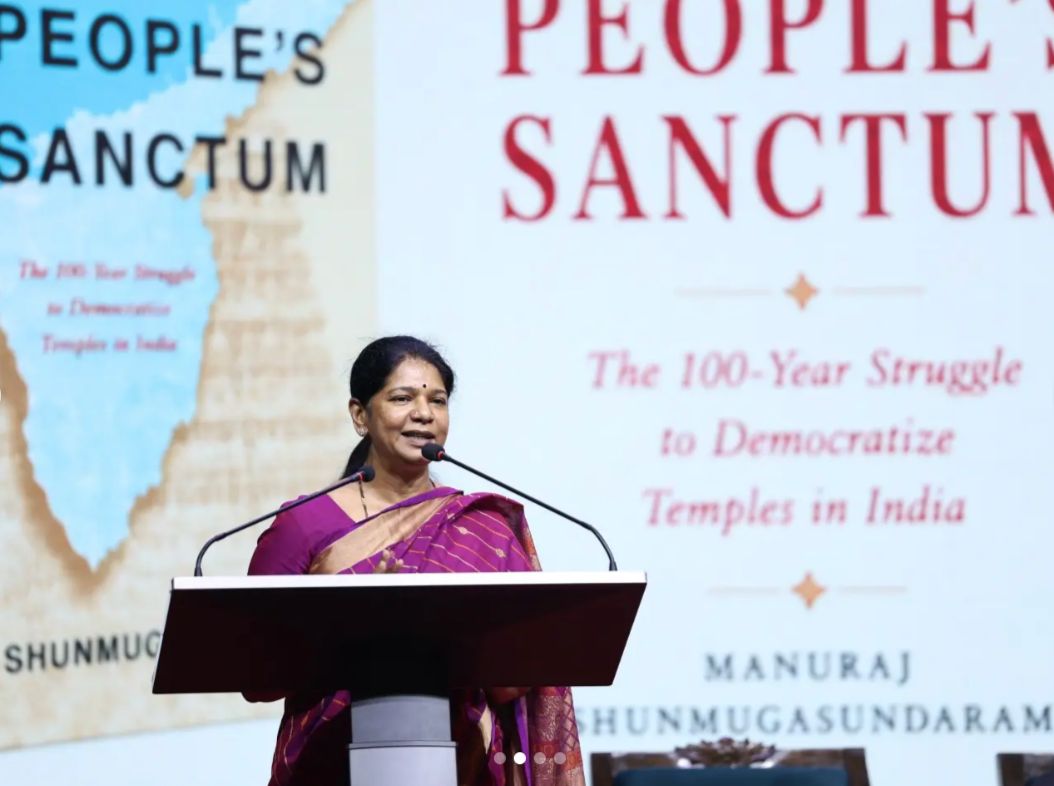
Speaking in Chennai, DMK MP Kanimozhi stated that the Dravidian movement and Periyar played a pivotal role in historic temple entry struggles. She emphasized that despite holding atheist principles, the movement fought relentlessly to dismantle caste barriers, ensuring equal access for all believers to worship without discrimination.
Addressing a book launch in Chennai, MP Kanimozhi highlighted how historical social reform movements successfully dismantled caste-based worship restrictions.
Shedding light on the historical milestones of social reform in South India, Dravida Munnetra Kazhagam (DMK) Member of Parliament K. Kanimozhi asserted that the Dravidian movement played a decisive role in spearheading historic temple entry struggles. Speaking in Chennai at the official book release event for The People's Sanctum, authored by advocate Manuraj Shunmugasundaram, Kanimozhi noted that the foundational push to eradicate caste discrimination in religious spaces paved the way for broader societal equality. The remarks bring renewed focus to the intersection of rationalist ideology, social justice, and equal civil rights in contemporary public discourse.
The Intersection of Rationalist Ideology and Religious Access
Addressing the gathering at Chennai’s Victoria Public Hall, Kanimozhi addressed the apparent paradox of an atheist-rooted political philosophy championing the right to temple entry. She pointed out that figures like E.V. Ramasamy (Periyar), despite holding strict rationalist and atheistic personal philosophies, fought tirelessly to dismantle caste-based exclusion within religious institutions.
Key themes highlighted during the discussion included:
Dismantling Caste Hierarchies: The Dravidian movement treated institutionalized caste segregation as a primary obstacle to human dignity, targeting discriminatory practices across social strata.
Guaranteeing Equal Access: Proponents argued that ensuring entry for marginalized communities into sanctums was a fundamental battle for civil rights rather than merely a religious concession.
Foundation for Broader Inclusivity: Struggles fought inside temple entry movements served as the historical precursor for opening up modern domains like education, law, industry, and governance to all sections of society.
Judicial and Historical Documentation: Events at the symposium drew attention to archival records detailing historical discriminatory practices, emphasizing that universal citizenship rights must supersede regressive social norms.
Impact on Social Justice, Civil Rights, and Modern Inclusivity
The historical evaluation of the Dravidian movement's role in social reform carries deep practical implications for civil rights discussions, legal frameworks, and contemporary politics. By framing temple entry as a baseline human rights struggle rather than isolated religious reform, the discourse reinforces the ongoing mandate for absolute social equity. Legal experts and political commentators note that acknowledging these historical milestones is essential for understanding how Tamil Nadu's progressive legislative measures evolved to safeguard marginalized communities across public and private sectors.
Why It Matters
Revisiting the history of temple entry movements highlights the foundational struggles that dismantled rigid caste boundaries in India. Recognizing these milestones reinforces the ongoing commitment to institutional equality and inclusive civil rights across modern society.
Key Facts at a Glance
Key Speaker: DMK MP K. Kanimozhi.
Event: Book release of The People's Sanctum by advocate Manuraj Shunmugasundaram.
Venue: Victoria Public Hall, Chennai.
Core Theme: The Dravidian movement's historical fight against caste discrimination and temple entry restrictions.
FAQ Section
What did Kanimozhi state about the Dravidian movement and temple entry?
Kanimozhi stated that the Dravidian movement, led by figures like Periyar, played a crucial and historic role in dismantling caste barriers to ensure equal temple entry for all citizens, despite the movement's rationalist foundations.
Which book release prompted these historical discussions?
The discussion took place during the release of The People's Sanctum, authored by advocate Manuraj Shunmugasundaram.
Why are historical temple entry struggles considered significant today?
They represent the foundational civil rights battles that paved the way for broader inclusivity and anti-discrimination standards in modern education, law, and public life.
Where can readers find verified reports on this event?
Detailed coverage of the event is accessible via The Hindu Regional Archives.
Source: The Hindu, Zenodo Archives