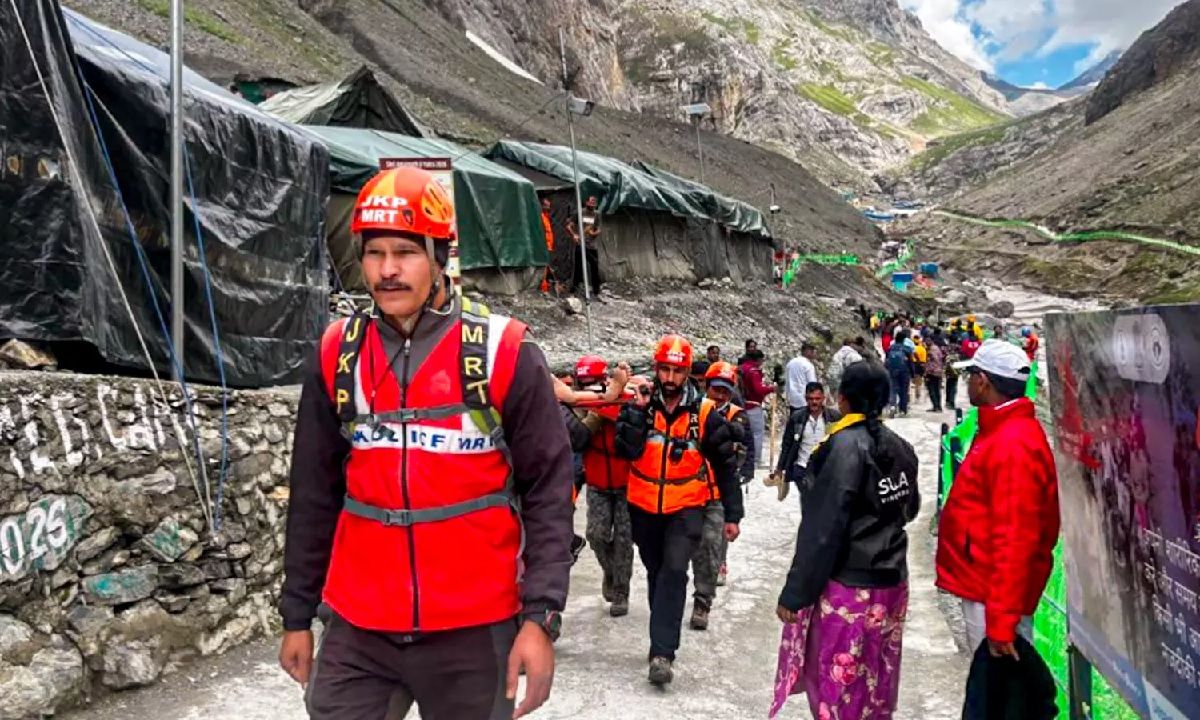
Authorities announced the temporary suspension of the annual Amarnath Yatra from both the Pahalgam and Baltal routes starting August 9, 2026. Prompted by persistent rainfall, track damage along vulnerable stretches, and adverse weather forecasts by the IMD, the precautionary pause allows the Border Roads Organisation to execute urgent restoration work.
Citing severe weather alerts and necessary trail repairs, administration officials have temporarily halted the annual pilgrimage from both access routes.
Citing persistent weather hazards and the urgent need for structural restoration along high-altitude mountain trails, administrative authorities in Jammu and Kashmir announced the temporary suspension of the annual Amarnath Yatra from Sunday, August 9, 2026. The 57-day pilgrimage, which commenced on July 3 across both the traditional Pahalgam route in Anantnag and the shorter Baltal route in Ganderbal, has drawn over 4.8 lakh devotees to the holy cave shrine. However, continuous downpours over the past week created hazardous conditions along vulnerable stretches, prompting officials to enact a complete, precautionary pause to safeguard pilgrims.
Trail Restoration and Meteorological Factors
The decision to halt the pilgrimage comes in response to extensive track erosion caused by recent heavy rains and worsening forecasts issued by regional meteorological agencies. Divisional Commissioner Kashmir Anshul Garg confirmed that specialized restoration teams have been mobilized to address compromised segments of the trekking paths.
Key operational updates concerning the suspension include:
Both Routes Affected: The temporary halt applies uniformly to the Chandanwari (Pahalgam) track and the Baltal axis.
Engineering Interventions: The Border Roads Organisation (BRO) has taken charge of immediate repair, stabilization, and clearance work along landslide-prone sectors.
Adverse Weather Forecasts: Bulletins from the India Meteorological Department (IMD) warned of continuing wet spells and unstable conditions across higher reaches of the Himalayas.
Culmination Plans: Officials clarified that despite the general suspension, the sacred Chadi Mubarak (mace of Lord Shiva) will proceed via the traditional Pahalgam route to mark the formal conclusion of Yatra 2026 on August 28.
Impact on Pilgrims, Travel Logistics, and Local Economy
The sudden suspension of the pilgrimage carries immediate practical implications for thousands of registered travelers, local transport operators, and service providers across the region. Pilgrims currently stationed at base camps have been advised to halt their journeys until clearance notices are issued. Travel operators and hoteliers note that while the pause disrupts short-term itineraries, prioritizing comprehensive track safety prevents potential mishaps on treacherous mountain ascents. Transportation networks, including sections of the Jammu–Srinagar National Highway, have similarly faced intermittent disruptions due to weather-related mudslides, reinforcing the necessity of strict travel advisories.
Why It Matters
Temporarily halting high-altitude pilgrimages during severe weather events ensures the safety of devotees navigating hazardous mountain terrain. Proactive track maintenance by specialized engineering corps prevents structural failures and preserves the long-term integrity of the Himalayan trails.
Key Facts at a Glance
Event: Temporary suspension of Amarnath Yatra 2026.
Effective Date: Sunday, August 9, 2026.
Affected Routes: Both Pahalgam (Chandanwari) and Baltal tracks.
Executing Agency: Border Roads Organisation (BRO).
Total Pilgrim Turnout To Date: Over 4.8 lakh devotees.
FAQ Section
Why has the Amarnath Yatra been suspended?
The pilgrimage has been temporarily suspended due to recent heavy rains, track damage along vulnerable mountain stretches, and adverse weather forecasts by the IMD.
Which routes are affected by this suspension order?
Both access routes—the traditional Pahalgam track and the shorter Baltal route—remain closed to general pilgrims starting August 9.
Who is handling the repair and maintenance of the damaged tracks?
The Border Roads Organisation (BRO) is actively engaged in restoring and stabilizing the compromised segments of the trekking paths.
How and when will the pilgrimage officially conclude for the year?
The annual Yatra will formally conclude with the traditional Chadi Mubarak procession proceeding via the Pahalgam route on August 28, 2026.
Source: Rising Kashmir, The Economic Times, Deccan Chronicle