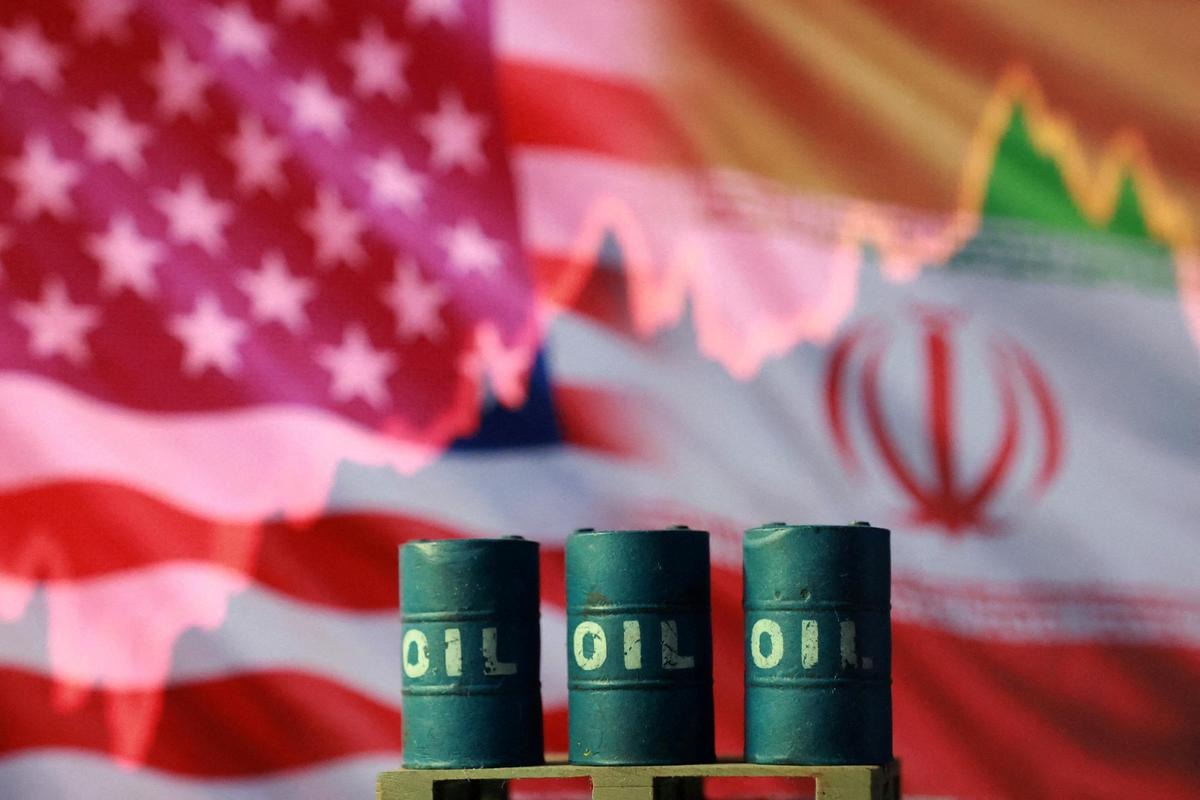
Brent crude futures surged to their highest level since June 12, 2026, surpassing $86 per barrel as the U.S. reinstated a naval blockade in the Strait of Hormuz. The geopolitical escalation, coupled with strong summer demand, has heightened fears of supply disruptions, impacting global stock markets and energy security.
Geopolitical instability in the Middle East has sent oil prices surging, with Brent crude reaching its highest level since mid-June as the U.S. enforces a new maritime blockade.
LONDON — Global energy markets faced renewed volatility on Tuesday, July 14, 2026, as Brent crude futures climbed to their highest point in four weeks. The international benchmark breached the $86-per-barrel threshold during intraday trading, a sharp reversal from recent price declines, as escalating military tensions between the United States and Iran cast fresh doubt over the security of vital oil transit routes.
The price surge follows a weekend of intensifying hostilities in the Strait of Hormuz, a critical maritime chokepoint through which approximately one-fifth of the world’s oil supply typically passes.
Escalating Standoff in the Strait of Hormuz
The latest price rally was triggered by the U.S. government’s decision to reinstate a naval blockade on Iranian shipping vessels transiting the Strait. President Donald Trump announced that the U.S. would assume the role of "Guardian of the Hormuz Strait," declaring that Iranian ships would be prohibited from passage and that other nations would be subject to a 20% toll on eligible cargo to cover security costs.
This escalation marks a significant departure from the relative stability observed in late June, following a memorandum of understanding intended to de-escalate regional hostilities. According to officials, the U.S. Central Command initiated strikes on Iranian targets over the weekend to "continue degrading their ability to attack civilian mariners and commercial ships".
Market Impact and Supply Concerns
The disruption has heightened the "geopolitical risk premium" embedded in global energy prices. While physical flows of oil have remained largely intact thus far, the increased probability of localized conflict has made the market hypersensitive to potential supply shocks.
Analysts noted that the rise in prices is also supported by firming physical market indicators. "The appreciation in Brent crude prices is primarily driven by a confluence of tightening physical market indicators and a resurgence in the geopolitical risk premium," market researchers at TradingKey stated. High refinery utilization rates and expectations of shrinking U.S. crude stockpiles have provided a resilient floor for current energy prices.
Economic Implications
For global consumers, the sudden rise in crude oil prices risks reversing recent inflationary relief. The energy sector's volatility has already begun to ripple through broader financial markets, with airline stocks and several major technology indices experiencing downward pressure as investors retreat from risk-heavy assets.
While OPEC+ has recently lowered its global demand growth forecasts, the immediate focus remains on the Strait of Hormuz. The ongoing crisis continues to test the resilience of global supply chains that have already been strained by months of geopolitical uncertainty.
Key Facts at a Glance
Brent Benchmark: Prices climbed above $86 per barrel on July 14, marking the highest level since June 12, 2026.
Geopolitical Catalyst: The U.S. reinstated a naval blockade of Iranian shipping and imposed a 20% transit toll on other vessels to cover security costs.
Supply Sensitivity: The Strait of Hormuz is a vital trade route for roughly 20% of the world’s daily oil supply.
Market Drivers: Prices are supported by a combination of geopolitical risk premiums, tightening physical supply, and robust demand during the Northern Hemisphere’s summer driving season.
FAQ
Why did Brent crude prices rise so sharply?
The price increase is driven by heightened military tensions between the U.S. and Iran, specifically the U.S. decision to blockade Iranian shipping in the Strait of Hormuz and impose new transit tolls.
What is the significance of the Strait of Hormuz?
It is a critical maritime chokepoint through which approximately one-fifth of the global oil supply flows; any disruption there threatens global energy security.
Are petrol and diesel prices expected to increase?
While crude oil prices are a primary factor in retail fuel costs, whether this translates to higher pump prices depends on various regional tax policies, refining margins, and inventory levels.
Source: The Hindu, The Guardian, Trading Economics, TradingKey