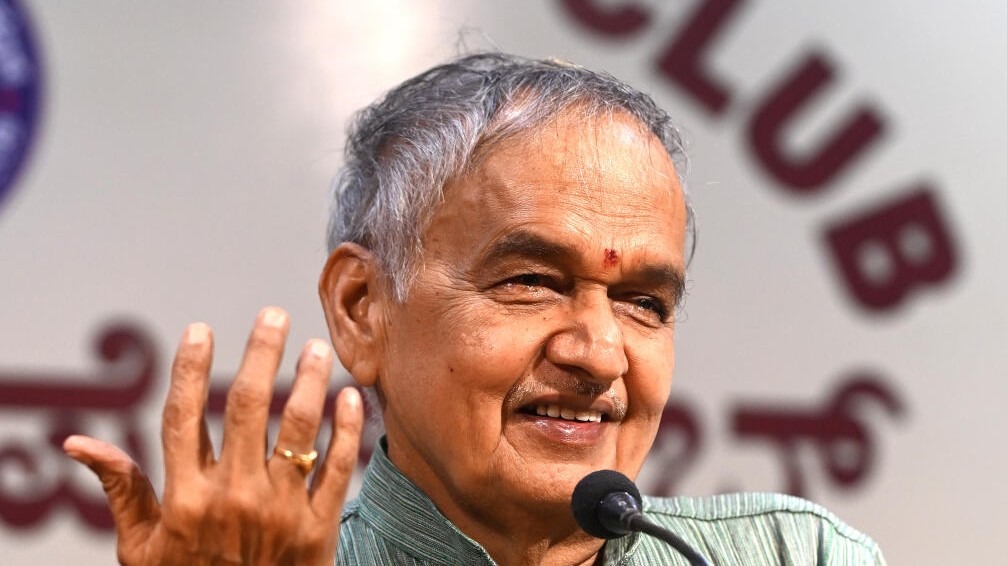
Girish Bharadwaj, the legendary "Bridge Man of India" and Padma Shri recipient, passed away at 76 in Sullia, Karnataka. Renowned for constructing over 140 eco-friendly hanging bridges that provided vital rural connectivity, he remains a symbol of grassroots engineering and social empowerment for thousands of isolated village residents across the country.
Girish Bharadwaj, the renowned engineer whose low-cost, eco-friendly hanging bridges transformed rural connectivity across India, has passed away in Karnataka.
SULLIA, India — Girish Bharadwaj, the pioneering engineer affectionately known as the "Bridge Man of India," passed away on July 7, 2026, at a private hospital in Sullia, Karnataka. He was 76. His death marks the loss of a visionary who dedicated decades to bridging the geographic divides that isolated remote communities across the nation.
Bharadwaj, a mechanical engineering graduate, was widely celebrated for his innovative work in constructing over 140 hanging footbridges. His efforts significantly improved access to education, healthcare, and essential services for thousands of villagers living in rugged, terrain-locked regions.
A Legacy of Rural Empowerment
Born on May 2, 1950, Bharadwaj began his journey in 1989 when he constructed his first hanging bridge across the Payaswini river at Arambur, Karnataka. Over the following decades, he developed a cost-effective, sustainable model for bridge construction that relied on indigenous expertise and local community participation.
His work, often referred to as "Sethu Bandhu," earned him national recognition, culminating in the Government of India conferring upon him the Padma Shri in 2017. Beyond his engineering achievements, he was lauded for his commitment to keeping bridge construction affordable, ensuring that remote villages could maintain vital lifelines to the mainland without the prohibitive costs typically associated with large-scale infrastructure projects.
Impact on National Infrastructure
Throughout his career, Bharadwaj’s bridges became symbols of resilience. In regions prone to floods and difficult terrain, his structures served as the only reliable path for school students and workers to reach their destinations. Even in the face of natural disasters, such as the 2019 Karnataka floods, his work remained a focal point for recovery efforts as local communities mobilized to restore the bridges that he had built.
Despite his fame, Bharadwaj often expressed concern about the lack of interest among younger engineering graduates in learning the art of constructing sturdy, low-cost hanging bridges. He frequently emphasized the necessity for hands-on, ground-level work to master these critical skills, lamenting that few students were willing to take up the mantle of his specialized craft.
Official Acknowledgements
According to official reports, Bharadwaj is survived by two sons and a daughter; his wife, Usha, predeceased him. His passing has drawn tributes from across the country, with local officials and social leaders acknowledging his profound contribution to rural development and social connectivity. He was a recipient of numerous accolades, including the Dr. Kota Shivarama Karantha Huttoora Prashasthi, honoring his service to the public.
Why It Matters
For rural India, the loss of Bharadwaj is felt deeply as his bridges serve as a lifeline for connectivity in areas where major infrastructure projects rarely reach. His model of engineering—prioritizing sustainability, affordability, and community involvement—stands as a template for grassroots development. The "Bridge Man of India" leaves behind not just steel and cable structures, but a proven philosophy for empowerment that continues to serve as an inspiration for social workers and engineers dedicated to rural upliftment.
Key Facts at a Glance
Renowned Engineer: Built over 140 hanging footbridges across remote parts of India, including Karnataka, Kerala, Telangana, and Odisha.
National Honour: Conferred with the Padma Shri in 2017 for his outstanding contribution to rural connectivity.
Philosophy: Championed "low-cost" and "eco-friendly" engineering solutions to empower the poor.
Lifetime Mission: Popularly known as the "Bridge Man of India" and "Sethu Bandhu" for his dedication to connecting isolated communities.
Legacy: His work provided a safe route for villagers, students, and workers to overcome geographic barriers.
Frequently Asked Questions (FAQ)
Why was Girish Bharadwaj called the "Bridge Man of India"?
He earned the title through his tireless dedication to building over 140 hanging bridges in remote areas, significantly improving rural connectivity.
What was unique about his bridge-building technique?
He specialized in low-cost, eco-friendly, and sturdy hanging bridges that could be constructed using indigenous methods and local participation.
Where can the impact of his work be seen?
His bridges are primarily located in Karnataka, with additional structures in Kerala, Odisha, and Telangana, serving as lifelines for people in isolated villages.
Source: The Hindu, Wikipedia