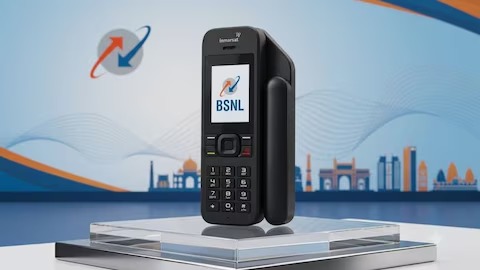
BSNL has launched its new Inmarsat-powered satellite phone in India for ₹1,34,166, designed to maintain voice and SMS connectivity in remote areas without mobile towers. Target applications include defense, mining, and disaster response. Buyers must obtain prior security clearance from the Department of Telecommunications (DoT) before using the device.
NEW DELHI — State-run telecommunications provider Bharat Sanchar Nigam Limited (BSNL) officially announced the rollout of its new dedicated BSNL Satellite Phone in India on July 9, 2026. The specialized communication hardware, priced at ₹1,34,166 inclusive of all statutory taxes, is designed to provide uninterrupted voice calling and SMS capabilities in extreme geographical locations completely devoid of conventional cellular network coverage and traditional ground-based mobile towers.
The launch represents a significant development in India’s civil and industrial emergency infrastructure. By bypassing terrestrial cellular towers and establishing direct linkages with global satellite constellations, the state-run telecom operator aims to secure highly encrypted, resilient communication channels for strategic deployment. The initiative serves as a critical connectivity buffer for emergency personnel, maritime operations, and industrial teams working in isolated environments.
Technical Specifications and Global Network Integration
According to formal product disclosures released via BSNL's corporate communications channels, the new BSNL Satellite Phone relies on hardware developed in structural partnership with global satellite network provider Inmarsat. The handset is specifically engineered for field deployment under harsh climate patterns and challenging environmental conditions.
The device comes equipped with a rugged, heavy-duty exterior casing designed to resist water, dust ingress, and intense physical impacts encountered during field operations. To ensure operational viability during prolonged power outages, the terminal incorporates a long-lasting internal battery optimized for extended standby and talk-time thresholds. Furthermore, the handset features an integrated, real-time SOS distress button that broadcasts localized GPS coordinates directly to emergency response networks during critical field failures.
Regulatory Compliance and Customer Verification Guidelines
Despite the commercial availability announcement, the public enterprise emphasized that the specialized hardware is not intended for standard retail consumer usage. In accordance with legal frameworks enforced by the Ministry of Communications, satellite communication technology remains tightly regulated across the Indian subcontinent due to national security mandates.
Prospective individual buyers, corporate entities, and research organizations must secure explicit prior authorization certificates from the Department of Telecommunications (DoT) before completing a purchase. Regulatory data logs from the DoT confirm that subscribers are legally required to undergo the comprehensive customer verification process prescribed for mobile connections. This includes submitting detailed physical logs specifying the intended geographic area of operation, the explicit duration of use, and the formal organizational purpose of deploying the satellite handset. Operating or possessing an unauthorized satellite terminal remains a punishable offense under Indian wireless telegraphy laws.
Tariff Architecture and Commercial Service Plans
The introduction of the new handset updates BSNL's long-standing Global Satellite Phone Service (GSPS) framework, which has functioned securely in encrypted formats since January 1, 2018. BSNL maintains a distinct tiered tariff structure separated into commercial and government categories:
Commercial Postpaid Plans: Fixed monthly charges are structured at ₹3,500, ₹5,835, and ₹11,670. These tiers provide bundled call allocations of 16, 30, and 60 free minutes or SMS increments respectively.
Commercial Prepaid Plans: Available at an entry-level threshold of ₹5,835 per month, offering a base allocation of 30 free operational minutes. Annual packages are positioned at ₹64,185 with 360 bundled minutes.
Government Tariffs: Programmatic prepaid tiers start at ₹3,500 monthly (20 free minutes) or ₹38,500 annually, including 240 bundled minutes.
Out-of-Plan Charges: Once bundled limits expire, government users incur an additional fee of ₹18 per minute or SMS, while commercial subscribers are billed at ₹25 per minute or SMS.
Lenders and corporate consumers can buy supplemental prepaid top-up vouchers, which are distributed through official channels in denominations ranging from ₹200 to ₹10,000.
Context of BSNL's Broader Terrestrial Network Expansion
The launch of the specialized BSNL Satellite Phone arrives alongside an unprecedented expansion of the operator's standard terrestrial mobile networks. Progress tracking reports from the Telecom Regulatory Authority of India (TRAI) indicate that BSNL has successfully commissioned nearly 99,000 localized 4G sites as part of its homegrown technology rollout. The Union Government is actively reviewing capital allocations to deploy additional 4G sites across rural zones, aiming to transition these nodes smoothly toward 5G architectures over the 2026–2028 window.
Official Sources Section
Product metrics, pricing indices, and regulatory protocols are extracted from official corporate circulars published by Bharat Sanchar Nigam Limited and public safety compliance circulars managed by the Department of Telecommunications under the Ministry of Communications.
Quote Section
"When conventional mobile networks can't reach, the BSNL Satellite Phone keeps you connected," stated the executive management team of BSNL India in their official release documentation.
"According to officials managing the spectrum allocation desks, the strict documentation requirements for satellite devices are essential to maintain secure communication tracking," industry compliance analysts added. "The encrypted nature of the GSPS network guarantees that strategic operations remain isolated from external intercept risks."
Why It Matters
The rollout of advanced satellite communication options carries direct practical implications for industrial infrastructure firms, logistics operators, and adventure travel agencies. When extreme weather events or natural disasters cause standard terrestrial cell towers to fail, satellite handsets serve as the primary communication lifeline to coordinate rescue and recovery efforts. For heavy industries like mining, deep-sea shipping, and oil exploration, access to reliable satellite voice and data links helps maintain operational safety, protect workers in remote locations, and prevent costly supply chain delays.
Key Facts at a Glance
Retail Pricing: The new handset is officially priced at ₹1,34,166, inclusive of all applicable taxes.
Network Infrastructure: The system connects directly to Inmarsat’s satellite constellation, completely bypassing the need for nearby mobile towers.
Regulatory Mandate: All buyers must obtain prior authorization from the Department of Telecommunications (DoT) before purchase.
Core Target Demographics: Designed for defense forces, disaster response teams, maritime shipping, and remote industrial operations.
Encryption Standards: Voice and SMS data are fully encrypted across the network to ensure secure communication.
FAQ Section
Who is legally permitted to buy and use the BSNL Satellite Phone in India?
The device is intended for defense forces, maritime operators, disaster response teams, mining companies, and research groups. Private citizens can purchase the handset for adventure travel or isolated pilgrimages, provided they secure explicit prior authorization from the DoT.
How does a satellite phone differ from a standard smartphone?
Standard smartphones rely on a network of ground-based cell towers to transmit data. In contrast, a satellite phone communicates directly with satellites orbiting the Earth, allowing it to function in remote locations where terrestrial signal towers do not exist.
What documentation is required to pass the security verification process?
Applicants must complete standard mobile verification procedures and provide formal documentation detailing the specific geographic areas of use, the duration of the deployment, and the exact purpose of the communication operations.
Source: Official Product Availability Circulars, Bharat Sanchar Nigam Limited corporate archive, and public notification indices via the Department of Telecommunications.