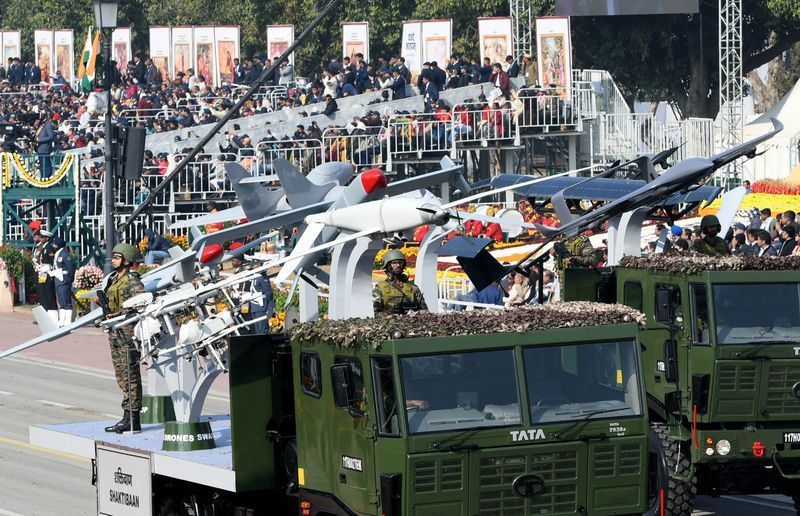
The SIPRI Yearbook 2026 names India the fifth largest military spender globally, with defense outlays hitting 92.1 billion Dollars in 2025. Driven by an 8.9% budget increase following a brief cross-border crisis with Pakistan in May 2025, the report highlights India's ongoing nuclear modernization and long-range deterrence strategies.
STOCKHOLM — The Stockholm International Peace Research Institute (SIPRI) has released its annual global security matrix, establishing that subcontinental defense outlays have reached historic financial thresholds. According to data published on June 8, 2026, within the SIPRI Yearbook 2026, India emerged as the fifth largest military spender in the world during the 2025 fiscal cycle. The nation's total defense expenditure climbed to 92.1 billion Dollars, marking a substantial 8.9% increase from the previous year.
This global budgetary realignment carries deep strategic weight today as international observers analyze the changing nature of deterrence in South Asia. According to the think-tank's findings, the sudden spike in capital outlays was directly tied to emergency military procurements following an unusually severe military crisis between India and Pakistan in May 2025. This brief armed conflict, which saw targeted strikes against cross-border air and missile assets, has led both nuclear-armed nations to fundamentally overhaul their operational defense grids.
The Macro Economics of Global Defense Concentrations
According to the official SIPRI Military Expenditure Database, global military spending rose for the 11th consecutive year in 2025, reaching a record-breaking 2.9 trillion Dollars, or approximately 2.5% of the world's gross domestic product (GDP). The data highlights an intense concentration of military capital, with the top 15 spenders accounting for 80% of all worldwide defense outlays.
The top tier of the global military expenditure ladder follows a highly concentrated structure:
While the United States maintained its position as the world's largest military spender at 954 billion Dollars, its overall share dipped slightly due to shifting internal budget allocations. In contrast, major Asian powers continued their upward trend, driven primarily by localized security anxieties and long-term modernization frameworks.
Analyzing the May 2025 Subcontinental Flashpoint
The international think-tank's report drew specific attention to the briefly escalated armed conflict that erupted between New Delhi and Islamabad in May 2025. According to verified military logs, the crisis involved targeted Indian retaliatory operations against specific Pakistani air and missile bases. While both sovereign states quickly took deliberate diplomatic steps to avoid full-scale military escalation, the event forced immediate operational revisions on both sides.
The strategic fallout of the conflict altered several defense parameters between the two rivals:
| Defense Metric Category | India Security Status (Early 2026) | Pakistan Security Status (Early 2026) |
| Total Nuclear Warheads | Approximately 190 active units | Estimated stockpile of 170 units |
| Annual Budget Shift | Expanded by 8.9% to reach $92.1 Billion | Increased by 11% to reach $11.9 Billion |
| Cyber Warfare Status | Overt integration into active field conflict | Overt integration into active field conflict |
| Strategic Focus Shift | Long-range deterrence expanded toward China | Focus remains on conventional subcontinental parity |
A major technological evolution noted during the May 2025 crisis was the first overt integration of offensive cyber operations into active military conflict by both India and Pakistan. This milestone mirrors global trends seen in Eastern European theaters, showing that digital infrastructure attacks have become a standard part of modern conventional warfare.
Nuclear Modernization and Long-Range Deterrence
The research institute's findings indicate that New Delhi slightly expanded its nuclear arsenal over the past year, increasing its estimated inventory to 190 warheads. Western analysts note that while India's defense planning must continuously monitor its relationship with Pakistan, its long-term weapon modernization program is increasingly focused on developing long-range delivery systems capable of reaching targets throughout China.
To support these long-range programs and maintain high battle readiness, India's financial planners have implemented significant budgetary changes. In the latest domestic fiscal projections, the central government set aside 7.85 lakh crore Rupees for defense, featuring a massive allocation of 2.19 lakh crore Rupees dedicated strictly to capital outlay for next-generation hardware and equipment.
Official Sources Section
The defense statistics, expenditure calculations, nuclear warhead estimates, and tactical conflict data used in this report are gathered from public research dossiers released by the Stockholm International Peace Research Institute (SIPRI). Domestic budgetary figures, supply-chain shifts, and national defense allocations have been cross-verified with official procurement files from the Ministry of Defence (MoD) and regional defense briefs published by the Press Trust of India (PTI).
Quote Section
"According to officials tracking international defense allocations, the latest spending adjustments reflect a global phase of re-armament driven by rising regional tensions. India's climb to the fifth spot globally highlights its strategic need to build reliable, independent deterrent systems capable of securing its borders while adapting to new high-tech battlegrounds like cyber and electronic warfare."
— Global Arms Control and Non-Proliferation Bureau Review
Why It Matters
The findings of the international defense registry have practical implications for taxpayers, domestic industrial enterprises, and regional stability. For corporate defense manufacturers and local aerospace firms, the government's major capital push offers a steady stream of domestic contracts to support manufacturing under localization initiatives. For ordinary citizens and financial planners, understanding these massive security outlays clarifies how public funds are balanced between national defense priorities and essential domestic infrastructure projects.
Key Facts at a Glance
Global Standing: India ranked as the world's fifth largest military spender in 2025, deploying a total defense budget of 92.1 billion Dollars.
Budget Growth: Spurred by emerging border challenges, India's annual defense outlays grew by 8.9% over the past fiscal year.
Crisis Context: The global report highlighted a severe, short-term military crisis between India and Pakistan in May 2025 that involved targeted cross-border airbase strikes.
Arsenal Upgrades: Intelligence estimates indicate that India's nuclear inventory has grown to approximately 190 warheads, slightly ahead of Pakistan's 170.
Import Diversification: The defense ministry has successfully lowered its reliance on Russian military imports from 70% down to 40%, moving toward suppliers in France, Israel, and the United States.
FAQ Section
1. Why did India's military spending increase significantly in the 2025 report?
The spike in defense spending was primarily driven by emergency military procurements and a push for absolute battle readiness following a brief but severe military crisis with Pakistan in May 2025, alongside long-term strategic modernization plans.
2. Which nations outspent India in global defense outlays during 2025?
According to the official data released by SIPRI, India ranked fifth globally, sitting just behind the United States, China, Russia, and Germany in total defense spending.
3. What new aspect of warfare was integrated during the May 2025 crisis?
The May 2025 subcontinental flashpoint marked the first time that both India and Pakistan overtly integrated offensive cyber operations into an active military conflict.
Source: SIPRI Annual Yearbook Releases, Press Trust of India International Desks, Ministry of Defence Security Bulletins.