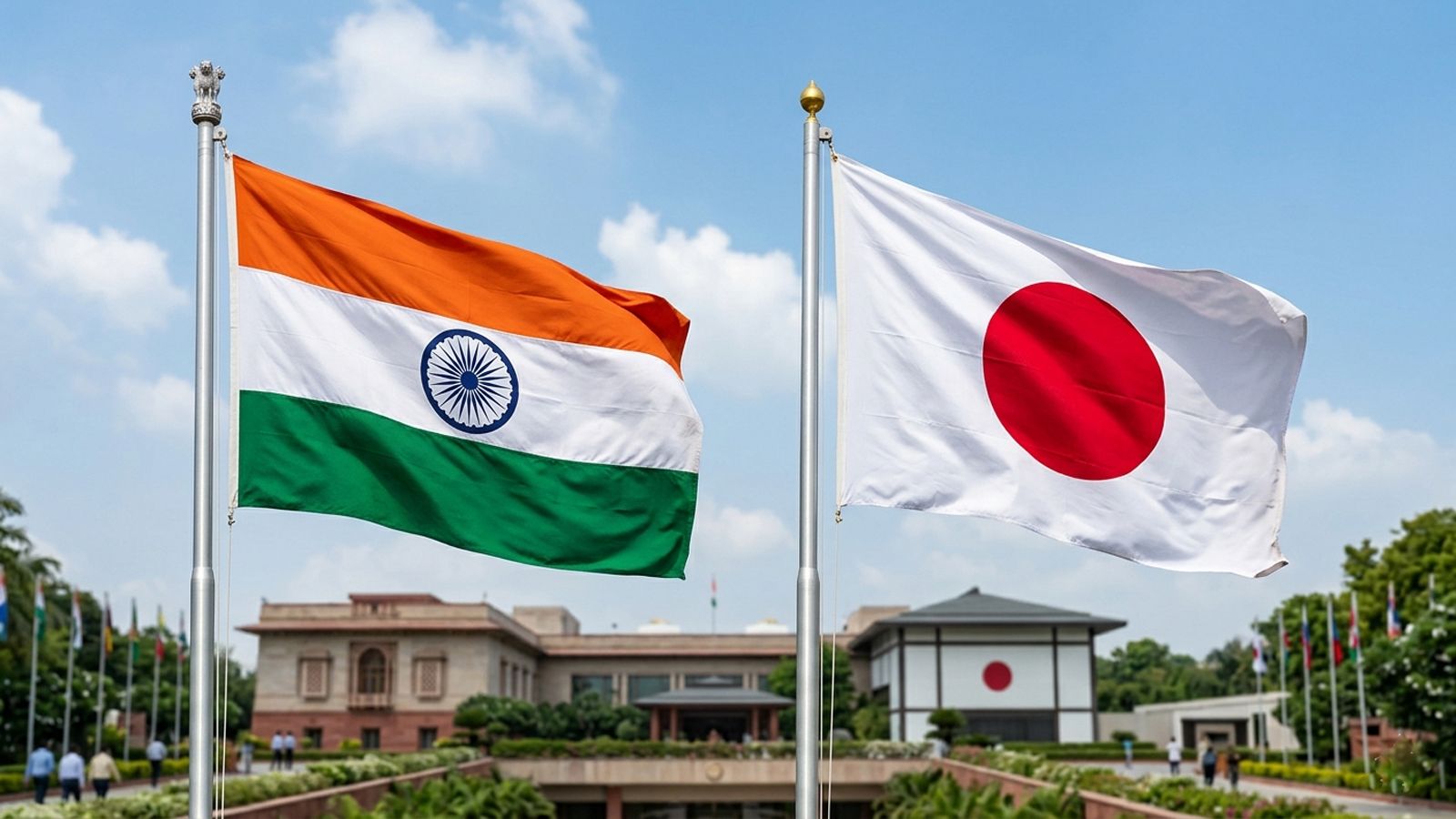
Bilateral updates from New Delhi and Tokyo detail the coordinated efforts to further strengthen ties between India and Japan. By implementing a multi-layered Economic Security Initiative, both nations are building resilient supply chains for semiconductors and critical minerals, boosting public-private investments to ensure long-term regional stability across the Indo-Pacific
TOKYO — The Ministry of External Affairs (MEA) and the Japanese Ministry of Foreign Affairs have completed an extensive review of their shared diplomatic, defense, and trade portfolios. According to official diplomatic statements published via the DD News National Portal, high-level representatives from both nations held comprehensive meetings in Tokyo to assess recent senior-level exchanges and implement fresh measures to further strengthen ties across the Indo-Pacific.
This strategic alignment carries immense weight today on June 9, 2026, as global markets grapple with fractured supply lines and geopolitical friction in critical trade corridors. By moving past traditional trading structures and embracing a dedicated economic security model, both Asian democracies are working to protect their industrial supply chains, expand private sector investments, and offer a stable alternative to non-market economic monopolies.
Moving Beyond Trade: The Rise of Economic Security
According to official briefings from the Ministry of External Affairs (MEA), the push to further strengthen ties follows the initial agreements made during the 15th India-Japan Annual Summit. The relationship has rapidly matured into a highly specialized partnership designed to insulate critical technology and raw materials from external market manipulation and supply shocks.
The core operational focus of this updated bilateral security structure targets five strategic pillars:
Sovereign data shows that the shift toward friend-shoring—moving supply chains to friendly, allied nations—allows both governments to provide a steady protective umbrella for private tech firms. These frameworks ensure that vital industrial components remain insulated from regional political disputes or unilateral trade blockades.
Private Capital Flows and Prefectural Integration
Data released by the Indian Embassy in Tokyo reveals that Japan has solidified its position as one of the top five sources of Foreign Direct Investment (FDI) into the subcontinental economy. Over the past several fiscal cycles, cumulative Japanese equity inflows have surpassed 44.39 billion Dollars, accounting for over 6% of India's total foreign investments.
The growth of this commercial presence is backed by extensive institutional infrastructure:
| Commercial Metric | Registered System Status | Primary Industrial Focus |
| Active Corporations | Roughly 1,500 Japanese firms registered in India | Automotive, telecommunications, and heavy electronics. |
| Local Establishments | Nearly 5,000 active business installations | Nationwide manufacturing hubs and design offices. |
| Profitability Rating | 77.7% of local operations reporting net profits | Ranks among the highest globally in JETRO surveys. |
| Investment Baseline | 10 trillion Yen target over the next decade | Public-private cross-border infrastructure initiatives. |
Additionally, diplomatic records show that this cooperation is no longer limited to federal agencies. Since 2025, the Chief Ministers of several Indian states—including Telangana, Meghalaya, Haryana, and Punjab—have traveled to Japan to work directly with regional prefectures, matching local labor talent pools with specialized Japanese technical institutes.
High-Level Diplomatic Continuity
The most recent meetings between Indian Ambassador Nagma Mallick and Japan's Deputy Minister for Foreign Affairs Hiyoshi Takehiro confirmed that both nations are working to turn high-level agreements into active field projects. These discussions followed senior-level sessions in New Delhi, where External Affairs Minister S. Jaishankar and Japanese Foreign Minister Toshimitsu Motegi reviewed the Joint Vision for the Next 10 Years.
Official statements emphasize that these continuous government-to-government (G2G) meetings are supported by regular private sector dialogues hosted by the Confederation of Indian Industry (CII) and Japan's Keidanren. This close public-private coordination ensures that regulatory hurdles are quickly addressed, paving the way for smooth technological transfers and faster project completions.
Official Sources Section
The investment values, diplomatic itineraries, corporate performance percentages, and policy strategies highlighted in this report are gathered from public archives published by the Ministry of External Affairs of India (MEA). These developments have been cross-verified with official trade folders from the Ministry of Foreign Affairs of Japan (MOFA) and the DD News Diplomatic Coverage Desks.
Quote Section
"According to officials reviewing cross-border economic strategies, the ongoing work to further strengthen ties marks a shift from traditional trade talk to a shared model of economic survival. Synchronizing our industrial bases and reducing vulnerabilities in semiconductors and critical minerals ensures that both nations can protect their sovereignty and economic independence in a changing world."
— Indo-Pacific Strategic Cooperation Council Joint Review
Why It Matters
The continuous push to further strengthen ties has practical benefits for consumers, businesses, and international travelers. For technology companies and electronics manufacturers, a secure, integrated supply chain reduces the risk of sudden factory shutdowns or component shortages, ensuring more stable pricing for consumer electronics and vehicles. For tech workers and engineering graduates, programs like the Specified Skilled Workers initiative create clear, legal pathways to build global careers, matching local talent directly with advanced industrial hubs in Tokyo, Osaka, and Nagoya.
Key Facts at a Glance
Strategic Alignment: The initiative to further strengthen ties relies on matching India's Act-East Policy with Japan's vision of a Free and Open Indo-Pacific (FOIP).
Deep Financial Backing: Japanese private and public channels have set a clear goal to deploy 10 trillion Yen in investments across India over the next decade.
Commercial Viability: A recent JETRO corporate poll highlights that 77.7% of Japanese companies operating in India report solid, consistent profits.
Securing High-Tech Access: The joint economic security framework focuses on building trusted, independent supply lines for semiconductors, AI systems, and 6G telecom networks.
Expanding Local Ties: Over 7 Indian states have established direct investment partnerships with Japanese prefectures to drive local employment and training initiatives.
FAQ Section
1. What does the term "Economic Security" mean within India-Japan relations?
Economic Security is a core policy model that moves beyond simple trade agreements. It focuses on building secure, trusted supply chains for critical items like semiconductors, rare earth minerals, pharmaceuticals, and telecommunications, reducing dependence on volatile or non-market economies.
2. How are everyday businesses and workers affected by these bilateral agreements?
The partnership creates direct technology sharing opportunities for local manufacturers and opens up structured employment pathways for technical professionals through initiatives like the Specified Skilled Workers program.
3. Which government bodies are leading these economic security dialogues?
The initiatives are co-chaired by the Indian Foreign Secretary alongside the Vice Minister of Japan's Ministry of Foreign Affairs (MOFA) and the Vice Minister of Japan's Ministry of Economy, Trade and Industry (METI).
Source: DD News Global Relations Bureau, Ministry of External Affairs India Policy Portals, Ministry of Foreign Affairs of Japan Briefings.