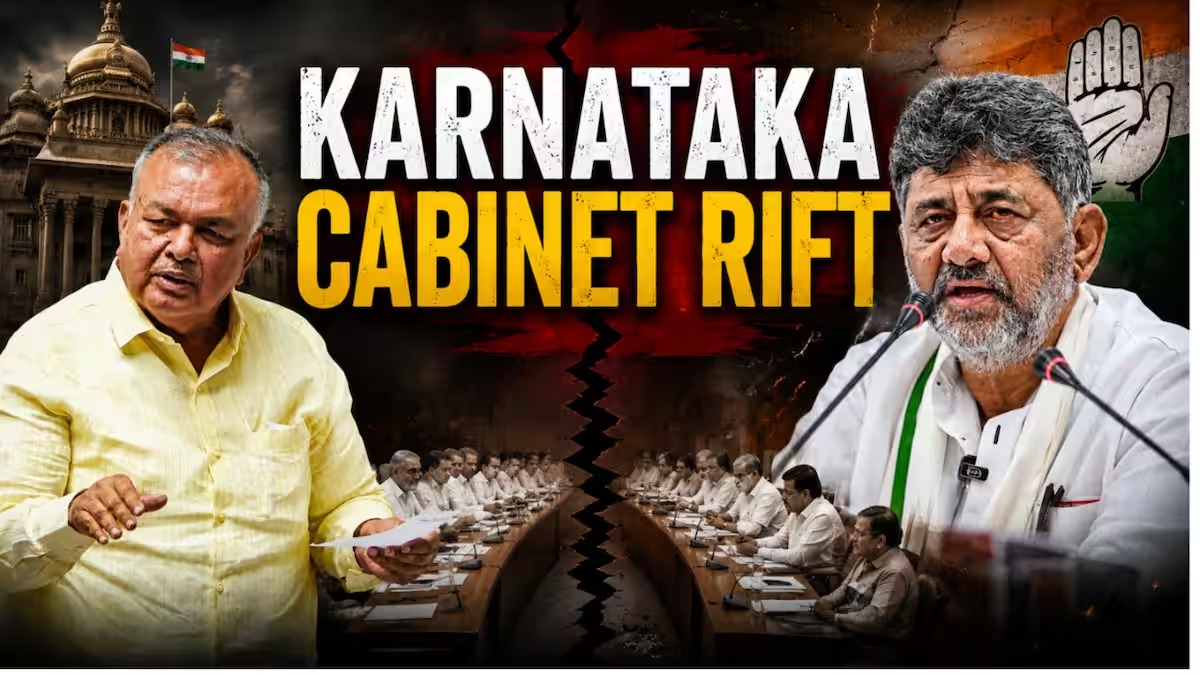
Newly appointed Karnataka Chief Minister D.K. Shivakumar is facing an early administrative test as senior leader Ramalinga Reddy and other factions express open dissatisfaction over recent cabinet portfolio allocations. The rift comes just days after a high-profile leadership transition from former CM Siddaramaiah.
BENGALURU — Less than 72 hours after being sworn in as the 18th Chief Minister of Karnataka, D.K. Shivakumar is facing his first major administrative challenge. The trouble follows a contentious cabinet portfolio allocation that has triggered open discontent within the ruling Indian National Congress.
The political shift occurred on June 3, 2026, when Shivakumar replaced outbound leader Siddaramaiah under a predetermined, mid-term power-sharing arrangement negotiated by the party high command. However, the subsequent allocation of administrative departments has sparked immediate internal friction, testing the stability of the newly configured state executive.
Discontent Erupts Over Key Portfolios
The friction within the state unit intensified on June 4, 2026, following an official notification from Governor Thaawarchand Gehlot detailing the new ministerial responsibilities. Chief Minister Shivakumar opted to retain the critical portfolios of Finance, Intelligence, and Personnel and Administrative Reforms. He assigned other heavy-weight departments to senior colleagues, but the distribution quickly upset the party's internal balance.
Senior Congress leader Ramalinga Reddy reportedly expressed strong dissatisfaction after being bypassed for the highly coveted Bengaluru Development portfolio. That ministry was instead granted to Krishna Byre Gowda under the newly constituted Greater Bengaluru Authority (GBA). According to state political observers, Reddy has openly resisted accepting alternative allocations, including the major and medium transport departments originally assigned to him.
| Minister | Newly Assigned Portfolio (June 2026) | Historical Affiliation / Status |
| D.K. Shivakumar | Finance, Cabinet Affairs, Intelligence | Replaced Siddaramaiah as Chief Minister |
| G. Parameshwara | Revenue, Youth Empowerment & Sports | Appointed Deputy Chief Minister |
| Priyank Kharge | Home Affairs, Information Technology & BT | Retained IT portfolio from previous cabinet |
| Yathindra Siddaramaiah | Urban Development | MLC; Son of outgoing CM Siddaramaiah |
The decision to induct Yathindra Siddaramaiah a Member of the Legislative Council (MLC) and son of the former Chief Minister into the 14-member cabinet as the Urban Development minister has further complicated internal dynamics. Factional leaders are calling for wider representation across regional and community lines.
The Shadow of a Rotational Chief Ministership
The current friction highlights the long-standing challenges of managing a mid-term transition. Siddaramaiah, who resigned on May 28, 2026, to honor the party's internal agreement, leaves behind a highly consolidated network of loyalist legislators. Political analysts note that Shivakumar must establish clear executive authority while accommodating the influential backward classes, minorities, and Dalits coalition built by his predecessor.
The opposition Bharatiya Janata Party (BJP) has been quick to capitalize on these visible fractures. Former Karnataka Chief Minister and current BJP leader Basavaraj Bommai publicly remarked that Siddaramaiah’s decision to remain active in state politics will act as a permanent check on Shivakumar’s executive independence.
Official Sources Section
According to official gazette notifications published by the Karnataka Government Secretariat and public updates hosted on the Board of Control for Cricket in India (BCCI) corporate tracking portals, the cabinet currently functions with 14 sworn ministers. Formal lists verified by the Karnataka Pradesh Congress Committee (KPCC) confirm that several senior slots remain unallocated, leaving room for future expansions to appease disgruntled factions.
Quote Section
The escalating dispute has drawn sharp responses from both opposition strategists and ruling party managers attempting to defuse the situation.
"The quick breakdown in consensus over basic cabinet portfolios indicates that the current leadership change is less about governance and more about internal friction. This arrangement is bound to keep the administration unstable," stated BJP National Spokesperson Shehzad Poonawalla during a media briefing.
In response to queries regarding the exclusion of certain demographics, Chief Minister D.K. Shivakumar noted during a press interaction at the Vidhana Soudha:
"There are still vacancies left within the state cabinet structure. We are continuously consulting with the central leadership in New Delhi to ensure equitable representation for all regions, including pending requests for women legislators."
Why It Matters
For ordinary citizens and international investors, the stability of the Karnataka government directly affects infrastructure projects across Bengaluru, including the expansion of metro lines and municipal zoning under the Greater Bengaluru Authority. Internal political gridlock risks delaying crucial budget clearances and executive policy implementations, which could hurt businesses in India’s primary technology hub.
Key Facts at a Glance
Leadership Transition: D.K. Shivakumar assumed office as the 18th Chief Minister of Karnataka on June 3, 2026, succeeding Siddaramaiah.
Portfolio Disputes: Senior leader Ramalinga Reddy has reportedly rejected his assigned portfolios due to disagreements over the Bengaluru Development ministry.
Key Assignments: Shivakumar has retained direct control over the state's Finance and Intelligence wings.
Upcoming Political Tests: The administration faces immediate pressure to balance regional factions ahead of the crucial Rajya Sabha biennial elections scheduled for June 18, 2026.
FAQ Section
Why did Karnataka change its Chief Minister mid-term?
The transition from Siddaramaiah to D.K. Shivakumar was part of a pre-arranged power-sharing agreement brokered by the Congress high command following the state assembly elections.
Who is managing Bengaluru’s urban infrastructure in the new cabinet?
Krishna Byre Gowda has been given charge of Bengaluru Urban Development under the Greater Bengaluru Authority (GBA), while Yathindra Siddaramaiah oversees the state-wide Urban Development portfolio.
Is the Karnataka government at risk of collapsing?
While there is notable dissatisfaction among certain senior ministers regarding portfolio assignments, the ruling party maintains a comfortable working majority within the state legislative assembly.
Source: Karnataka Government Official Gazette Notifications, Congress Legislative Party (CLP) Briefings, All India Radio News Bengaluru Dispatches, All India Congress Committee (AICC) Media Releases.