Prime Minister Narendra Modi revealed that the Ayushman Bharat scheme and Jan Aushadhi centers have saved Indian families Rs 2.25 lakh crore in healthcare costs. Speaking in Daman, where he launched infrastructure projects worth Rs 2,970 crore, Modi highlighted that national health coverage has now crossed 60%.
Prime Minister Narendra Modi announced that the national Ayushman Bharat program and Jan Aushadhi Kendras have collectively saved poor and middle-class Indian families nearly Rs 2.25 lakh crore in medical expenses. Speaking at a large public gathering in the union territory of Daman, Modi highlighted these figures while executing a massive regional development push.
During his official visit, the Prime Minister inaugurated and laid the foundation stones for multiple public welfare, aviation, and infrastructure projects valued at Rs 2,970 crore. Modi emphasized that healthcare remains one of the highest structural priorities for the Union government, stating that changing the daily lives of deprived and middle-class communities serves as the primary benchmark of national development.
Expanding Health Insurance Protection to Over 60 Percent of Families
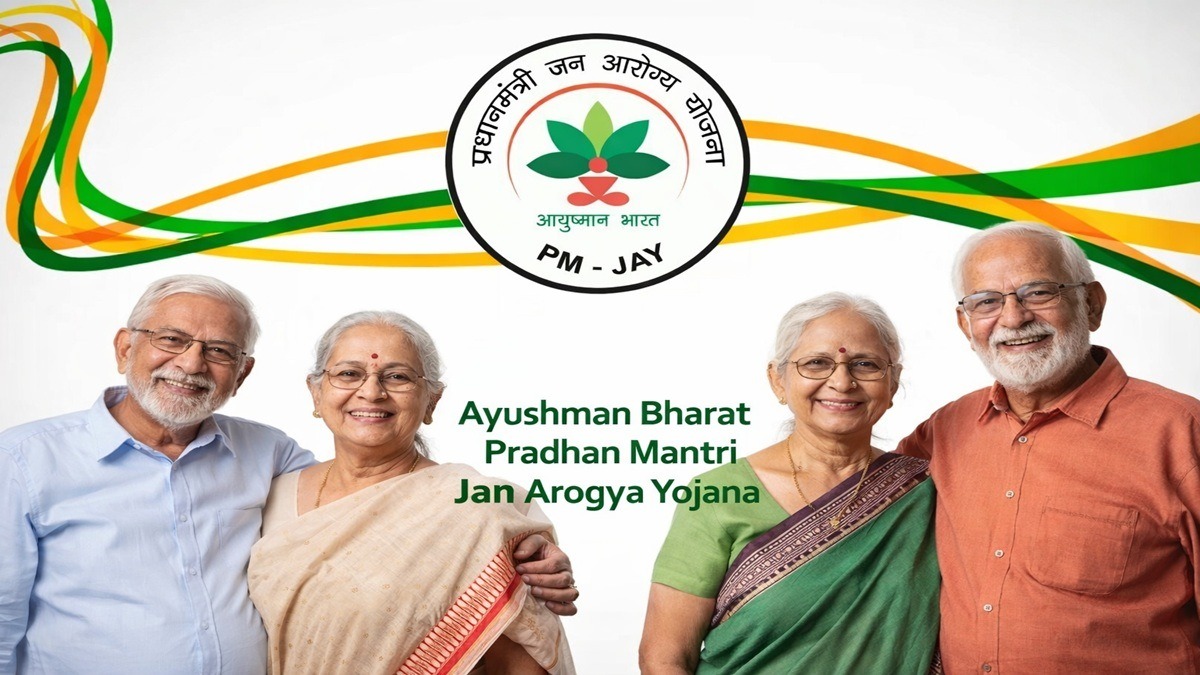
The core of the Prime Minister's address focused on the dramatic expansion of health security since the inception of the flagship Ayushman Bharat Pradhan Mantri Jan Arogya Yojana (AB PM-JAY). Government data indicates that before 2014, less than 30% of Indian families were protected by any formal health insurance network.
Through the ongoing issuance of Ayushman Cards, that baseline protection has officially expanded to cover more than 60% of all families nationwide. The flagship health insurance program secures free, cashless secondary and tertiary hospital treatment worth up to Rs 5 lakh per year for eligible socio-economically vulnerable households.
According to technical figures tracked by the Ministry of Health and Family Welfare, the financial cushion provided by these cards, combined with the extreme price reductions of generic drugs distributed through over 18,000 Jan Aushadhi Kendras, has directly lowered out-of-pocket medical expenditure (OOPE) across all states.
Direct Impact on Maternal Care and Childhood Immunization
The integration of health infrastructure has driven substantial advancements in essential health indicators over the past twelve years. Prime Minister Modi cited verified national data showing that institutional hospital deliveries now account for more than 90% of all births in India, significantly lowering maternal mortality risks.
Simultaneously, the execution of the targeted Mission Indradhanush vaccination campaigns has scaled up comprehensive child immunization from an estimated 60% before 2014 to nearly 90%.
| Key Health Indicator Tracking | Pre-2014 Baseline Status | Monitored National Status |
| National Health Insurance Coverage | Less than 30% of families | Greater than 60% of families |
| Institutional Hospital Deliveries | Limited regional presence | Exceeds 90% of total births |
| Comprehensive Child Immunization | Approximately 60% coverage | Reaching nearly 90% nationwide |
To support this expansion, the Union administration has systematically expanded medical education facilities. The total number of operational medical colleges across India has more than doubled over the last decade, complemented by the addition of 12 new functional All India Institutes of Medical Sciences (AIIMS) to train the next generation of doctors and nurses.
Regional Infrastructure Upgrades for Daman and Diu
The development package unveiled in Daman provides immediate utility to the citizens of Dadra and Nagar Haveli and Daman and Diu. Local medical infrastructure has scaled up with the formal establishment of a new medical college, specialized postgraduate medical training tracks, and the operationalization of high-capacity NAMO Hospitals in Silvassa and Daman. These regional medical centers are engineered to provide advanced diagnostic and clinical treatments locally, saving residents from traveling long distances to major urban health hubs.
Official Sources Section
The performance matrices, financial parameters, and regional project lists have been compiled from public briefings hosted on the Press Information Bureau (PIB) and verified tracking databases managed by the Ministry of Finance and the National Health Authority.
Quote Section
The Prime Minister emphasized that women have emerged as the primary beneficiaries of these deep-rooted structural transformations in the public health sector.
"Today, even the poorest citizen has access to an Ayushman Card and the assurance of free treatment worth up to Rs five lakh. In our government, the first benchmark of development is change in the lives of the poor, the deprived, tribal communities, and the middle class... There has been a major change in health security, and our programs have helped families save nearly Rs 2.25 lakh crore in medical expenses," stated Prime Minister Narendra Modi during his address in Daman.
Why It Matters
For ordinary consumers and middle-class households, catastrophic healthcare expenses have historically been a leading cause of sudden families falling into deep debt traps. The combination of Rs 5 lakh in yearly insurance buffers and access to generic medications priced 50% to 90% below standard market rates at Jan Aushadhi pharmacies acts as a crucial financial safety net. For the broader economy, these reforms help preserve household savings, allowing families to redirect capital toward nutrition, education, and micro-business investments.
Key Facts at a Glance
Massive Capital Savings: The Ayushman Bharat scheme and affordable generic drug centers have saved Indian citizens nearly Rs 2.25 lakh crore in cumulative medical costs.
Insurance Expansion: National health insurance protection has doubled, expanding from under 30% of families before 2014 to over 60% of households.
Regional Injection: PM Modi launched targeted development and infrastructure initiatives worth Rs 2,970 crore during his visit to Daman.
Institutional Strides: Hospital-managed births now exceed 90% of total deliveries, and child immunization has risen to nearly 90% nationwide.
FAQ Section
Who qualifies for the Rs 5 lakh free treatment under Ayushman Bharat?
The AB PM-JAY scheme primarily targets socio-economically vulnerable families identified under the Socio-Economic Caste Census (SECC) data, as well as senior citizens aged 70 and above under expanded insurance categories.
How do Jan Aushadhi Kendras contribute to household financial savings?
These government-backed pharmacies distribute high-quality, certified generic medicines that are priced between 50% and 90% less than equivalent branded formulations in the retail market.
What new healthcare facilities were announced for the Daman region?
The regional expansion features the operationalization of NAMO Hospitals in Silvassa and Daman, alongside new medical colleges and advanced postgraduate specialty medical courses.
Source: Press Information Bureau (PIB) Government Releases, Ministry of Health and Family Welfare Portal, National Health Authority (NHA) Statistical June Report, Doordarshan News Live Broadcast Dispatches.