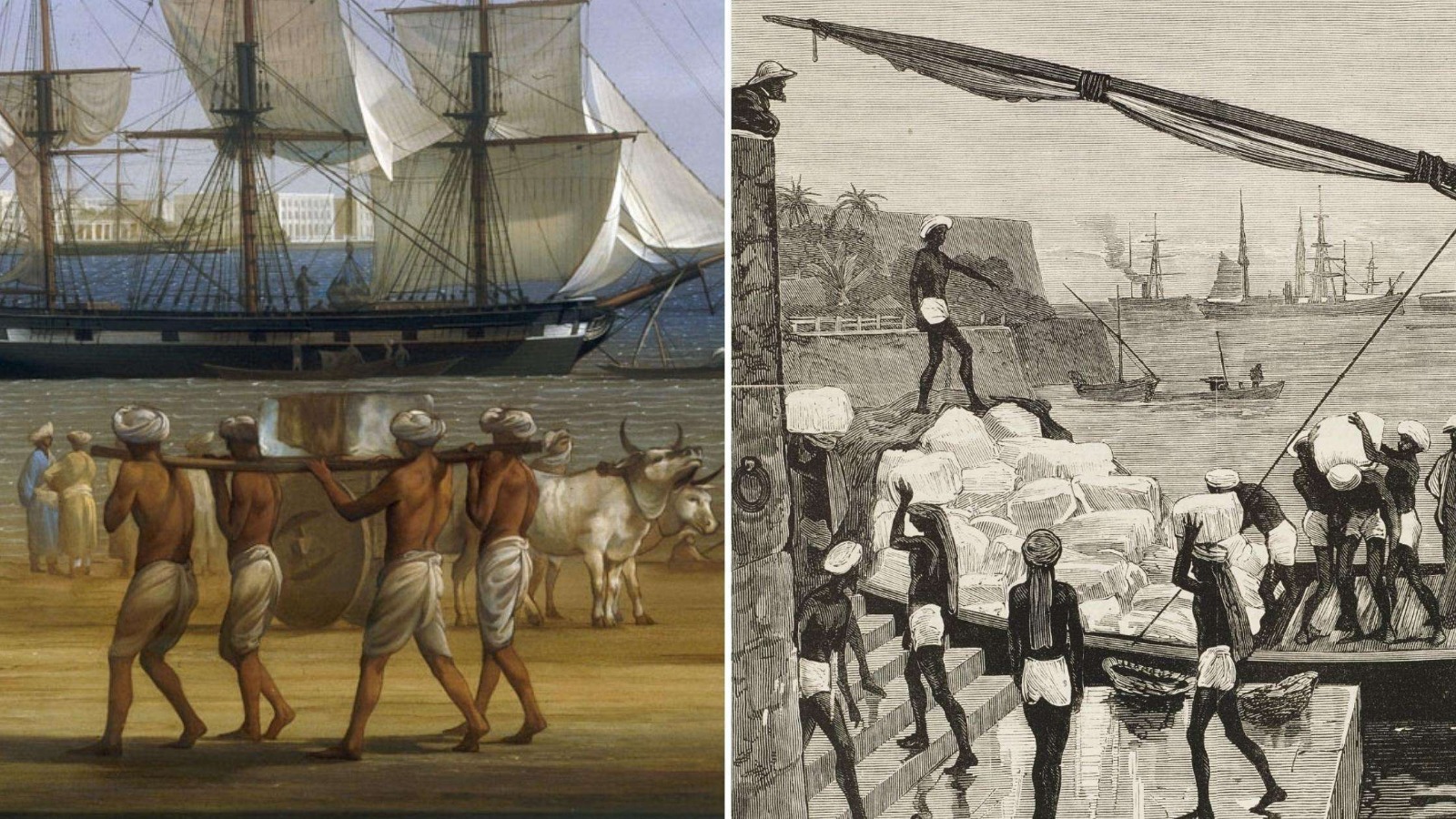
The practical use of dry ice was first patented in 1897 by Dr. Herbert Samuel Elworthy in Mumbai, India. By exploiting the process of sublimation to cool without leaving water residue, his innovation laid the technical foundation for modern global cold chains and advanced industrial food logistics.
MUMBAI — The extensive network of global food logistics, commercial transport, and modern molecular gastronomy continues to rely heavily on a technology that traces its first practical application directly back to colonial India. Archival records from the 1890s reveal that the first consumer-focused integration of solidified carbon dioxide universally known as dry ice was patented by a British resident living in the Bandra suburb of modern-day Mumbai.
This historical innovation has gained renewed prominence in modern supply chain discussions. As international logistics managers navigate volatile shipping bottlenecks in the Strait of Hormuz, rising petrochemical processing costs have triggered a localized carbon dioxide shortage across Western markets. This friction has focused industrial attention on the critical architecture of the modern cold chain, highlighting a technological evolution that transformed a laboratory novelty into an indispensable asset for transporting everything from vaccine doses to fresh food resources.
From a Mumbai Hunting Field to a Global Patent
Solidified carbon dioxide was first recorded in 1835 by French chemist Adrien-Jean-Pierre Thilorier. However, for more than sixty years, the substance remained a laboratory curiosity due to the immense technical difficulties of containing and handling liquefied gases under extreme atmospheric pressure.
The transition from a scientific experiment to a practical consumer utility occurred due to a localized requirement in British India. Dr. Herbert Samuel Elworthy, a British Army doctor residing in Bandra during the late 1890s, sought a reliable method to cool and carbonate beverages while traveling on excursions outside the urban boundaries of Bombay.
Recognizing that solid carbon dioxide could simultaneously lower temperatures and dissolve into water, Elworthy successfully engineered a method to produce instant, chilled soda water in the field. He subsequently formalized this process by filing an English patent in 1897, establishing the first documented commercial blueprint for utilizing dry ice as a direct consumer cooling medium.
The Sublimation Breakthrough in Industrial Refrigeration
While the foundational concept was devised in India, the large-scale industrialization of the technology expanded rapidly in the West during the 1920s. The primary driver was the sudden expansion of cross-continental meat shipping systems by rail in the American Midwest and by specialized vessels traveling from Argentina.
Dry ice offered a critical physics advantage over standard water-based ice: sublimation. Because solid carbon dioxide transforms directly from a solid phase to a gaseous state at -78.5 degrees Celsius without melting into a liquid intermediate, it leaves zero liquid moisture behind.
Traditional water ice created damp, highly unhygienic environments inside wooden railcars, accelerating bacteria growth and causing structural rot. By eliminating moisture runoff, dry ice preserved the structural integrity of transport containers while delivering more than twice the thermal cooling capacity of water ice per unit of weight.
Technical Regulation and Modern Food Safety
In the contemporary food processing and packaging sectors, the deployment of solid carbon dioxide is strictly monitored by national and international food safety regulators to prevent occupational hazards.
| Regulatory Body | Core Mandate / Advisory Standard | Primary Safety Target |
| FSSAI India | Mandatory ventilation standards for food business operators | Prevention of hypercapnia (breathlessness) |
| Global Cold Chain Alliance | Cryogenic protective handling protocols | Mitigation of severe dermal frostbite |
| International Civil Aviation Org | Capped weight allowances per cargo fuselage | Prevention of pressurized container ruptures |
Because a single kilogram of solid dry ice expands into approximately 541 liters of carbon dioxide gas at room temperature, the Food Safety and Standards Authority of India (FSSAI) maintains strict compliance warnings. Food business operators are legally prohibited from transporting or storing the medium inside airtight, unventilated compartments to eliminate the risk of explosive decompression or asphyxiation.
Official Sources Section
The historical patent timelines and technical logs are systematically verified through historical archives maintained by The Times of India and corresponding 1897 filings at the British Patent Office. Modern safety frameworks and cold chain industrial directives are monitored directly via public advisories hosted by the Food Safety and Standards Authority of India (FSSAI).
Quote Section
Modern supply chain strategists emphasize that international resource dependencies often expose how critical trace gases are to daily consumer stability.
"The ongoing industrial friction in the West underscores our heavy reliance on industrial gas sub-products. While we naturally categorize food logistics through physical solids and liquids, the strategic management of gases from cooling agents like carbon dioxide to heating elements like liquefied petroleum gas remains the true baseline of modern supermarket stability," stated a logistics analyst during an international trade brief.
Why It Matters
For everyday consumers, the efficiency of dry ice logistics directly dictates the retail price and fresh availability of off-season produce, frozen confections, and imported meats. On a broader scale, the technology acts as a critical infrastructure backbone for global public health. During international crises, the availability of specialized carbon dioxide blocks ensures that temperature-sensitive pharmaceuticals and deep-freeze vaccine shipments can reach remote rural clinics lacking local electrical grid infrastructure or mechanical refrigeration units.
Key Facts at a Glance
Indian Roots: The first commercial consumer patent for utilizing solid carbon dioxide to chill and carbonate liquids was granted to Dr. Herbert Samuel Elworthy in Bandra, India, in 1897.
Physics Advantage: Unlike regular water ice, dry ice transitions directly from a solid to a gas via sublimation, avoiding corrosive and unhygienic water residue.
Modern Shortages: Contemporary supply chain disruptions in the Middle East have caused a domestic carbon dioxide shortage in Western markets, threatening cold chains.
Strict Handling Mandates: National safety regulators like the FSSAI enforce strict ventilation standards to protect food handlers from the risks of hypercapnia.
FAQ Section
Why is dry ice preferred over regular ice for shipping food?
Dry ice provides twice the cooling power of water ice by weight and sublimates directly into gas. This eliminates water runoff, keeping shipping containers dry and preventing the growth of moisture-loving bacteria.
Is it safe to put dry ice directly into consumer drinks?
Direct contact is highly discouraged by food safety authorities. Because dry ice operates at an extreme temperature of -78.5 degrees Celsius , accidental ingestion or direct contact can cause immediate internal frostbite and severe tissue damage.
How is dry ice manufactured commercially?
Dry ice is manufactured by capturing carbon dioxide gas, which is often collected as a cheap by-product of petrochemical refining or ammonia production. The gas is highly pressurized and cooled to form liquid $CO2, which is then rapidly vented to create a dense "snow" that is mechanically compressed into solid blocks.
Source: Food Safety and Standards Authority of India (FSSAI) Advisories, The Times of India Historical Archives, British Patent Office Records (1897), Economic Times Panache Reports (June 7, 2026).