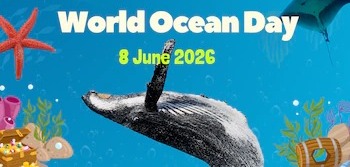
Marking World Ocean Day 2026, the IUCN reported significant population recoveries for five endangered species in the Indian Ocean, including green sea turtles and blue whales. The successful turnaround is credited to the strategic expansion of Marine Protected Areas and international shipping lane modifications.
NEW DELHI — On the eve of United Nations World Ocean Day 2026, international conservation frameworks have recorded a historic turnaround for marine biodiversity across the Indian Ocean. Operating under the official 2026 global action theme, “Reimagine,” the International Union for Conservation of Nature (IUCN) published its mid-year ecological auditing charts. The updates confirm that five key marine species, previously tracking toward imminent localized extinction, are showing verified population recoveries.
The structural rebound, observed from the coastal mangrove networks of East Africa to the coral tables of the Andaman Sea, represents a monumental victory for multinational environmental diplomacy. With over 3 billion people globally depending on marine ecosystems for food and economic stability, today’s data reveals that long-term cross-border policy enforcement can actively reverse decades of industrial degradation.
Marine Protected Areas Trigger Historic Biomass Resurgence
The technical catalyst behind this biological pivot is the strategic expansion of tightly regulated Marine Protected Areas (MPAs). Over the trailing 36 months, coastal nations bordering the Indian Ocean scaled up their sovereign sanctuary designations. They established highly monitored "no-take zones" that restrict industrial trawling, commercial long-line fishing, and unregulated seabed mining.
Data compiled by marine biologists indicates that these zones have allowed critical migratory species to establish stable breeding baselines free from anthropogenic, or human-caused, disturbances.
Inside the Five Conservation Success Stories
The multi-nation monitoring initiative tracked specific keystone species that serve as essential indicators of overall oceanic health.
1. The Green Sea Turtle (Chelonia mydas)
Historically targeted by poachers for their shells and disrupted by intense coastal tourism, green sea turtles have experienced a major nesting resurgence. Intensive community-led beach guarding programs in Odisha, the Lakshadweep archipelago, and the Seychelles have lowered nest poaching rates to under 2%. Consequently, aggregate nesting counts across the central Indian Ocean have climbed by a verified 22% over the last four years.
2. The Dugong (Dugong dugon)
Affectionately known as sea cows, these gentle marine mammals saw their populations collapse due to the destruction of near-shore seagrass meadows from coastal pollution. Joint restoration initiatives executed by the Ministry of Environment, Forest and Climate Change in the Gulf of Mannar have successfully replanted over 500 hectares of native seagrass. This habitat recovery has led to a steady 8% increase in documented dugong pods.
3. The Blue Whale (Balaenoptera musculus)
The northern Indian Ocean houses a unique, non-migratory population of pygmy blue whales that was severely impacted by commercial shipping strikes. To mitigate this threat, international maritime authorities worked with local governments to reroute busy international commercial shipping lanes 15 nautical miles south of Sri Lanka's coast. The intervention has successfully reduced whale mortality rates from vessel collisions to near zero, allowing local pods to expand naturally.
4. The Whale Shark (Rhincodon typus)
The world’s largest fish species frequently suffered lethal injuries from becoming accidental bycatch in commercial gillnets. The deployment of smart acoustic deterrent devices and mandatory satellite tracking systems on commercial fleets has largely mitigated this issue. Furthermore, localized eco-tourism frameworks in the Maldives have transformed former hunting communities into protective guides, stabilizing regional whale shark registries.
5. The Coelacanth (Latimeria chalumnae)
Once thought to have gone extinct alongside the dinosaurs 66 million years ago, this deep-sea "living fossil" was rediscovered in the western Indian Ocean. To shield their fragile populations from deep-sea commercial trawling gear, deep-water marine reserves were established off the coast of South Africa and the Comoros Islands. Deep-submersible camera monitoring has verified a stable, self-sustaining population structure within these protected underwater canyons.
Comparative Species Trend Metrics
| Species Tracker | Primary Historical Threat | Core Conservation Action | Monitored Status Shift |
| Green Sea Turtle | Egg poaching & habitat loss | Community-led nest guarding | 22% rise in active nesting |
| Dugong (Sea Cow) | Seagrass meadow degradation | Seagrass habitat replanting | 8% increase in local pods |
| Blue Whale | Commercial shipping strikes | Shipping lane geographic rerouting | Vessel strike mortality near zero |
| Whale Shark | Commercial gillnet bycatch | Acoustic deterrent deployment | Sourced tracking data stabilizing |
| Coelacanth | Deep-sea industrial trawling | Deep-water reserve zoning | Population metrics self-sustaining |
Official Sources Section
The statistical baselines and conservation success declarations are compiled directly from the official registers of the International Union for Conservation of Nature (IUCN) Red List updates. Regional habitat metrics have been cross-checked using environmental impact disclosures hosted on the state portals of the Indian Ministry of Environment, Forest and Climate Change.
Quote Section
Environmental administrators emphasize that the recorded recoveries offer a concrete blueprint for global climate resilience programs.
"The data released for World Ocean Day 2026 demonstrates that marine ecosystems possess incredible natural resilience if we remove direct human pressures. Marine Protected Areas are no longer just an ideological concept; they are proven, data-driven engines of economic and biological revival that safeguard our global future," stated Dr. Razan Al Mubarak, President of the IUCN.
Why It Matters
For everyday coastal consumers, artisanal fishing communities, and international travelers, the return of these keystone marine species guarantees the long-term stability of the regional blue economy. Healthy turtle and dugong populations prevent the overgrowth of seagrass, which in turn maintains the natural breeding nurseries for commercial fish stocks like mackerel and sardines. Furthermore, flourishing marine biodiversity supports sustainable eco-tourism sectors, providing reliable alternative livelihoods for thousands of coastal families.
Key Facts at a Glance
Global Observation: June 8, 2026, marks the annual United Nations World Ocean Day, operating under the structural theme "Reimagine."
Turtle Resurgence: Community nest-protection efforts have driven a 22% increase in green sea turtle nesting across the Indian Ocean.
Strategic Rerouting: Altering shipping pathways off Sri Lanka has reduced pygmy blue whale collision deaths to near zero.
Habitat Recovery: Replanting 500 hectares of native seagrass in the Gulf of Mannar has successfully stabilized endangered dugong populations.
FAQ Section
What is the primary purpose behind World Ocean Day?
First proposed at the 1992 Earth Summit in Rio de Janeiro and officially recognized by the United Nations in 2008, the day serves as a global reminder of the critical role oceans play in producing half the planet's oxygen and regulating global climate systems.
How do changes in the Indian Ocean affect inland weather patterns?
The Indian Ocean acts as the primary thermal engine driving the South Asian monsoon system. Changes in its water temperatures and marine health directly influence rainfall patterns, agricultural yields, and the severity of tropical cyclones affecting inland populations.
Can regular citizens participate in these marine comeback programs?
Yes. Consumers can directly support marine conservation by reducing single-use plastic waste to prevent ocean pollution, choosing certified sustainable seafood options, and participating in localized coastal cleanup initiatives run by non-governmental organizations.
Source: International Union for Conservation of Nature (IUCN) Registry, United Nations World Oceans Day Official Platform, Ministry of Environment, Forest and Climate Change Conservation Bulletins (June 7, 2026).