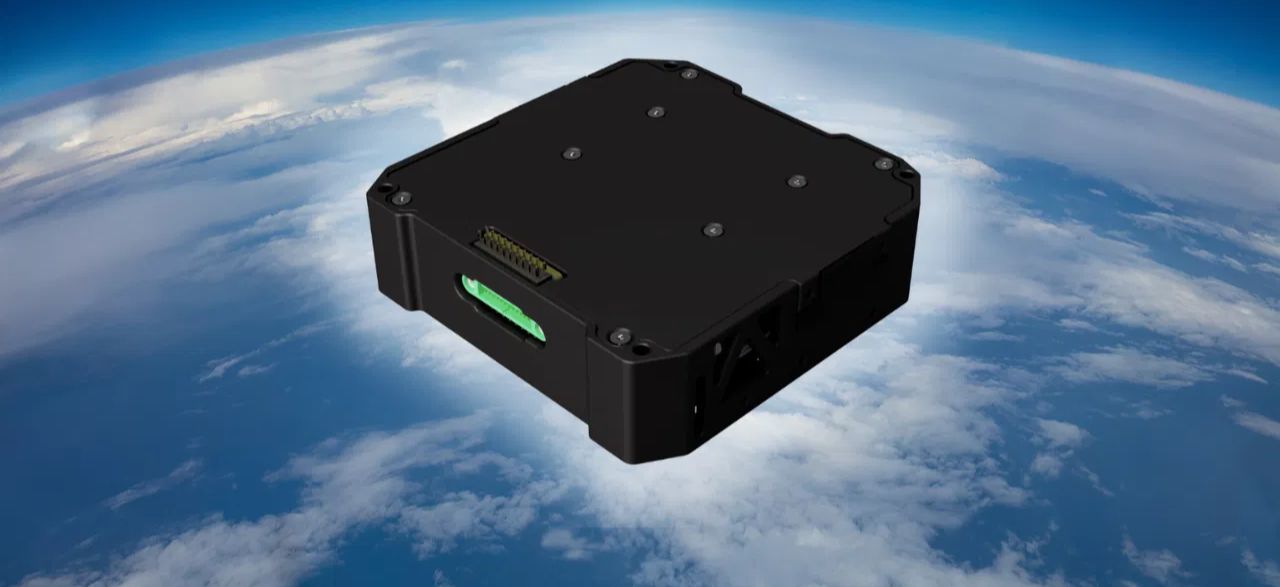
Hyderabad-based space-tech startup TakeMe2Space announced that its indigenously built PowerBank-50 satellite battery pack has achieved space-flight heritage. Weighing just 380 grams, the compact 50 Wh power system successfully sustained experimental payloads aboard Skyroot Aerospace's Vikram-1 rocket, offering a reliable, off-the-shelf energy solution for small satellites during Earth-shadow orbital passes.
A Hyderabad space-tech firm achieves flight heritage for an indigenous satellite power bank designed to keep CubeSats operating during dark orbital phases.
Opening Paragraph
In a major breakthrough for commercial satellite development, Hyderabad-based space technology startup TakeMe2Space officially announced on July 30, 2026, that its indigenously developed PowerBank-50 satellite battery unit has achieved space-flight heritage. Launched aboard Skyroot Aerospace’s inaugural Vikram-1 rocket during Mission 'Aagaman' on July 18 from the Satish Dhawan Space Centre in Sriharikota, the compact 380-gram power pack successfully operated at an altitude of 450 kilometers in Low Earth Orbit (LEO). By continuously supplying energy to an experimental payload during solar eclipses and Earth-shadow passes, the milestone confirms that small satellite developers can now access commercial, off-the-shelf power architectures without relying on expensive foreign imports.
Technical Specifications and Engineering Resilience
Every low Earth orbit satellite experiences frequent darkness as it passes behind the Earth relative to the Sun, requiring robust secondary power systems to operate without solar array input. TakeMe2Space engineered the PowerBank-50 specifically to handle these extreme transitions while maintaining strict mass and volume constraints:
Compact Form Factor: Stores over 50 Watt-hours (Wh) of energy within a paperback-sized unit weighing approximately 380 grams, suited for CubeSats and microsatellites.
Onboard Intelligence: Integrated with an intelligent Battery Management System (BMS) that monitors state-of-charge, manages cell balancing, and controls active thermal cell heaters.
Extreme Environmental Endurance: Withstood intense launch vibration, high shock, high vacuum, cosmic radiation, and orbital temperature fluctuations without thermal runaway.
Affordable Accessibility: Commercially priced off the shelf at ₹1,04,900, significantly lowering financial barriers for university researchers and private space startups.
Industry Impact and Commercial Significance
Securing flight heritage is often the hardest hurdle for aerospace hardware manufacturers, as satellite builders traditionally avoid unproven components for high-risk orbital deployments. By powering Cosmoserve Space’s experimental payload on Vikram-1’s Orbital Adjustment Module (OAM), TakeMe2Space validated its architecture under real space conditions. Industry experts note that localizing satellite power infrastructure reduces delivery lead times, lowers assembly costs, and accelerates constellation deployments for Earth observation, microgravity research, and telecommunications.
Why It Matters
For satellite manufacturers, academic institutions, and commercial space operators, off-the-shelf space-proven power systems remove a major engineering bottleneck. Standardizing small satellite battery modules lowers the entry threshold for constellation builders, making climate monitoring, global communications, and space research more cost-effective and globally accessible.
Key Facts at a Glance
Product Name: PowerBank-50 by TakeMe2Space.
Weight & Capacity: Weighs 380 grams and delivers 50 Wh of power storage.
Launch Vehicle: Skyroot Aerospace’s Vikram-1 (Mission 'Aagaman').
Orbital Altitude: Verified at 450 km in Low Earth Orbit (LEO) with a design lifespan of up to 5 years.
FAQ Section
What is the PowerBank-50 satellite battery?
It is an indigenously developed, compact 50 Wh satellite battery pack designed to power small satellites and CubeSats during orbital dark phases when solar panels cannot gather sunlight.
Which mission validated the battery pack in space?
The unit earned its flight heritage aboard Skyroot Aerospace’s Vikram-1 rocket during its maiden orbital launch on July 18, 2026.
Why is achieving space flight heritage important for satellite components?
Flight heritage proves that a component can survive the violent vibrations of launch and function reliably in the radiation, vacuum, and extreme thermal conditions of space, making buyers confident in adopting it.
Where can official product information and mission details be found?
Official statements and technical specifications are available via Swarajya and Manufacturing Today India.
Source: Swarajya, Manufacturing Today India, United News of India