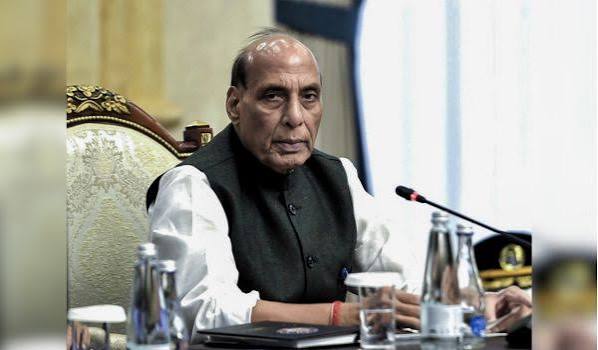
Defence Minister Rajnath Singh has called for building an indigenous talent pipeline to support India's expanding defence manufacturing sector. Speaking at an industry conclave in Lucknow, he urged defense enterprises to take active ownership of technical training institutions under the PM-SETU scheme to prepare youth for high-tech careers.
LUCKNOW — Union Defence Minister Rajnath Singh called for the systematic development of a skilled, future-ready workforce to support India's rapidly expanding defence manufacturing sector.
Addressing the PM-SETU Industry Conclave in Lucknow, Singh emphasized that as India scales its domestic production capabilities across aerospace, electronics, drones, robotics, and advanced engineering, matching investments must be directed toward human capital. The high-level conclave brought together government officials, industry leaders, and academic institutions to strategize on modernizing vocational training and bridging the gap between classroom curricula and industrial shop floors.
Aligning Skilling Ecosystems with Industrial Growth
Singh noted that while nations can acquire advanced machinery, long-term technological sustainability depends entirely on skilled human resources capable of operating and maintaining complex systems. Highlighting the ongoing transformation under the Pradhan Mantri Skilling and Employability Transformation through Upgraded ITIs (PM-SETU) initiative, he urged Defence Public Sector Undertakings (DPSUs) and private sector defence firms to play an active ownership role.
Instead of traditional models limited to corporate social responsibility (CSR) support, Singh encouraged industry partners to actively shape curricula, train instructors, provide structured apprenticeships, and define future skill requirements. He pointed out that modern defence manufacturing facilities require specialized talent pools—including precision machinists, electronics technicians, and quality-control experts—alongside traditional engineering roles.
According to official Ministry of Defence releases and ministerial statements:
Core Imperative: Developing an "Aatmanirbhar Talent Pipeline" alongside an "Aatmanirbhar Defence Industry".
PM-SETU Framework: Upgrading 1,000 government Industrial Training Institutes (ITIs) through a 200-hub and 800-spoke model.
Industry Ownership: Anchor industry partners assigned majority stakeholder roles within specialized cluster development projects.
Sector Focus: Addressing workforce demands in aerospace, unmanned aerial systems, robotics, and precision engineering.
Official Sources Section
Quote Section
"According to official statements by Defence Minister Rajnath Singh, building a self-reliant defence industry requires an equally robust talent pipeline, urging industries to go beyond conventional support and actively shape vocational training ecosystems to meet modern technological demands."
Why It Matters
For domestic manufacturers, MSMEs, and young professionals across India, aligning technical education with actual industrial requirements bridges a critical employment gap. As India targets accelerated growth in defence production and exports, localized skilling models ensure that regional talent hubs—particularly within industrial corridors—can directly feed high-tech manufacturing assembly lines.
Key Facts at a Glance
Event: PM-SETU Industry Conclave held in Lucknow.
Key Speaker: Union Defence Minister Rajnath Singh.
Investment Scope: Cluster projects combining Hub and Spoke ITI upgrades attracting substantial public-private investments.
Strategic Goal: Integrating skill development with the Uttar Pradesh Defence Industrial Corridor and MSME networks.
FAQ Section
Why did Defence Minister Rajnath Singh emphasize a talent pipeline?
Singh stressed that advanced defence manufacturing in areas like aerospace, robotics, and drones requires specialized human capital to sustain long-term technological self-reliance.
What is the PM-SETU initiative?
PM-SETU (Pradhan Mantri Skilling and Employability Transformation through Upgraded ITIs) is a national framework modernizing 1,000 government ITIs through a hub-and-spoke model with active industry leadership.
How are industries expected to participate in the skilling program?
Rather than basic financial donations, industries are urged to help modernize equipment, update curricula, provide hands-on apprenticeships, and train instructors.
Where can stakeholders review official announcements regarding the PM-SETU conclave?
Comprehensive summaries and ministerial statements are published directly through the Press Information Bureau (PIB) India Portal.
Source: Press Information Bureau, Ministry of Defence India, UNI India News, Rajnath Singh Official Portal