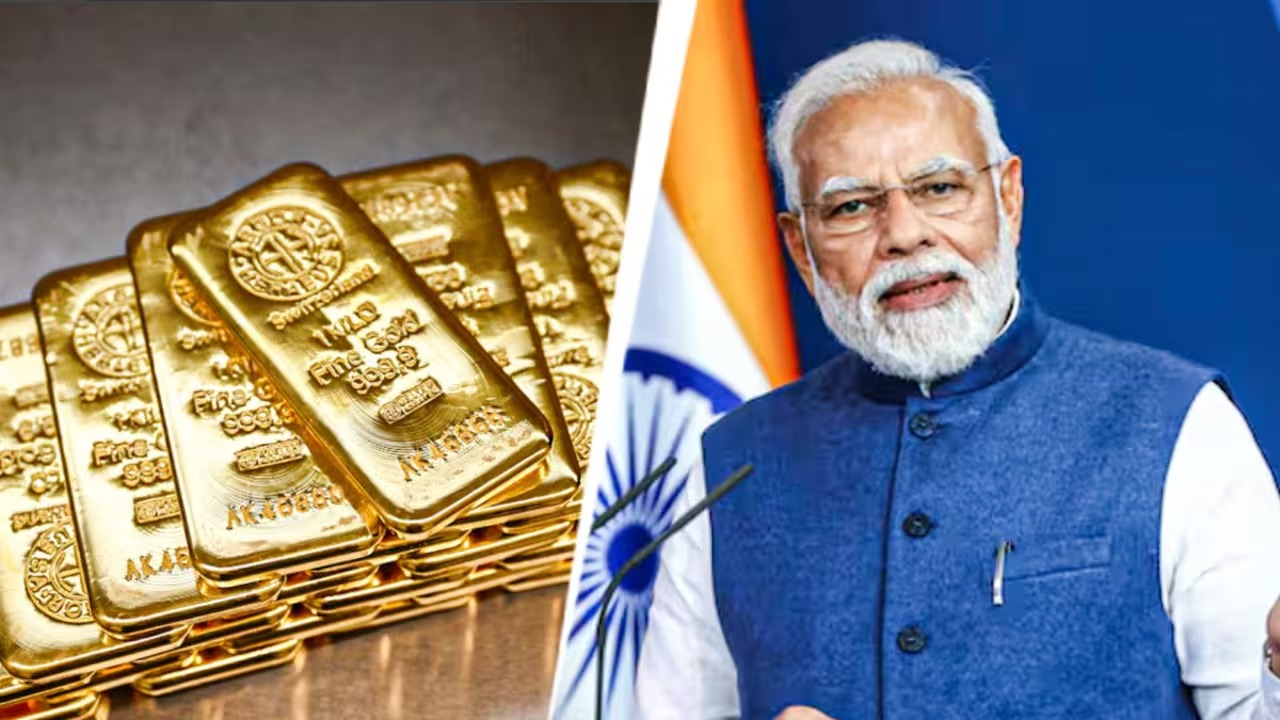
Prime Minister Narendra Modi has urged Indians to avoid buying gold for a year, especially for weddings and non essential jewellery purchases. The appeal is not about culture or personal savings, but about economics – specifically, protecting India’s foreign exchange reserves, rupee stability and trade balance during a period of global energy and geopolitical stress.
Addressing a rally in Hyderabad on 10 May 2026, Modi asked families to postpone gold purchases and foreign travel for one year, alongside calls to save fuel and embrace work from home and public transport wherever possible. He framed this as “saving foreign exchange by any means” at a time when wars in West Asia, tension around the Strait of Hormuz and elevated crude prices are inflating India’s import bill.
How Gold Imports Hit The Rupee
India is one of the world’s largest gold importers, with household demand for jewellery and bars overwhelmingly met through imported bullion paid for in US dollars. When global oil prices spike – currently in the 120 dollar plus range due to the US–Iran conflict and supply risks – India already faces a heavy dollar outflow for fuel. Adding tens of billions of dollars of gold imports on top of this widens the current account deficit, puts downward pressure on the rupee and risks higher imported inflation.
By asking households to defer discretionary gold buying for a year, the government hopes to curb this second major dollar drain, ease pressure on the currency and protect forex buffers, even though official reserves are currently robust at around 691 billion dollars. Economists describe this as a push for “economic patriotism” – small voluntary sacrifices by millions of households that, in aggregate, can materially shrink dollar outflows in a stressed global environment.
Beyond Weddings – The Broader Message
Crucially, Modi’s statement is an appeal, not a legal prohibition: there is no ban on buying gold. Experts stress that the Centre is not turning anti gold, but asking for temporary restraint in a year when high oil, fertiliser and geopolitical risks are testing India’s external resilience. The larger package also includes advice to postpone foreign vacations, reduce fuel use, and revive work from home and virtual meetings – all aimed at conserving foreign exchange and managing imports without formal capital controls.
Gold Restraint Insights
- PM Modi has appealed to families to avoid buying gold, particularly for weddings, for one year.
- The core reason is to reduce dollar outflows from gold imports at a time of elevated crude prices and global instability.
- Gold and oil together account for a large share of India’s import bill, and both are paid for in US dollars.
- High gold imports widen the current account deficit, weaken the rupee and can stoke inflation through costlier imports.
- India’s forex reserves are strong, but policymakers want to avoid unnecessary pressure while the West Asia conflict and US–Iran tensions persist.
- The appeal is part of a broader “economic patriotism” message that also targets foreign travel, fuel use and other non essential dollar spending.
Sources: India Today, Moneycontrol, Business Standard, OneIndia, Hindustan Times, Times Now, Business Today, OpIndia