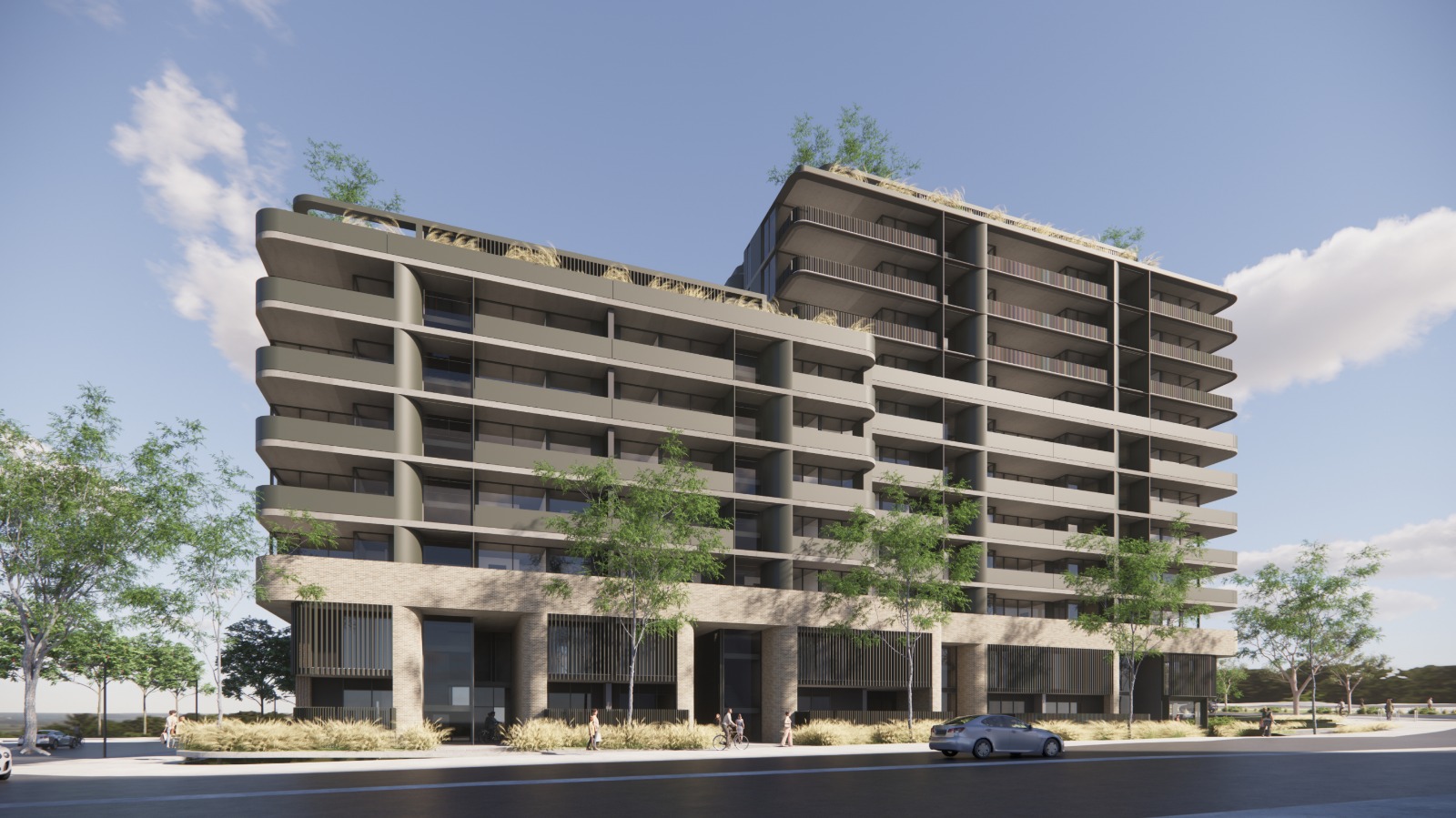
Canberra is seeing a significant rise in apartment construction along Northbourne Avenue, with hundreds of new units in development. Projects such as 220 Northbourne and Art Haus highlight the shift toward high-density urban infill near the light rail, aiming to support the capital's growth while creating vibrant, transit-oriented residential precincts
New development proposals signal a shift toward higher density living along Canberra’s primary gateway as planners push for urban renewal.
CANBERRA — Ambitious redevelopment plans are reshaping Northbourne Avenue, with several high-density residential projects currently in the pipeline or under construction. The surge in apartment development follows strategic government efforts to boost urban infill along the capital's central transit corridor, centered around the city's light rail network.
Recent planning amendments and development applications have paved the way for hundreds of new dwellings along the avenue. Projects such as the landmark 220 Northbourne development, which proposes 543 apartments in a mixed-use precinct, reflect the scale of the ongoing transformation. These developments are designed to capitalize on proximity to the CBD, the Australian National University, and established lifestyle hubs in Braddon and Turner.
Urban Renewal Along the Light Rail Corridor
The push for increased density is part of a broader ACT Government strategy to accommodate Canberra’s growing population within existing urban footprints. By targeting land within 800 metres of light rail stops, planners aim to create "15-minute city" environments where residents have immediate access to employment, dining, and public services.
Key projects currently transforming the Northbourne corridor include:
220 Northbourne Avenue: A major mixed-use village featuring 543 residential units and ground-floor commercial tenancies.
Art Haus (91 Northbourne Avenue): An eight-storey residential tower delivering 119 apartments in Turner.
Northbourne Village: A multi-stage precinct revitalization project designed to integrate residential living with serviced apartments.
CENTO (100 Northbourne Avenue): A recently refurbished complex in Braddon offering 153 residential units with resort-style amenities.
Community and Infrastructure Considerations
While the developments are supported by planners for their role in strengthening the city's "front door," the rapid intensification has sparked community debate. Submissions to ACT Planning authorities highlight concerns regarding traffic congestion, pressure on public green spaces, and the visual impact of taller building forms on established low-density neighborhoods.
In response, developers and officials emphasize that modern projects are incorporating sustainability features, such as 100% electric vehicle charging readiness, communal landscaping, and proximity to active transport options to mitigate potential externalities. The ACT Planning authority continues to oversee these applications, ensuring that new massing and siting requirements are balanced against the heritage character of the capital.
Why It Matters
For prospective residents and investors, this corridor represents the frontline of Canberra’s residential evolution. The transition from older, low-density housing to multi-storey apartment living is fundamentally changing the demographic profile of inner-north suburbs. For the city, these projects are essential to meeting housing targets and ensuring the financial sustainability of public infrastructure by concentrating the population near major transit arteries.
Key Facts at a Glance
Strategic Growth: Developments are concentrated near the light rail to encourage active and public transport use.
Housing Scale: Large-scale projects like 220 Northbourne are set to deliver over 500 units, significantly increasing local supply.
Amenity Focus: New complexes are emphasizing "resort-style" amenities, including rooftop gardens, gymnasiums, and communal workspaces.
Government Policy: The projects align with the ACT Planning Strategy 2018, which targets 70 per cent of new development within the existing urban footprint.
FAQ
Why is the government encouraging apartments on Northbourne Avenue?
The Northbourne Avenue corridor is a primary transit spine. Increasing density here allows the government to utilize existing infrastructure, including the light rail, and supports sustainable population growth.
Are there concerns regarding the height of these new buildings?
Yes, some community groups have raised concerns about the impact of five-to-nine-storey buildings on solar access, privacy, and traffic congestion in surrounding residential streets.
What services are planned for these new apartment precincts?
Most large-scale developments, such as 220 Northbourne, include ground-floor commercial tenancies to provide retail and hospitality options for residents.
Source: ACT Planning Authority, Geocon, Art Haus Apartments, Realestate.com.au