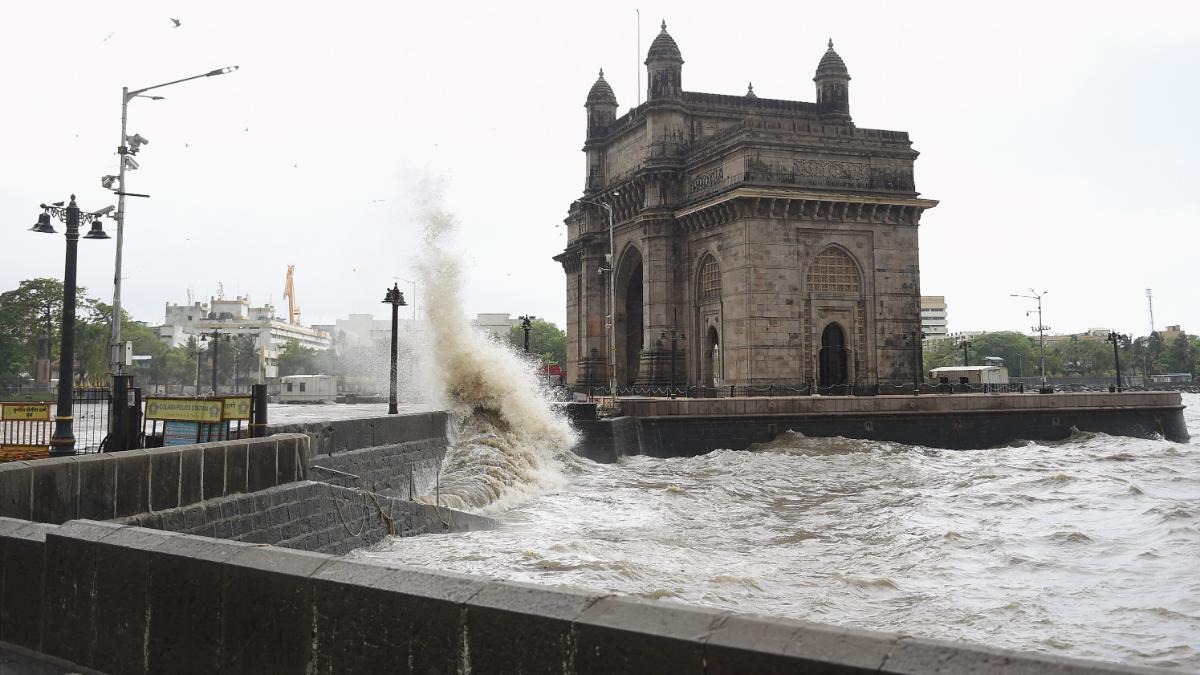
Mumbai experienced a high tide at Marine Drive on July 12, 2026, while the IMD issued heavy rain alerts for 18 states across India. While the monsoon remains active in the north and east, Mumbai is expected to see subdued rainfall activity following an intense start to July.
As Mumbai witnessed a notable high tide at Marine Drive on Sunday, the India Meteorological Department (IMD) issued widespread heavy rainfall alerts across 18 states.
MUMBAI — Mumbai’s iconic Marine Drive witnessed a high tide on Sunday, July 12, 2026, drawing crowds even as the city prepares for a shift in weather patterns. While the coastal capital experiences a brief reprieve from the intense monsoon fury seen earlier this month, the India Meteorological Department (IMD) has sounded high-alert warnings for heavy to very heavy rainfall across a significant portion of the country.
According to IMD data, while Mumbai and the broader Konkan region are expected to see subdued rainfall activity over the coming week, much of northern and northeastern India remains under a red-flag advisory for severe weather.
National Weather Outlook
The IMD has issued alerts for heavy to very heavy rainfall at isolated places over Assam, Meghalaya, Bihar, and Sub-Himalayan West Bengal and Sikkim for July 12. Additionally, heavy rainfall is anticipated in Arunachal Pradesh, Chhattisgarh, East Uttar Pradesh, Gangetic West Bengal, Himachal Pradesh, Jammu & Kashmir, Jharkhand, Odisha, Punjab, and Uttarakhand.
The weather agency has specifically warned of thunderstorms accompanied by lightning and gusty winds, particularly in Jammu and Kashmir, Uttarakhand, and East Uttar Pradesh. In some regions, wind speeds are projected to reach between 40 and 60 kmph, posing potential risks to power infrastructure and transit.
Mumbai’s Monsoon Status
For Mumbai residents, the current weather represents a "break" phase in the monsoon. Following record-breaking precipitation between July 1 and July 5—which saw the Colaba and Santacruz weather stations record 80% to 94% above-normal rainfall—the IMD indicates that the intensity of showers will likely remain low to moderate for the next several days.
Despite the reduced rainfall, authorities remain vigilant, especially during high tide windows. Sunday’s high tide at Marine Drive serves as a regular maritime occurrence, yet officials advise caution for those visiting the promenade during peak tidal times to ensure public safety.
Official Sources
The IMD’s national summary confirms that the monsoon trough—the primary driver of this season's rainfall—is currently positioned across northern and eastern India, facilitating moisture inflow in those regions.
"While Mumbai and the Konkan region are likely to see a break from heavy rain for about a week, the country as a whole continues to face active monsoon conditions in the north and east," officials stated in a bulletin.
Why It Matters
The contrast between the localized high tide in Mumbai and the severe rain warnings across 18 states highlights the geographical diversity of India’s monsoon season. For the agricultural sector, the ongoing rain in northern states is critical for Kharif crop development, whereas for urban centers, the IMD’s warnings are essential for disaster management and minimizing infrastructure disruption.
Key Facts at a Glance
Active Alerts: Heavy to very heavy rain warnings issued for 18 states, including Bihar, Assam, and Uttar Pradesh.
Mumbai Weather: The city is entering a week-long "break" in intense rainfall, with only light to moderate showers expected.
High Tide: Marine Drive witnessed a high tide as part of routine tidal cycles on Sunday; no emergency warnings were issued for the coast.
Monsoon Progress: Rainfall across India for July 2026 is trending at approximately 94% of the long-period average.
FAQ
Is there a flood risk for Mumbai during the current high tide?
No, Sunday's high tide is part of the regular lunar tidal cycle. The IMD has not issued any special flood warnings for Mumbai’s coast for this period.
What does the IMD's "Red Color Warning" mean?
The IMD clarifies that a red warning is an advisory for authorities to "take action" or prepare for significant weather-related impacts, not necessarily an emergency evacuation order.
Why is it raining more in northern India than in Mumbai?
The monsoon trough has shifted its position toward the Indo-Gangetic plain and the Himalayan foothills, concentrating heavy moisture inflow in those regions rather than the west coast.
Source: India Meteorological Department (IMD), United News of India (UNI), ANI News