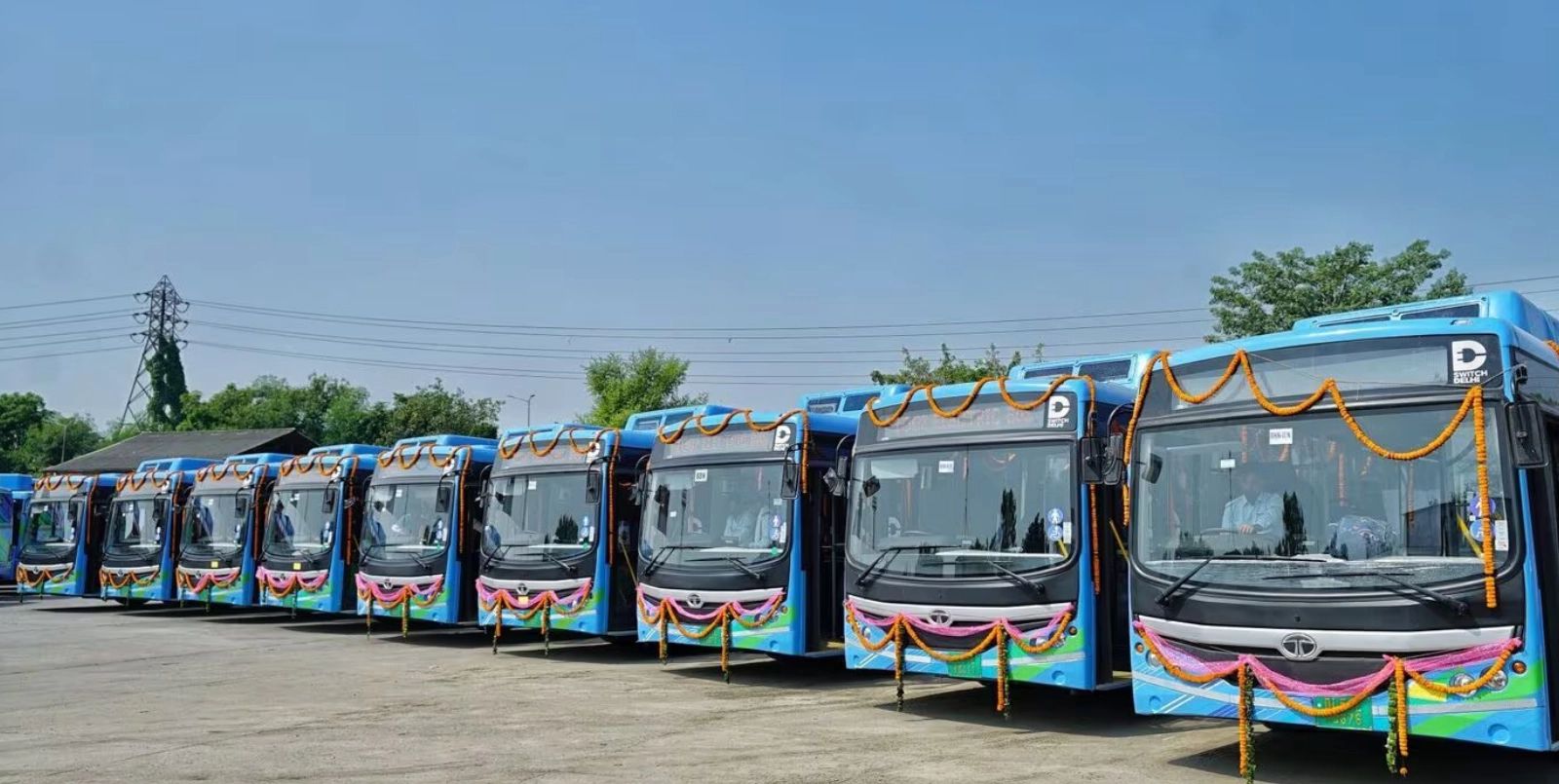
India’s electric bus penetration in the medium and heavy vehicle segment is projected to climb from 7% to approximately 30% by FY29-30, according to rating agency ICRA. Driven by favourable total cost of ownership, robust government schemes, and emerging payment security frameworks, the transition marks a major milestone for national public transport.
Backed by supportive government policies and lower operating costs, India's public transport sector accelerates its transition toward large-scale fleet electrification.
As urban centers across the subcontinent grapple with environmental pressures and transit modernization, the domestic clean mobility landscape is poised for a significant structural shift. According to a comprehensive market analysis released by rating agency ICRA on Wednesday, August 12, 2026, electric bus (e-bus) penetration across India's medium and heavy vehicle segment is projected to surge from its current 7% baseline to approximately 30% by fiscal year 2029-30. The accelerated trajectory is supported by sustained federal policy frameworks, improving financial models for operators, and an expanding network of charging infrastructure concentrated across key state public transport networks.
Market Trajectory and Government Scheme Backing
The expansion of electric public transit has accelerated sharply over recent years. Industry metrics highlighted by ICRA indicate that medium and heavy e-bus sales climbed from a modest 37 units in 2017-18 to 5,412 units in 2025-26. Furthermore, commercial momentum continued into the current fiscal year, with over 2,000 units sold within the first four months of FY2026-27.
Key drivers propelling this expansion include:
Cumulative Policy Outlays: Successive central government initiatives—ranging from the FAME frameworks to the National Electric Bus Programme, PM-eBus Sewa, and the PM E-Drive scheme—have collectively targeted the deployment of over 80,000 e-buses backed by approximately ₹1 trillion in budgetary allocations through FY28.
Geographic Concentration: Current deployment patterns remain concentrated, with public transport authorities across Delhi, Maharashtra, Karnataka, Gujarat, and Telangana accounting for roughly 75% of all operational e-buses nationwide.
Capital Outlay Projections: Fully electrifying the estimated 1,50,000-bus fleet managed by public transport authorities over the coming decade will require a cumulative capital expenditure of approximately ₹1.5 trillion.
Total Cost of Ownership and Operating Economics
A primary catalyst for the widespread adoption of commercial electric vehicles is their favorable long-term financial profile. Although upfront capital expenditures remain elevated—averaging around ₹1 crore for a standard 12-metre air-conditioned electric bus compared to conventional diesel or CNG alternatives—lower running expenses deliver a compelling total cost of ownership (TCO) advantage.
ICRA estimates indicate that a 12-metre AC e-bus incurs a total cost of ownership of approximately ₹39 per kilometre, compared with ₹51 per kilometre for diesel equivalents and ₹48 per kilometre for CNG models, factoring in operational subsidies and reduced energy expenses. To safeguard private operators against counterparty delays, the institutionalization of a Payment Security Mechanism (PSM)—routed via Convergence Energy Services Limited (CESL) and supported by a Reserve Bank of India (RBI) Direct Debit Mandate backstop—is expected to mitigate financial risks as fresh public tendering expands.
Why It Matters
Accelerating the electrification of public transport fleets is vital for reducing urban carbon emissions and lowering municipal transit expenditures. Establishing durable financial frameworks and payment security mechanisms ensures that public-private operating models remain resilient, attracting institutional capital to scale sustainable urban infrastructure across India.
Key Facts at a Glance
Projected Penetration: ~30% of medium and heavy buses by FY2029-30 (up from 7% currently).
Sales Growth: Jumped from 37 units in FY18 to 5,412 units in FY25-26, with over 2,000 units sold in the first four months of FY27.
Cost Efficiency: Total cost of ownership for a 12-metre AC e-bus stands at ~₹39/km, compared to ₹51/km for diesel and ₹48/km for CNG.
Key Mitigant: Implementation of the Payment Security Mechanism (PSM) backed by an RBI Direct Debit Mandate to address operator payment risks.
FAQ Section
What is the projected e-bus penetration rate in India by FY30?
Rating agency ICRA forecasts that electric bus penetration in the medium and heavy vehicle segment will reach approximately 30% by 2029-30.
Why are operating costs lower for electric buses despite higher initial prices?
While a 12-metre AC e-bus requires a higher upfront investment of around ₹1 crore, its lower running electricity costs result in a favorable total cost of ownership of ₹39 per km compared to diesel (₹51/km) and CNG (₹48/km).
Which government schemes support the deployment of electric buses in India?
Key initiatives include FAME-I, FAME-II, the National Electric Bus Programme, PM-eBus Sewa, and the PM E-Drive scheme, which collectively target over 80,000 e-buses.
How are payment risks for private bus operators being mitigated?
A Payment Security Mechanism (PSM) routed through Convergence Energy Services Limited (CESL) with an RBI Direct Debit Mandate backstop has been introduced to protect operators against delayed municipal payments.
Source: ICRA Limited Official Portal, ETAuto Commercial Vehicle Desk, Autocar Professional Data Bureau, The Times of India Transport Desk