Confronted by extreme solar panel sales oversupply and tumbling margins, China's largest photovoltaic manufacturers—including Longi, JinkoSolar, and Trina Solar—are rapidly pivoting into the energy storage sector. These industry leaders are investing billions in lithium iron phosphate (LFP) battery production lines to secure new revenue streams and survive a grueling domestic price war.
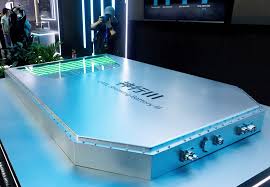
SHANGHAI / BEIJING - China’s premier photovoltaic giants are aggressively pivoting their industrial footprints into the energy storage market as severe solar panel sales oversupply continues to erode corporate profit margins. Industry frontrunners including Longi Green Energy Technology, JinkoSolar, and Trina Solar have collectively committed billions of dollars toward building gigawatt-scale lithium iron phosphate (LFP) battery assembly lines.
This structural migration comes at a critical time for the clean energy sector. While global solar panel sales remain robust by volume, an unprecedented domestic manufacturing expansion has driven wholesale module prices to historic lows, forcing many corporations to sell hardware below the cost of production. By integrating utility-scale and residential energy storage systems into their portfolios, these clean energy leaders are racing to diversify their revenue streams, insulate their balance sheets, and adapt to a changing global regulatory environment.
Severe Panel Oversupply Forces Structural Reallocation
The strategic move into battery manufacturing is a direct response to a hyper-competitive, oversaturated domestic photovoltaic market. Over the past three years, heavy state-subsidized capital expenditures across China led to a massive expansion of polysilicon refining and module assembly plants. Data from the China Photovoltaic Industry Association (CPIA) reveals that the country’s annualized solar production capacity has surpassed 800 gigawatts (GW)—vastly exceeding total global demand, which hovers around 500 to 550 GW.
This widening supply-demand imbalance has caused the wholesale cost of standard n-type monocrystalline solar modules to plummet by more than 45% over the past 12 months. According to financial regulatory filings, these plunging prices have severely impacted corporate profit margins, prompting clean energy executives to look beyond solar panel sales to capture value downstream through advanced grid-scale battery storage.
Solar Majors Deploy Billions in Gigafactory Projects
To secure an early advantage in this transition, clean energy leaders are rapidly shifting capital from panel lines to massive battery production hubs.
Longi Green Energy Technology: The Xi'an-based manufacturer recently broke ground on a 20 GW energy storage system facility in Shaanxi province, focusing specifically on high-density liquid-cooled utility batteries.
Trina Solar: Operating through its specialized subsidiary, Trina Storage, the company has successfully scaled its self-developed LFP battery cell capacity to 25 GW at its primary manufacturing hub in Changzhou.
JinkoSolar: The enterprise has adjusted its capital allocation roadmap to fund a new 12 GW integrated energy storage manufacturing project in Zhejiang, aiming to pair smart solar modules directly with local battery units.
By leveraging their existing international distribution networks, these companies aim to bundle solar panels with storage hardware, offering complete clean energy solutions to global utility developers.
Grid Curtailment and Policy Directives Fuel Storage Demand
The pivot toward energy storage is also heavily supported by domestic regulatory frameworks. As wind and solar generation capacity scales rapidly across China, regional electrical grids are struggling to absorb intermittent clean energy. This has led to rising grid curtailment rates—where solar arrays are intentionally disconnected to prevent grid instability during peak production hours.
To resolve these distribution bottlenecks, the National Energy Administration (NEA) has introduced strict mandates across more than 20 provinces. New utility-scale renewable energy installations are now required to build co-located energy storage infrastructure equivalent to 10% to 20% of their total generating capacity, with a minimum storage duration of two hours. This regulatory requirement ensures an immediate, captive domestic market for the very batteries that Chinese solar companies are now racing to produce.
Navigating Global Trade Barriers and Western Subsidies
While the domestic Chinese market provides a reliable foundation, solar majors are structuring their battery investments with a close eye on international trade restrictions. Clean energy hardware exports are facing intensifying scrutiny from Western regulators. The US government recently adjusted its Section 301 tariff structures, increasing import duties on Chinese lithium-ion batteries from 7.5% to 25%, alongside ongoing restrictions on solar panel sales.
Similarly, the European Union's Net-Zero Industry Act encourages localized supply chains, putting Chinese exporters under greater pressure. To navigate these rising geopolitical hurdles, Chinese clean energy firms are forming strategic joint ventures abroad and exploring factory locations in North America, Europe, and the Middle East. These efforts are designed to satisfy localized sourcing rules while keeping their battery products globally competitive.
Official Sources Section
The market dynamics, corporate expenditures, and policy mandates presented in this report are compiled from verified regulatory filings, company statements, and official government releases, including:
Quote Section
Addressing the structural realignment of the clean energy sector during an industry conference in Shanghai, CPIA Secretary-General Wang Bohua stated:
"The era of relying solely on standard solar panel sales to generate stable corporate returns has shifted. Severe manufacturing oversupply has compressed profit margins across the midstream supply chain to unsustainable levels. Moving forward, the financial health of our leading clean energy companies will depend on their ability to successfully bundle solar hardware with advanced energy storage technologies."
According to an official corporate governance disclosure released by Trina Solar during its annual shareholder presentation:
"The company is intentionally expanding its focus beyond traditional photovoltaic module manufacturing. By dedicating capital to vertically integrated battery cell lines, we are building comprehensive energy storage solutions that resolve grid curtailment challenges while establishing resilient, alternative revenue streams."
Why It Matters
For international energy investors and utilities, the entry of China’s solar giants into the battery sector is expected to replicate the pricing trends seen in solar panel sales, likely lowering global energy storage costs significantly over the next two to three years. For retail consumers and businesses looking to adopt renewable energy, cheaper utility and residential battery options will make solar power much more practical, allowing users to store cheap daytime energy for use during expensive peak evening hours.
Key Facts at a Glance
Capacity Overload: China's domestic solar manufacturing capacity has reached 800 GW, easily outpacing the total global demand of roughly 500 GW.
Price Collapse: Wholesale module prices have plummeted by over 45% within the past year, driving profit margins for standard solar panel sales to near-zero levels.
Mandated Storage: More than 20 Chinese provinces now legally require new solar installations to build co-located battery storage equal to 10% to 20% of their total generating capacity.
Tariff Hurdles: Solar firms are investing heavily in local supply chains to navigate a new 25% US tariff on imported Chinese lithium-ion battery cells.
FAQ Section
Why are Chinese solar companies suddenly building battery factories?
An intense manufacturing oversupply has caused module prices to drop sharply, making standard solar panel sales far less profitable. Companies are pivoting to batteries to diversify their businesses, capture new markets, and find higher profit margins.
What are the domestic policy drivers behind this battery transition?
To prevent grid instability caused by rapid clean energy growth, China's National Energy Administration has mandated that new utility-scale solar farms install co-located battery storage systems to hold excess daytime power.
Will this move lower the cost of residential and commercial battery systems?
Yes. As these massive solar manufacturers bring gigawatt-scale battery factories online, the increased supply is expected to drive down global prices for utility, commercial, and residential energy storage systems.
Source: National Energy Administration China, China Photovoltaic Industry Association, Trina Solar Investor Relations, Longi Green Energy Disclosures